How the Dravidian movement has shaped and split Tamil Nadu’s politics for a century
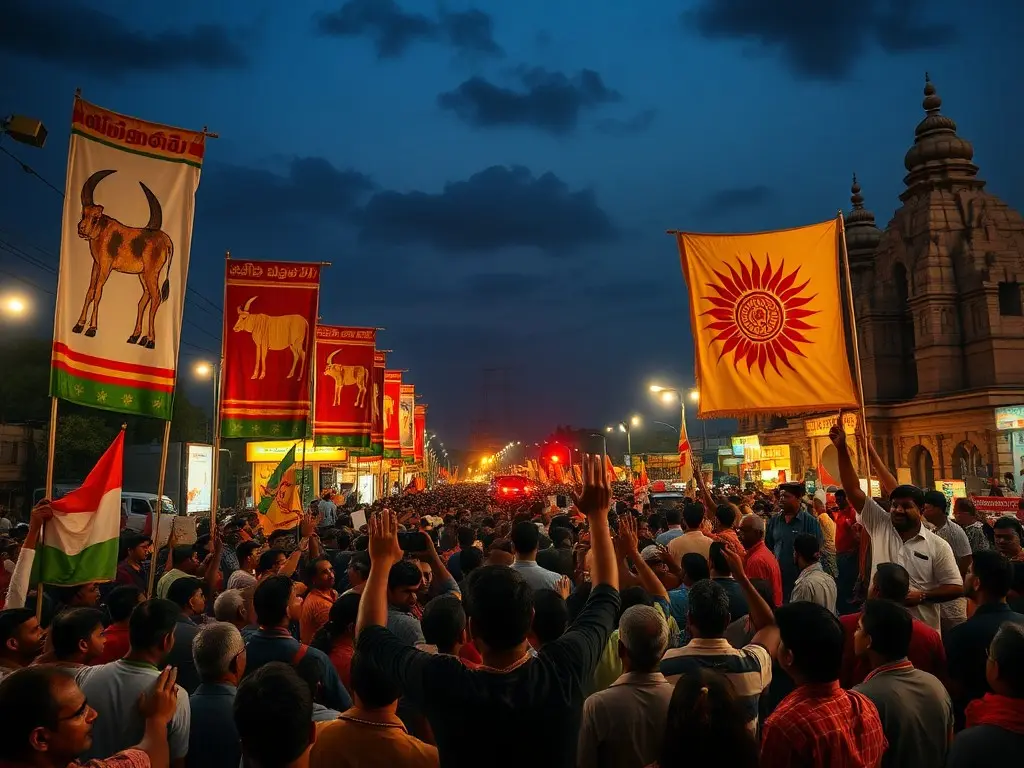
More than half of Tamil Nadu’s AIADMK MLAs rebelled to support Chief Minister C Joseph Vijay’s TVK-led coalition in a recent Assembly floor test, formalizing a split in the AIADMK amid rising TVK influence. The Dravidian ideology, rooted in anti-Brahminism, social justice, and Tamil identity, has shaped the state’s politics for over a century, evolving through movements like the Justice Party, Dravidar Kazhagam (DK), and Dravida Munnetra Kazhagam (DMK).
Tamil Nadu’s political landscape shifted as 25 AIADMK MLAs defied party orders to back Chief Minister C Joseph Vijay’s Tamilaga Vettri Kazhagam (TVK)-led coalition during a critical Assembly floor test on Wednesday. The defection solidified a split in the AIADMK, reducing its influence while elevating TVK’s role in the state’s governance. The Dravidian movement’s roots trace back to 1916 with the Justice Party, formed by non-Brahmin elites resisting Brahmin dominance in government and public spheres. In 1925, E V Ramasamy Naicker, or Periyar, launched the Self-Respect Movement, advocating anti-caste politics, atheism, and Tamil cultural distinctiveness from North Indian traditions. The movement merged with the Justice Party in 1944 to form the Dravidar Kazhagam (DK), which pushed for an independent Dravida Nadu encompassing Tamil, Malayalam, Telugu, and Kannada speakers. Internal conflicts within the DK led to its split in 1949 when C N Annadurai, or Anna, broke away to form the Dravida Munnetra Kazhagam (DMK). Annadurai clashed with Periyar over political engagement, the latter’s support for British rule, and personal disputes, including Periyar’s marriage to a much younger assistant. The DMK retained the Dravidian ideology but softened Periyar’s atheism, adopting a stance of ‘one community, one god,’ and later abandoning secessionist demands after the 1962 Sino-India war. The movement’s opposition to Hindi imposition in schools in 1938 became a defining issue, galvanizing mass protests and cementing its anti-establishment identity. Vijay’s TVK now invokes Periyar’s legacy, promising ‘real, secular social justice,’ while the AIADMK’s fragmentation underscores the enduring influence of Dravidian ideology in Tamil Nadu’s political DNA.
This content was automatically generated and/or translated by AI. It may contain inaccuracies. Please refer to the original sources for verification.