How the war in Iran could endanger one of Earth’s most unique ecosystems
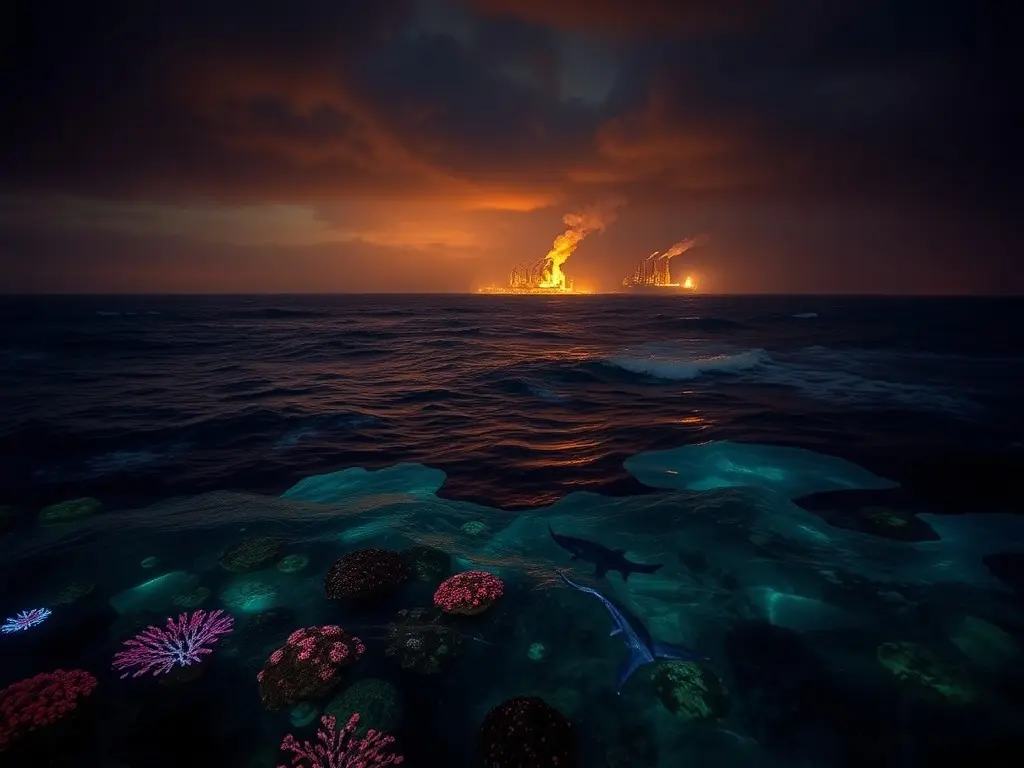
The war in Iran has escalated risks to the Persian Gulf’s unique ecosystems, including oil spills, mining near the Strait of Hormuz, and missile threats to Iran’s nuclear power plant, which could trigger radiation leaks. Scientists warn that the Gulf’s rare marine life, including heat-resistant corals and whale sharks, may be lost, along with potential genetic insights for global climate resilience.
The ongoing conflict in Iran has intensified threats to the Persian Gulf’s fragile ecosystems, already under pressure from extreme conditions and human activity. Mines deployed in the Strait of Hormuz, oil spills, and missile strikes near Iran’s nuclear power plant—located on the coast—pose immediate risks, including potential radiation contamination. The Gulf’s marine life has evolved to survive extreme heat, salinity, and temperature swings, making it a critical case study for climate resilience. Coral species, for example, have adapted to conditions that would kill tropical reefs elsewhere, offering genetic clues for preserving global reefs as temperatures rise. Kaveh Samimi-Namin, a marine biologist at Naturalis Biodiversity Center, warns that further environmental disruption could push these species to collapse. Beyond corals, the Gulf hosts seagrass meadows, mangrove forests, and mudflats vital for migratory birds, as well as hundreds of whale sharks. Bernhard Riegl, a marine biologist with decades of Gulf research, describes the region as an ‘evolutionary gold mine,’ where species have thrived in conditions resembling future global climate scenarios. Mohammad Reza Shokri, of Shahid Beheshti University, notes that the Gulf’s biodiversity is often underestimated despite its harsh environment. The conflict’s escalation—including oil spills and military activity—threatens these ecosystems, risking irreversible damage. Scientists emphasize the Gulf’s role as a natural laboratory for studying climate adaptation, with potential global implications for conservation efforts. Without intervention, the loss of these unique species could eliminate critical genetic resources for future environmental resilience.
This content was automatically generated and/or translated by AI. It may contain inaccuracies. Please refer to the original sources for verification.