How your postcode could make or break EV ownership
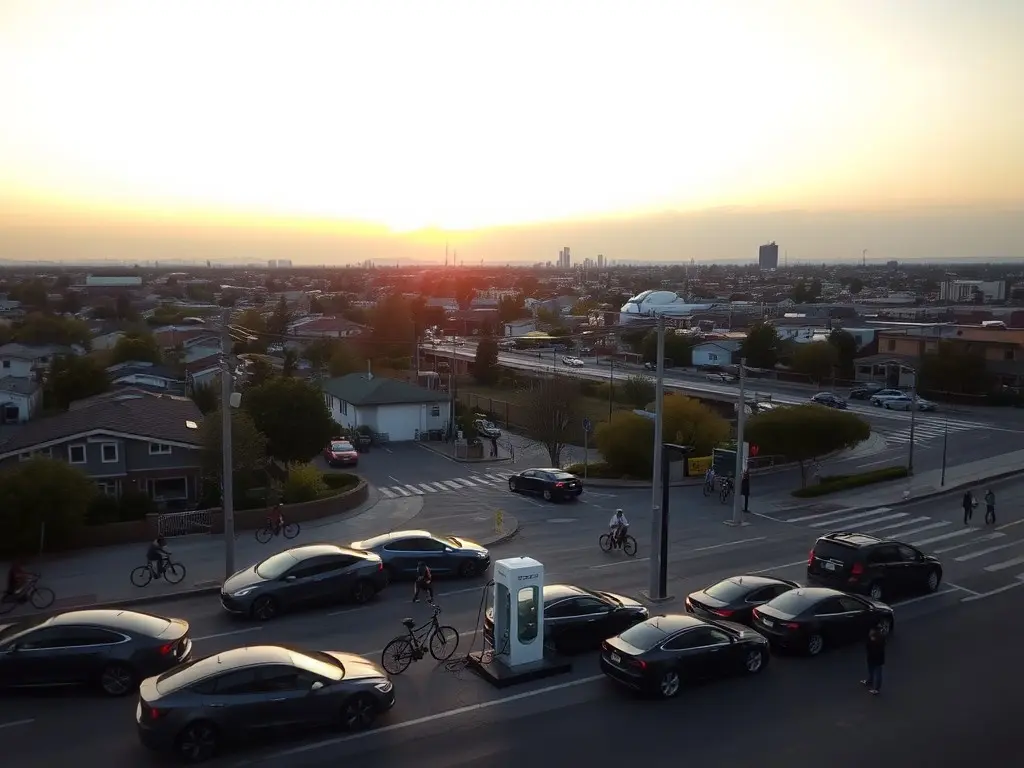
ROLLiN Insurance ranked Australia’s capital cities on EV friendliness, revealing Canberra leads in charger availability while Darwin has the highest charging costs. The Electric Vehicle Council and NALSPA highlight infrastructure gaps and shifting EV adoption trends among blue-collar and outer-suburban communities, with government incentives set to change in 2027.
ROLLiN Insurance analyzed Australia’s capital cities to determine which are most friendly for electric vehicle (EV) ownership, factoring in charger availability, charging costs, EV ownership rates, and growth since 2021. Canberra topped the rankings, followed by Perth, Sydney, Adelaide, and Brisbane, while Melbourne placed sixth despite its size. Hobart and Darwin ranked lowest, with Darwin drivers facing the highest charging costs at $0.77 per kilowatt-hour, nearly four times more expensive than Sydney-Ryde’s $0.22/kWh. The data underscores growing disparities in EV accessibility across Australia. Aman Gaur, Head of Legal, Policy, and Advocacy at the Electric Vehicle Council, emphasized the need for a coordinated national EV infrastructure plan. Key priorities include improving charging access in regional areas during peak travel times, expanding kerbside and apartment building charging, and dedicating points for EV trucks and heavy vehicles. Charging costs vary significantly by location, with Sydney-Ryde offering the cheapest rates at around $0.22/kWh, while Darwin’s $0.77/kWh rate makes full charges for a 60kWh EV cost approximately $46. Meanwhile, EV adoption is expanding beyond wealthy inner-city drivers, with strong uptake in outer-suburban growth areas like Tarneit and Point Cook in Victoria, Marsden Park and Kellyville in New South Wales, and Springfield Lakes in Queensland. NALSPA CEO Rohan Martin noted that the EV Discount is most relied upon by blue-collar workers, financially stretched families, and culturally diverse communities. The discount reduces tax and GST on EVs and running costs, offering critical savings for eligible buyers. The Albanese Government has confirmed the discount will remain in full for another year before phased changes begin in April 2027, raising questions about future affordability for current beneficiaries. Industry experts warn that without improved infrastructure and sustained incentives, Australia risks leaving many regions and demographics behind in the EV transition. The shift toward broader adoption highlights the need for targeted policies to ensure equitable access to electric mobility across the country.
This content was automatically generated and/or translated by AI. It may contain inaccuracies. Please refer to the original sources for verification.