Huawei reveals chip breakthrough designed to sidestep tough US sanctions
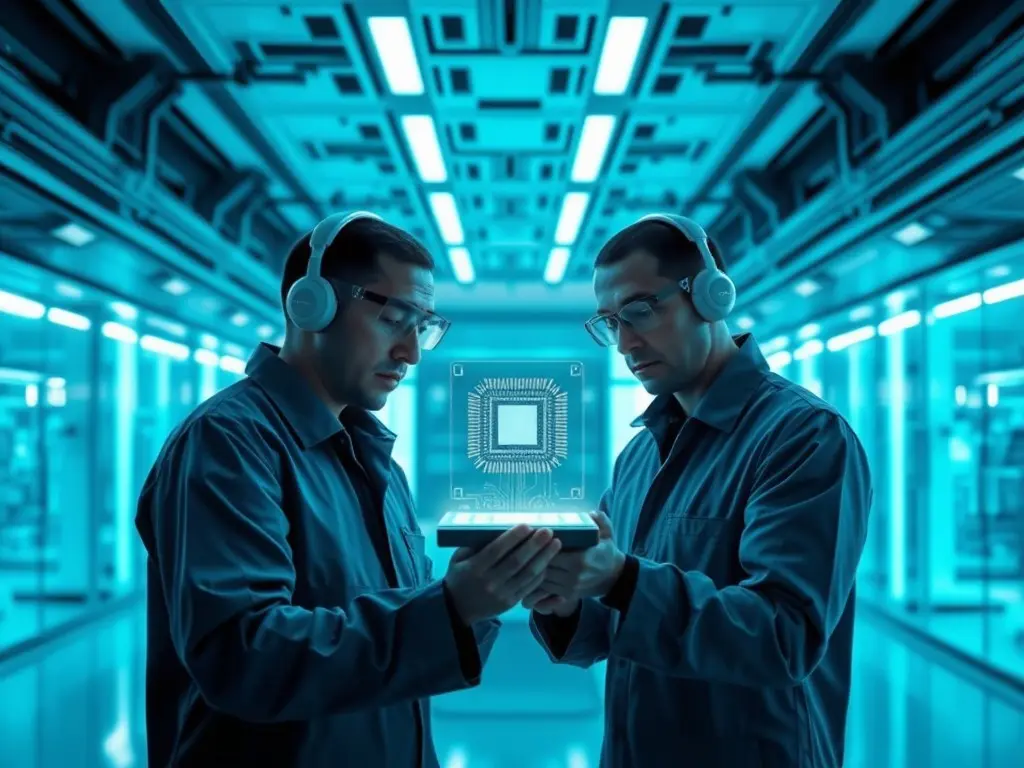
Huawei announced a new chipmaking technique called 'Tau Scaling Law' or 'Hers Law,' claiming it can produce chips equivalent to 1.4nm by 2031 without relying on US-sanctioned EUV machines. The company’s Kirin chip series will adopt this 'LogicFolding' architecture in its next iteration, aiming to compete with Taiwan’s TSMC despite ongoing US restrictions.
Huawei has revealed a breakthrough in semiconductor technology that could bypass US sanctions by eliminating the need for extreme ultraviolet lithography (EUV) machines. The company’s semiconductor division head, He Tingbo, announced at the International Symposium on Circuits and Systems (ISCAS) in Shanghai that Huawei will produce chips equivalent to next-generation 1.4-nanometer (1.4nm) ones by 2031, a timeline that outpaces Taiwan’s TSMC, which expects to achieve the same by 2028. Huawei’s new approach, called 'Tau Scaling Law' or 'Hers Law,' shifts focus from shrinking chip size to optimizing communication speed between components. This challenges Moore’s Law, which relies on transistor density, and instead prioritizes efficiency in signal transmission. The company’s next Kirin chip iteration, launching in autumn, will fully adopt this 'LogicFolding' architecture. He Tingbo acknowledged past frustrations due to US sanctions but expressed confidence in Huawei’s ability to compete in mobile and AI computing over the next decade. She cited China’s ancient Dujiangyan irrigation system as inspiration, framing the company’s challenges as solvable with long-term innovation. However, scaling the technology remains difficult, requiring new design tools and addressing overheating issues. The breakthrough underscores Huawei’s ambition to lead in the global chip race, even without immediate product launches. Analyst George Chen of The Asia Group noted that Huawei’s strategy reflects a shift from following industry trends to setting them. The announcement comes amid ongoing US-China tensions, where Huawei’s access to advanced semiconductor technology has been restricted since 2019.
This content was automatically generated and/or translated by AI. It may contain inaccuracies. Please refer to the original sources for verification.