Humanoid Robots Investment Race Heats Up: Goldman 6x Forecast, China Leads With Spy Law
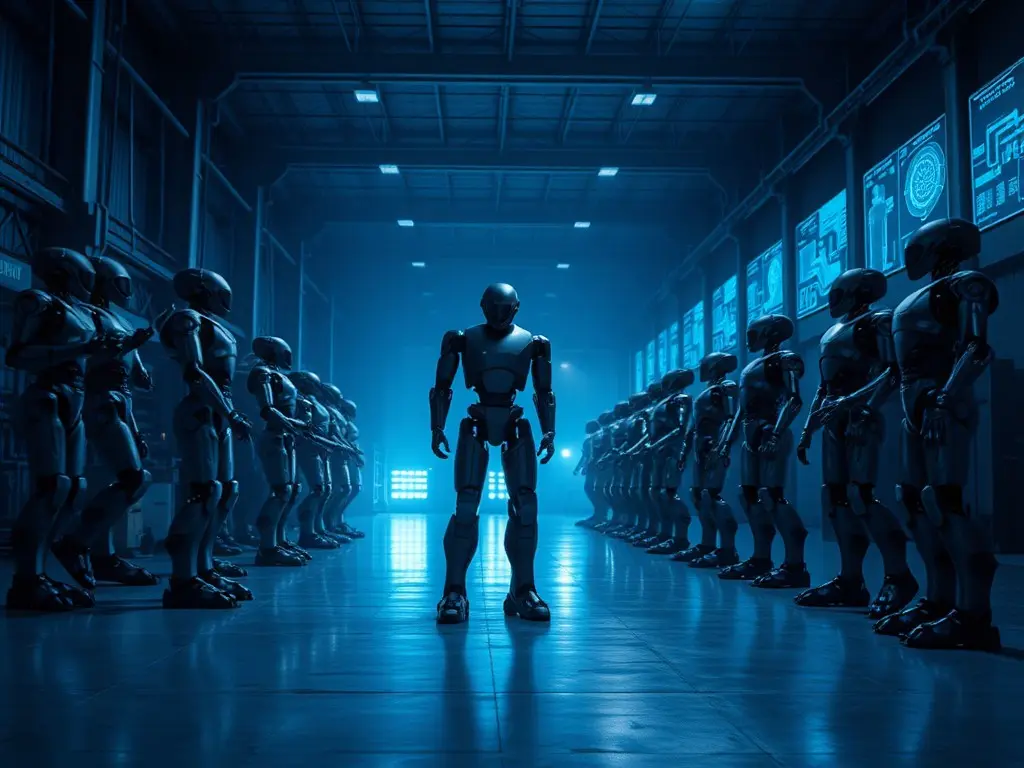
Goldman Sachs raised its 2035 humanoid robotics market forecast to $38 billion, a sixfold increase, citing AI advancements and cost reductions. Institutional investors are seeing commercial deployment milestones, with Agility Robotics, Boston Dynamics, and Figure AI securing major contracts for industrial use.
Wall Street analysts and major investors are intensifying their focus on humanoid robotics, viewing it as a pivotal sector in the AI revolution. Goldman Sachs revised its 2035 market forecast for humanoid robotics upward to $38 billion, a sixfold increase from $6 billion, attributing the growth to AI advancements and declining costs. The bank now projects over 250,000 shipments by 2030, primarily for industrial applications. SoftBank CEO Masayoshi Son reinforced this optimism, stating that humanoid and industrial robotics—with physical AI at their core—will likely produce the next trillion-dollar company. Wedbush Securities managing director Dan Ives similarly called humanoid robots 'the golden goose for physical AI,' emphasizing its potential as one of the biggest AI-driven market opportunities. Commercial deployments are accelerating, providing tangible evidence of the market’s viability. Agility Robotics’ Digit robot has handled over 100,000 totes at a GXO Logistics facility since its June 2024 deployment. In February 2026, Agility signed a Robots-as-a-Service agreement with Toyota Motor Manufacturing Canada, deploying seven Digit units at a Woodstock, Ontario plant to manage material logistics for RAV4 production. Boston Dynamics’ Atlas robot has had its entire 2026 production allocation committed, with Hyundai securing early deployments to sort car parts in live production settings. Figure AI’s Figure 02 completed an 11-month deployment at a BMW plant in South Carolina, assisting in assembling over 30,000 cars and handling more than 90,000 sheet metal parts. Demand for these robots is already outpacing supply, signaling strong market potential. The cost efficiency of these robots is driven by a software innovation called sim-to-real transfer. Companies like Agility Robotics, Figure AI, and NVIDIA train robots entirely in physics simulators, then transfer the learned behaviors directly to physical hardware without additional adjustments. Agility’s Digit uses an LSTM-based neural network trained in NVIDIA’s Isaac Sim, achieving decades of simulated experience in just days. Figure AI employs reinforcement learning with thousands of virtual robots, applying the final policy directly to factory hardware. This approach has reduced costs from $150,000 to $40,000 per robot, making industrial adoption more feasible.
This content was automatically generated and/or translated by AI. It may contain inaccuracies. Please refer to the original sources for verification.