Humanoid robots 'the future' of car making, says BMW
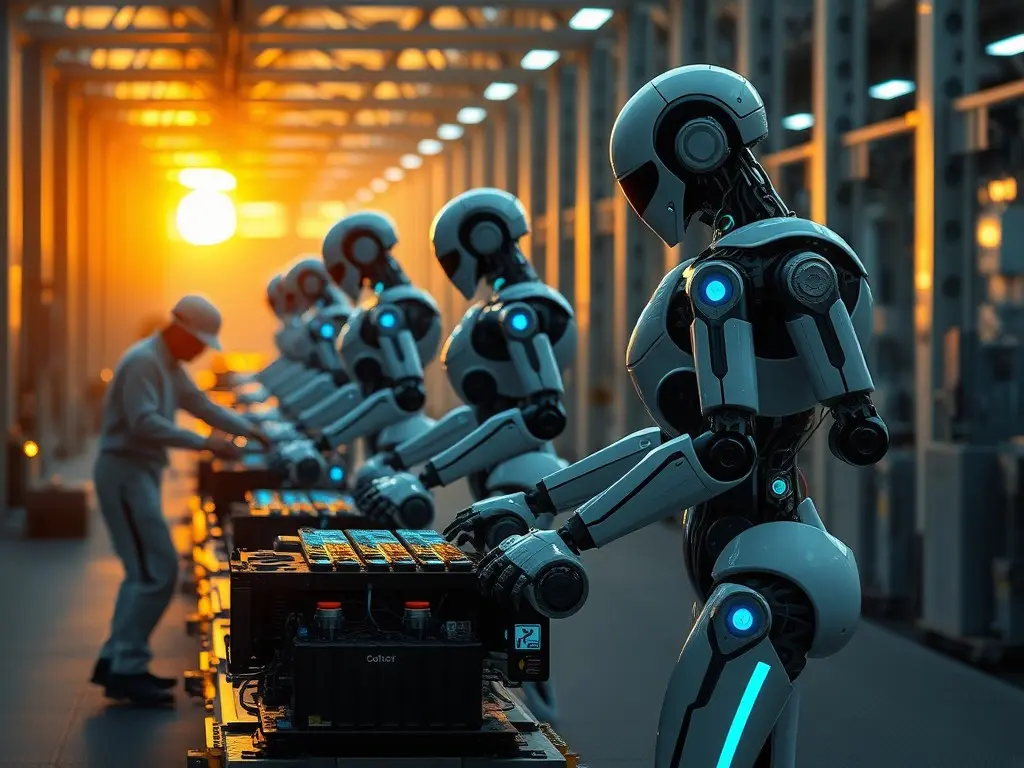
BMW will deploy humanoid robots from Hexagon Robotics at its Leipzig factory this summer, marking the first such use in European car manufacturing. The Aeon robots, trained via imitation learning and simulation, will handle repetitive tasks like battery assembly to address labor shortages and reduce physical strain on workers.
BMW is introducing humanoid robots into its car manufacturing process for the first time in Europe, with two Hexagon Robotics Aeon robots set to begin production tasks at its Leipzig factory this summer. The robots, standing 1.65 meters tall and weighing 60 kilograms, are designed to replicate human movements and capabilities, equipped with 21 sensors including cameras, radar, and force sensors. Their deployment follows a training process combining teleoperation—where human movements are recorded—and simulation using Nvidia software, with reinforcement learning refining their task execution. The Aeon robots were developed to integrate seamlessly into existing assembly lines, avoiding costly factory redesigns. Their cost-effectiveness is highlighted by Bill Ray, a Gartner analyst, who notes that traditional robotic systems required extensive infrastructure changes, whereas humanoid robots can adapt to current workflows. BMW’s Michael Nikolaides, head of process management and digitalization, emphasized that the robots’ human-like form allows them to operate in spaces designed for human workers, addressing repetitive or physically demanding tasks. At BMW, the robots will focus on feeding parts to manufacturing tools and performing pick-and-place operations, particularly in battery assembly. Their battery life of three hours is supplemented by an automated swapping system, allowing them to operate continuously during an eight-hour shift. The technology also aims to mitigate labor shortages, with Nikolaides stating that humanoid robots could create new job opportunities, similar to past automation advancements in the industry. Hexagon Robotics’ president of robotics, Arnaud Robert, described imitation learning as a breakthrough, enabling robots to learn tasks by observing human demonstrations. This method reduces training time from months to days, aligning the robot’s movements with human techniques. While full autonomy in tasks like packing boxes remains a future goal, Ray predicts robots will soon follow simple voice instructions effectively within three to five years. Nikolaides stressed that the robots will complement human workers rather than replace them, targeting roles that are physically taxing or repetitive. The initiative reflects a broader trend in automotive manufacturing toward integrating advanced robotics to enhance efficiency and sustainability in production.
This content was automatically generated and/or translated by AI. It may contain inaccuracies. Please refer to the original sources for verification.