Humanoids dance and thread needles as Japanese robotics developers look to outdo Chinese
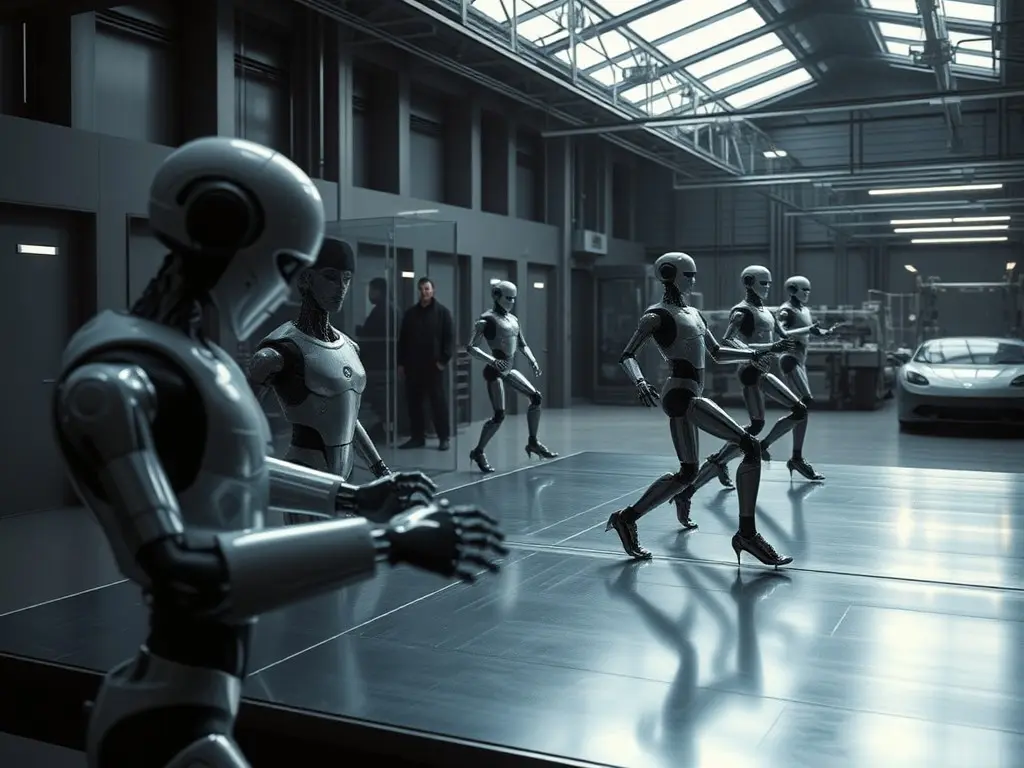
Japanese robotics developers showcased advanced humanoid robots at the Humanoids Summit Tokyo, including needle-threading hands and dancing models, but face competition from Chinese firms like Booster Robotics and Unitree, which offer cheaper mass-produced alternatives. While Japan excels in precision and cultural acceptance of robotics, Chinese companies are leading commercial adoption, with Japanese firms like Honda and Toyota struggling to match their market impact.
The Humanoids Summit Tokyo opened with Japanese robotics developers displaying cutting-edge humanoid technology, including mechanical hands capable of threading needles and childlike robots performing dances. However, Chinese companies like Booster Robotics and LimX Dynamics dominated the event, refining technology initially developed in Japan and the U.S. for cost-effective mass production. This mirrors Japan’s past struggles in industries like consumer electronics and electric vehicles, where it once led but later lost ground to competitors. Among the dozens of participating companies, including Boston Dynamics and Toyota, Chinese firms showcased affordable robots like the Mini Pi Plus from High Torque, priced at $5,500. While these robots lack practical applications like industrial or household tasks, their affordability and accessibility have given them an edge. Japanese firms, such as Honda, demonstrated durable and precise technology, like a four-fingered robotic hand that can screw bolts or thread needles, but face challenges in commercializing their innovations. A notable example of Chinese influence in Japan is GMO, a Tokyo-based AI and robotics company collaborating with Unitree, a Chinese firm, to develop a humanoid for airport cargo and other tasks. The goal is to create robots interchangeable with human labor, addressing Japan’s worsening labor shortage. Unitree also displayed a four-legged dog-like robot called the stellar explorer, further highlighting China’s advancements in the field. Experts attribute Japan’s early success in robotics to its manufacturing finesse and societal acceptance of AI, with only 28% of Japanese people expressing anxiety about AI compared to 50% in the U.S. However, Japan’s isolationist approach to innovation, referred to as the 'Galapagos syndrome,' has limited its global market reach. Osaka University Professor Hiroshi Ishiguro emphasized Japan’s cultural receptiveness to robots, noting that people do not discriminate against them, but acknowledged the competitive threat from China. Despite the challenges, Japanese companies like Honda continue to innovate, with their robotic hands outperforming rivals in durability and power. Ishiguro’s robotic clone, dressed in black, mirrored his responses to questions about robotics, reinforcing the idea that robots will coexist with humans. The summit underscored Japan’s strengths in robotics while revealing the urgent need to bridge the gap with Chinese competitors in commercial applications.
This content was automatically generated and/or translated by AI. It may contain inaccuracies. Please refer to the original sources for verification.