Hydrogen-fueled drone submarine with 17 sensors could scan Hormuz for naval mines
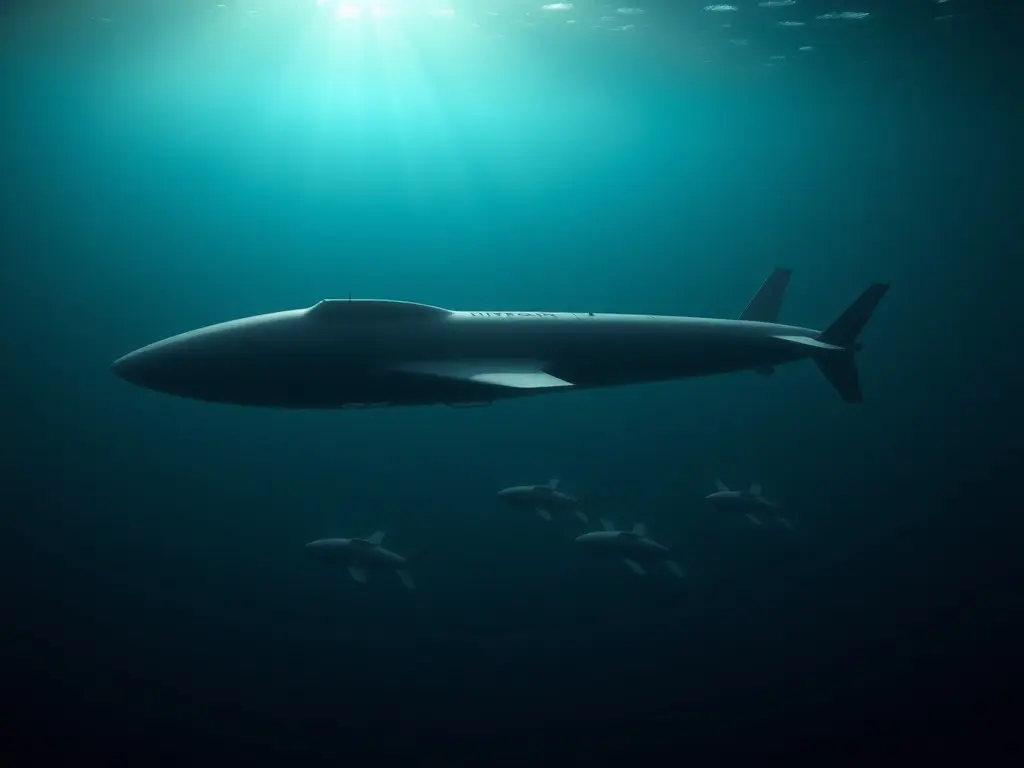
Euroatlas unveiled Greyshark, a hydrogen-fueled autonomous underwater vehicle (AUV) capable of 16-week endurance and equipped with 17 sensors for mine detection, which could map the Strait of Hormuz in 24 hours using just six units. The system, set for NATO trials in August 2026, aims to replace costly manned missions with swarm-capable, sensor-fused technology for persistent maritime surveillance.
Euroatlas, a German defense technology company based in Bremen, has introduced Greyshark, the world’s longest-endurance unmanned submarine, designed for autonomous underwater surveillance. Powered by hydrogen fuel cells, the AUV can operate submerged for up to four months without resupply, covering 1,100 nautical miles at 10 knots or 10,700 nautical miles at 4 knots. Its 17 high-resolution sensors generate seabed images with 1.6-inch-per-pixel resolution, enabling detection of underwater hazards, mines, and narco-submarines. Greyshark’s primary mission is persistent monitoring in contested waters, such as the Strait of Hormuz, where Iran deployed mines in April 2026 that remain undetected. Verineia Codrean, Euroatlas’ head of strategy, stated that six Greyshark units could map the entire strait in under 24 hours, reducing reliance on dangerous manned assets. The AUV’s autonomy also eliminates crew risks while cutting operational costs. The system integrates acoustic sensors, LiDAR, pressure sensors, and side-mounted detection systems into a fused intelligence network, enhancing environmental data accuracy. Niko Schmidt, Euroatlas’ sales manager, highlighted its swarm capability, allowing multiple AUVs to operate simultaneously for complex missions. Sensor fusion improves detection precision, making it ideal for tracking narco-submarines or protecting critical infrastructure like pipelines and cables. Greyshark’s technology addresses the maritime domain’s need for persistent awareness, which Schmidt called unattainable with manned assets alone. NATO nations have expressed interest, and sea trials are scheduled for August 2026 to validate endurance and autonomous operations. If successful, the AUV could revolutionize underwater surveillance, reducing costs and risks for naval forces worldwide.
This content was automatically generated and/or translated by AI. It may contain inaccuracies. Please refer to the original sources for verification.