Important things to know about humanoids
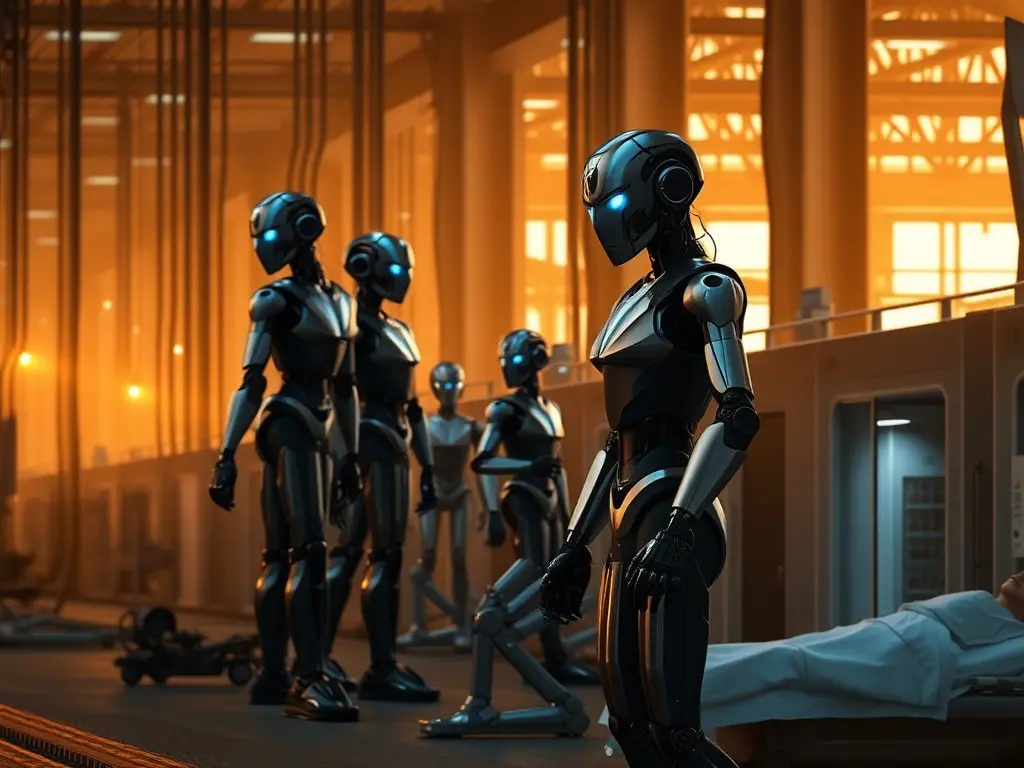
A Barclays report projects the humanoid robotics market could reach $200 billion by 2035, driven by AI, battery tech, and falling costs, with China leading deployments in manufacturing and logistics. Production costs have dropped from $3 million to $100,000 per robot, enabling broader commercial adoption across industries like healthcare and hospitality.
The humanoid robotics market could grow to $200 billion by 2035, according to a Barclays report, as advancements in artificial intelligence, robotics, and battery technology accelerate adoption. Unlike traditional industrial robots, humanoids are designed to operate in human-built environments, reducing infrastructure needs for sectors like factories, warehouses, and healthcare. Demand is expected to rise due to aging populations, urbanization, and labor shortages in manufacturing, logistics, agriculture, and healthcare. Deployment is split into two phases: 2025–2030 will focus on industrial applications, while later expansion may include healthcare, hospitality, and household use as safety improves. Production costs have fallen sharply, from about $3 million per robot a decade ago to roughly $100,000 today, with Chinese manufacturers driving prices lower through integrated supply chains. China currently dominates the market, accounting for 85% of global deployments in 2025, with around 15,000 units installed this year and projections of 60,000 in 2026. The report highlights AI computing systems, actuators, and batteries as key components, with actuators representing the largest production cost. The technology is seen as a way to automate entire jobs rather than isolated tasks, expanding its potential across industries. Barclays also notes a broader physical AI ecosystem, valued at up to $1 trillion by 2035, as humanoid robots integrate with existing workflows and infrastructure.
This content was automatically generated and/or translated by AI. It may contain inaccuracies. Please refer to the original sources for verification.