In Other Worlds by Liam Young Reimagines Cities, Landscapes, and Climate Futures at the Barbican Centre
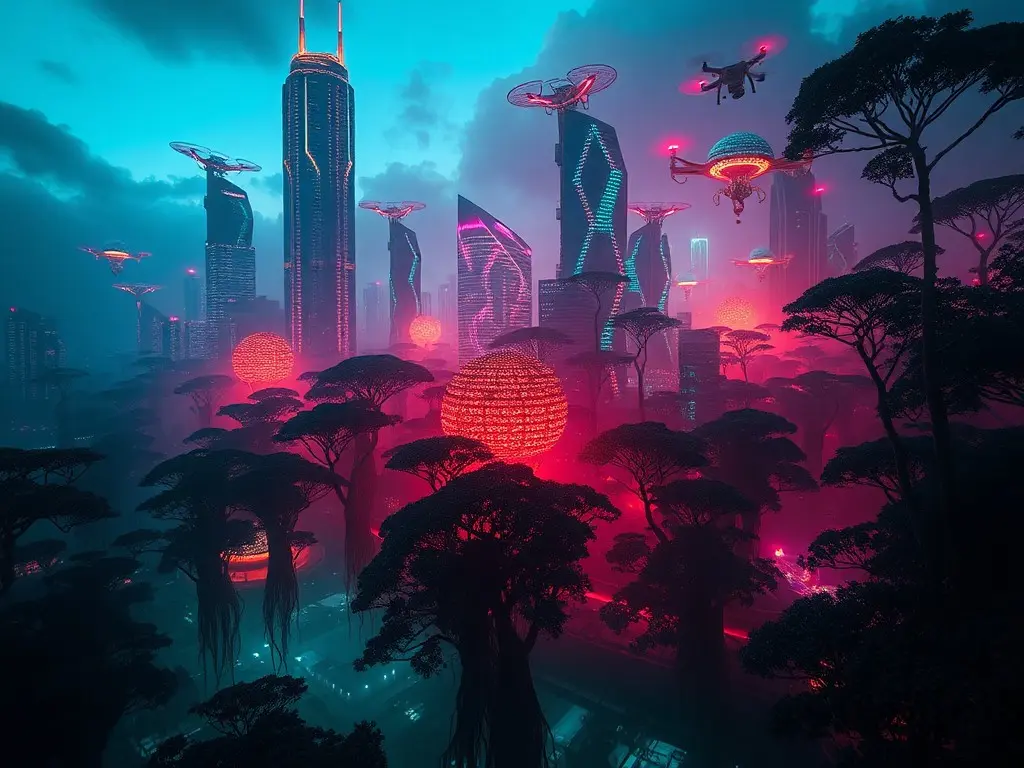
The Barbican Centre will host *In Other Worlds*, an immersive exhibition by artist Liam Young from May 21 to September 6, 2026, exploring speculative futures through architecture, climate, and planetary urbanism. The show spans three locations, featuring large-scale projections, LED installations, and collaborative works like *World Machine* and *Planet City* to reimagine cities, landscapes, and ecological systems.
The Barbican Centre in London has announced *In Other Worlds*, a major exhibition by speculative architect and filmmaker Liam Young, running from May 21 to September 6, 2026. Occupying three sites—the Silk Street Entrance, The Curve gallery, and Car Park 5—the project transforms the Brutalist landmark into a cinematic exploration of architecture, climate futures, and planetary urbanism. Developed with writers, scientists, and performers, it uses projections, LED installations, and speculative artifacts to question environmental and technological change. The exhibition frames fiction as a tool for imagining possible futures, blending architecture, cinema, and research. Visitors begin at the Silk Street entrance with an LED installation depicting fictional workers in speculative worlds, then move through The Curve and into the Barbican’s infrastructural spaces. Large-scale moving-image works, including a newly commissioned 12-meter-wide film titled *World Machine*, visualize AI-driven energy systems reshaping landscapes globally. Other key pieces include *Planet City (2021)*, which imagines consolidating the world’s population into a hyper-dense metropolis while restoring wilderness elsewhere, and *The Great Endeavour (2023)*, a global carbon-removal infrastructure project. *After the End (2024)*, a 50,000-year speculative timeline created with Aboriginal actor Natasha Wanganeen, traces Australia’s future through collaborative storytelling. The project builds on Young’s practice at the intersection of architecture, cinema, and environmental research. By avoiding fixed predictions, it encourages audiences to reconsider relationships between cities, machines, and ecological systems. The exhibition’s spatial design guides visitors through interconnected speculative worlds, using immersive technology to provoke discussion on climate adaptation, automation, and collective survival.
This content was automatically generated and/or translated by AI. It may contain inaccuracies. Please refer to the original sources for verification.