Inaugural Medina Triennial transforms small village in upstate New York
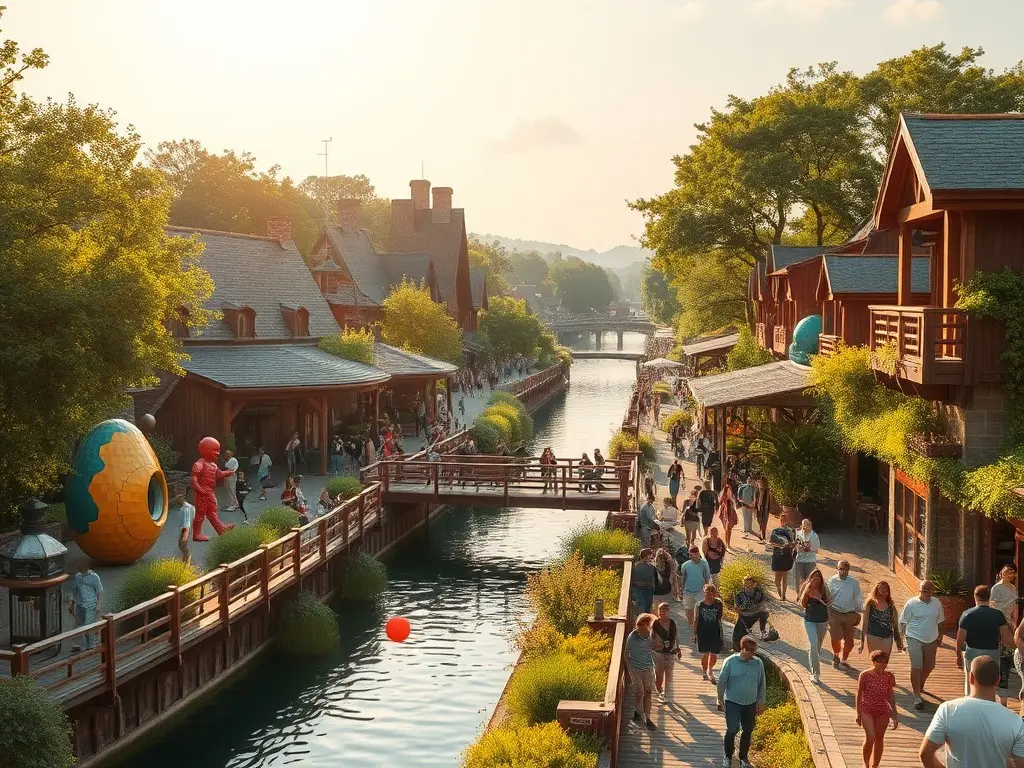
The Medina Triennial, a new art festival in upstate New York, opens June 6 and runs until September 7, focusing on social and ecological systems with 39 global artists. Organized by the New York State Canal Corporation, it aims to revive tourism along the Erie Canal while serving as a model for public cultural investment in rural areas.
The Medina Triennial, a first-of-its-kind art festival, launches June 6 in Medina, New York, a village of 6,000 near Buffalo, and continues until September 7. Initiated by the New York State Canal Corporation as part of a $300 million tourism push for the Erie Canal’s bicentennial, the event operates on a $2 million budget funded by regional foundations and international grantmakers like the UK’s Outset and the Netherlands’ Mondriaan Fund. Curators Kari Conte and Karin Laansoo designed the festival to highlight maintenance and labor systems, inspired by artist Mierle Laderman Ukeles, who worked with New York City’s sanitation department since 1977. Titled *All That Sustains Us*, the triennial features 39 artists and collectives creating works tied to Medina’s social, ecological, and infrastructural sustainability. Unlike traditional art shows, the exhibition avoids abstract paintings, instead focusing on community-relevant ideas. The art is displayed across ten sites, including parks, a YMCA, a church, and a former high school, with a central hub in a historic hotel building furnished with reclaimed Erie Canal wood. The festival draws parallels to Japan’s Echigo-Tsumari Triennale, which revitalized rural regions through local participation and nature integration, though Medina’s scale is smaller and confined to a half-mile radius. Medina, once a key Erie Canal trade stop and known for its sandstone, remains obscure today, with its name pronounced ‘die’ instead of ‘dee.’ The triennial aims to rebrand the village as a cultural destination while demonstrating how public agencies like the New York Power Authority can invest in art as they would in infrastructure. Conte described the project as a ‘crazy idea’ that could inspire similar initiatives nationwide.
This content was automatically generated and/or translated by AI. It may contain inaccuracies. Please refer to the original sources for verification.