India Is Buying An AI Course Every 3 Minutes. Is It Really Paying Off?
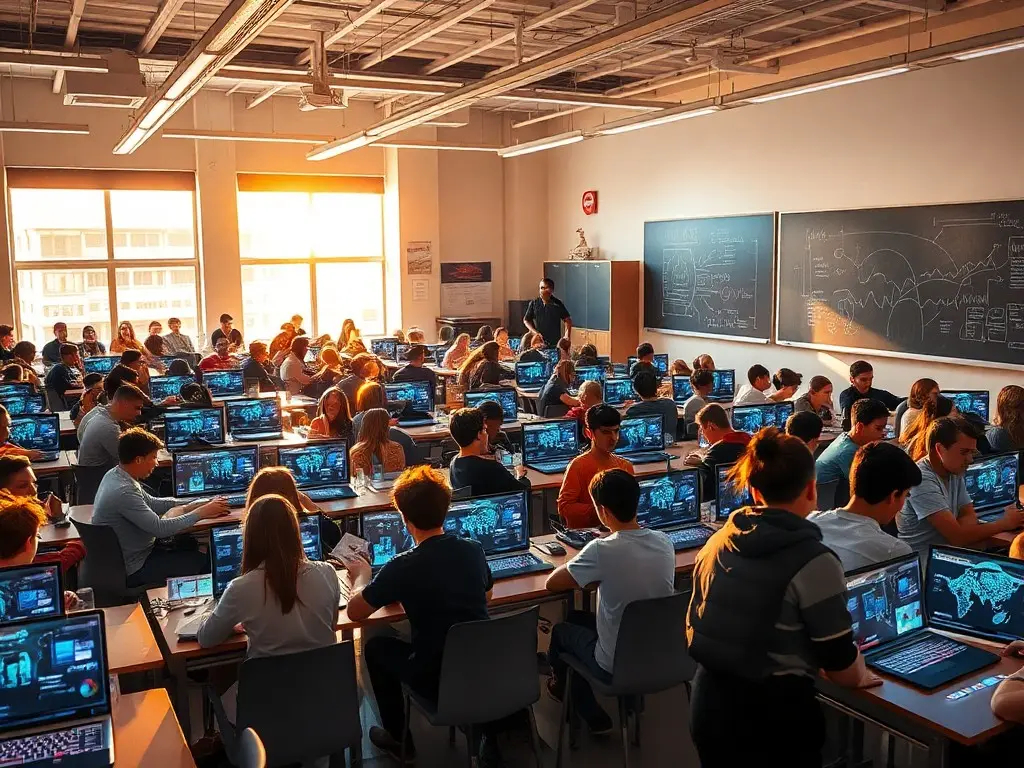
India is experiencing a surge in AI course enrollments, with three registrations every minute on platforms like Coursera, driven by career anxiety and perceived necessity for employability. Learners from diverse backgrounds, including non-technical fields, are adopting AI skills through simulations and bootcamps to improve job prospects and productivity.
India’s AI learning boom is accelerating rapidly, with 34.2 million learners on Coursera—making it the platform’s second-largest market globally—and a 21% year-over-year growth in enrollments. The country now sees three AI course registrations every minute, up from one every four minutes in 2023, reflecting a shift from curiosity-driven learning to career-critical adoption. The demand spans all professions, with students from management, commerce, and even tier-2 and tier-3 colleges enrolling in AI courses to stay competitive. Ankit Aggarwal, founder of Unstop, notes that 20-30% of recent enrollments come from non-technical backgrounds, as learners view AI as a practical tool for productivity and decision-making. Anxiety over future job markets is fueling the trend, with students like Suhani Singh and Rani Manna using AI-powered mock interviews to overcome placement failures. Singh, a 23-year-old, reported improved confidence after practicing AI-driven simulations, while Manna, also 23, credited regular assessments for better interview preparation. The shift extends beyond passive learning, with a growing preference for simulation-based training, hackathons, and outcome-oriented programs. Industry experts like Prateek Shukla of Masai School emphasize that AI is no longer seen as a niche skill but as a foundational workplace requirement, akin to Excel or coding in previous eras. This surge underscores India’s urgent push to integrate AI into education, driven by both economic necessity and the fear of being left behind in a rapidly evolving job market.
This content was automatically generated and/or translated by AI. It may contain inaccuracies. Please refer to the original sources for verification.