India needs more robotics, automation and component manufacturing to scale semiconductor ambitions: UST COO
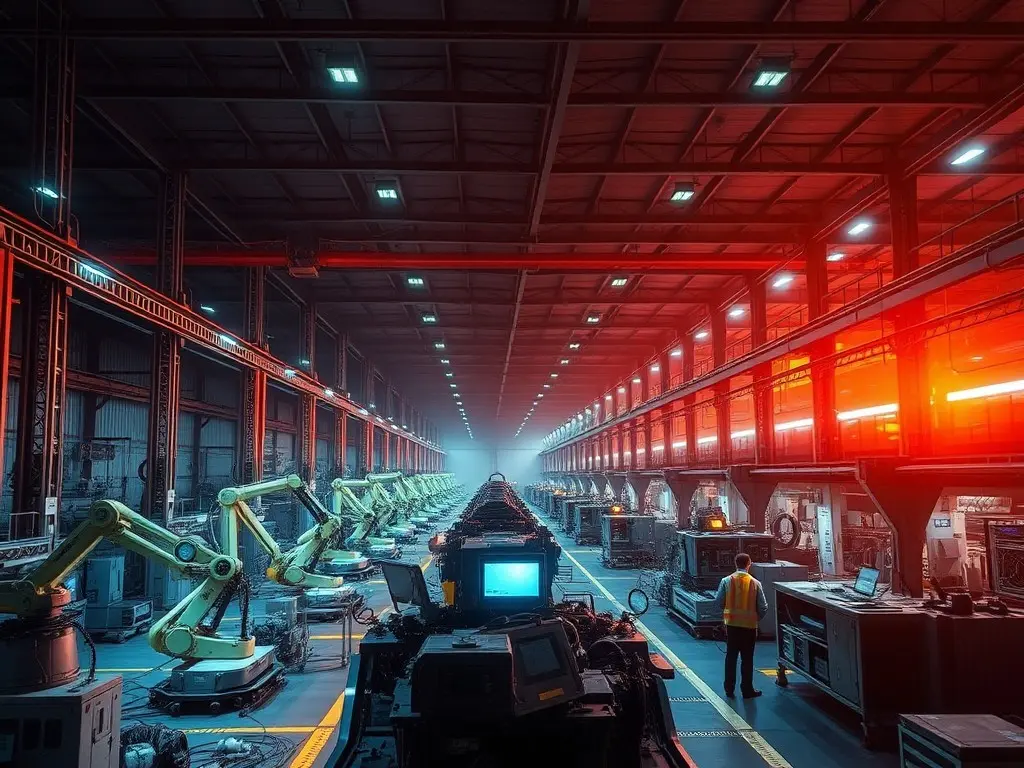
UST COO Gilroy Mathew states India must expand robotics, automation, and component manufacturing to build a globally competitive semiconductor ecosystem, citing the need for a broader industrial ecosystem and industry-academia partnerships. He highlights the phased development of a semiconductor OSAT facility in Gujarat, with plans extending to 2028, and emphasizes the importance of advanced manufacturing technologies like industrial robots for long-term competitiveness.
India’s semiconductor ambitions require significant investment in robotics, automation, and local component manufacturing to rival global hubs, according to Gilroy Mathew, Chief Operating Officer of UST. Speaking exclusively to CNBC-TV18, Mathew stressed that semiconductor development depends on a broader industrial ecosystem—including manufacturers, suppliers, universities, and technology partners—similar to successful hubs in neighboring Asian countries where thousands of companies support every stage of production. UST and Kaynes Technology are currently developing an Outsourced Semiconductor Assembly and Test (OSAT) facility in Sanand, Gujarat, inaugurated by Prime Minister Narendra Modi. The project follows a phased approach, with Phase 1 focusing on operations and customer onboarding before advancing to more complex packaging technologies. Expansion plans extend into 2028, aligning with India’s push to strengthen its semiconductor capabilities. Mathew noted that countries with advanced manufacturing rely on over a million industrial robots to enhance scale and productivity. He urged India to adopt similar automation systems, including physical AI, to remain competitive in semiconductor and AI-driven industries. The success of India’s ambitions hinges not just on fabrication and packaging but on a robust manufacturing ecosystem, he added. UST is collaborating with companies from the US, Europe, and Asia to integrate advanced technologies into India’s growing manufacturing sector. Mathew emphasized the need for industry-academia partnerships to cultivate talent and innovation, ensuring a sustainable pipeline for the industry’s future. The long-term goal is to attract like-minded partners to build a cohesive semiconductor ecosystem in India.
This content was automatically generated and/or translated by AI. It may contain inaccuracies. Please refer to the original sources for verification.