Indian Scientists Create Novel Nanomedicine To Target Breast Cancer Cells
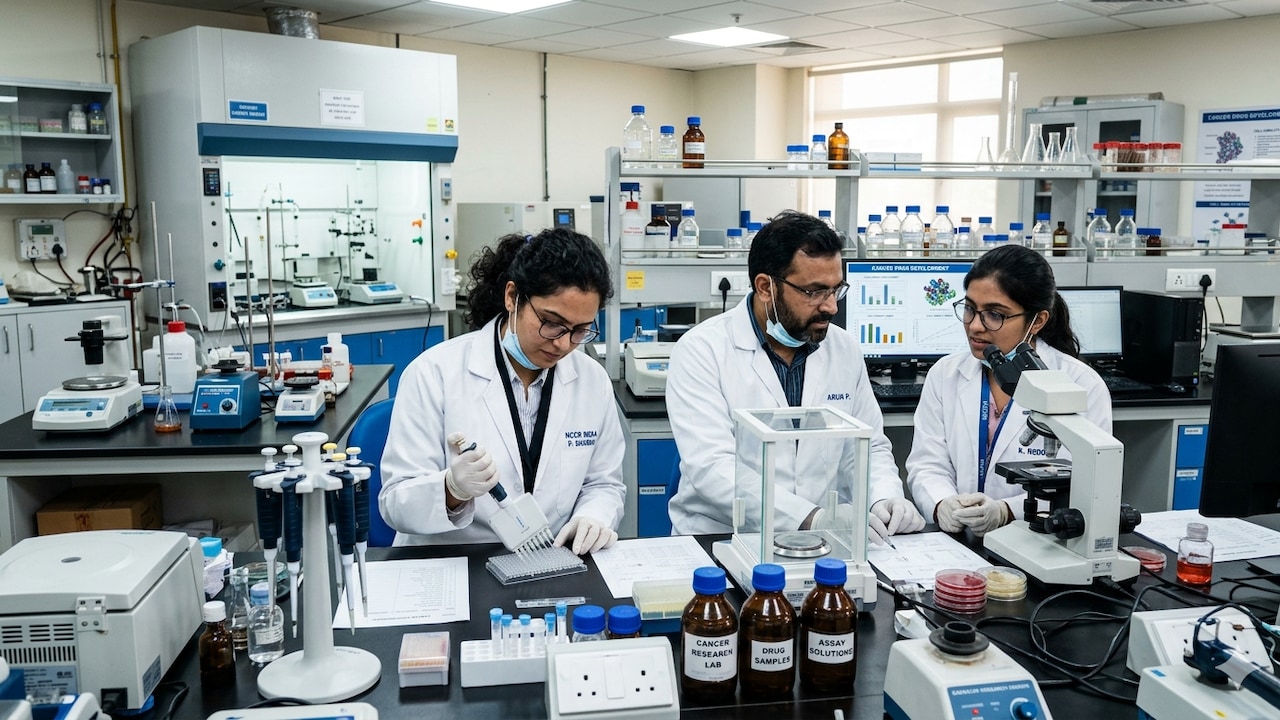
Scientists at the Agharkar Research Institute (ARI) in Pune developed a biodegradable nanoparticle-based nanomedicine that targets breast cancer cells by silencing genes MCL-1 and Survivin, showing promise in lab and animal studies. The treatment, published in *Advanced Healthcare Materials*, aims to reduce toxicity and improve precision in cancer therapy by recognizing the MUC1 protein on tumor cells.
Indian researchers at the Agharkar Research Institute (ARI) in Pune have created a novel nanomedicine designed to selectively target breast cancer cells. The therapy uses biodegradable nanoparticles to deliver gene-silencing molecules directly to tumors, focusing on two key genes—MCL-1 and Survivin—which help cancer cells evade destruction. The nanoparticles are engineered to recognize the MUC1 protein, commonly found in high amounts on breast cancer cells, ensuring precise delivery to tumor sites. Unlike traditional treatments such as chemotherapy, which can damage healthy tissues, this approach minimizes side effects by concentrating treatment at the tumor. Early lab experiments demonstrated that the nanomedicine reduced gene activity, increased cancer cell death, and slowed tumor growth. Animal studies in mice confirmed that the nanoparticles accumulated effectively at tumor sites with minimal toxicity to other organs, supporting its potential for further development. The breakthrough, published in *Advanced Healthcare Materials*, highlights the growing potential of precision medicine in cancer treatment. By targeting specific genetic pathways, the therapy may reduce the risk of tumor resistance compared to broader approaches. However, researchers emphasize that clinical trials are necessary to validate safety and efficacy in humans before the treatment can be used in patients. This development represents a significant step forward in breast cancer research, offering a more targeted and potentially less harmful alternative to current therapies. The gene-silencing nanomedicine could pave the way for future advancements in personalized cancer treatment, though additional studies are required to confirm its effectiveness in clinical settings.
This content was automatically generated and/or translated by AI. It may contain inaccuracies. Please refer to the original sources for verification.