Indigenous Leaders Warn AI Boom Repeates Patterns of Extraction
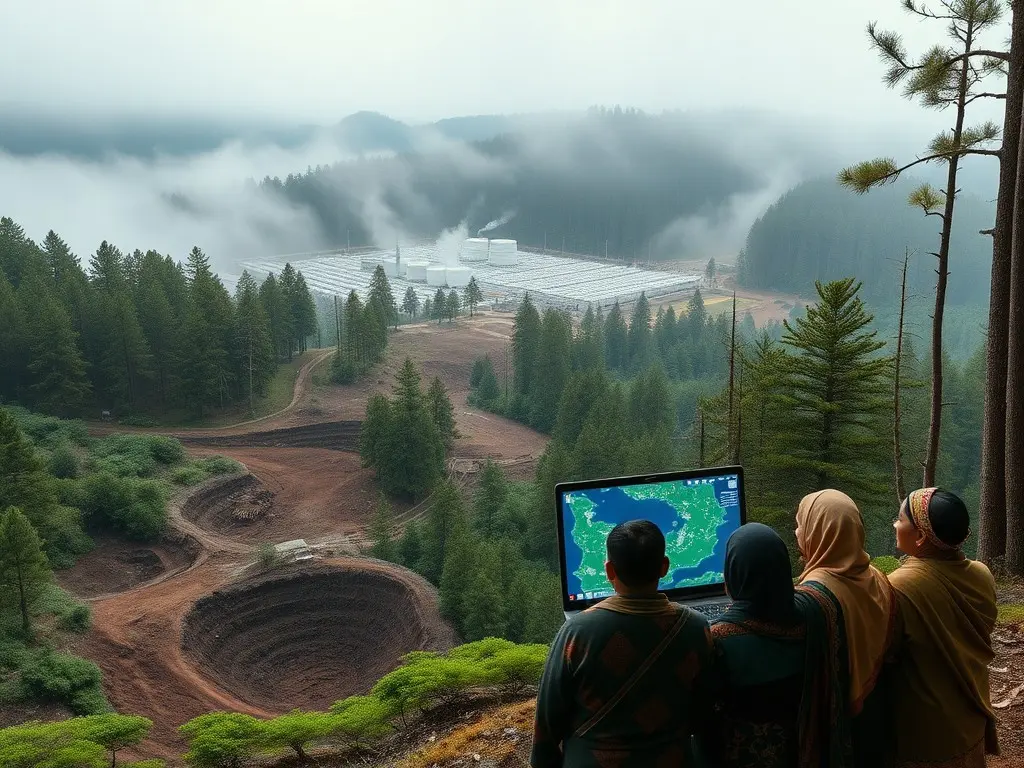
Indigenous leaders at the UN Permanent Forum on Indigenous Issues are grappling with the paradox of harnessing AI's protective capabilities while resisting the extractive forces driving its development. AI is being used by Indigenous communities to detect deforestation, track wildfires, and monitor traditional lands, but its data centers require water, energy, and critical minerals often extracted from Indigenous territories.
Indigenous communities are using artificial intelligence (AI) to detect illegal logging, track wildfires, and monitor traditional lands. However, the data centers powering AI require water, energy, and critical minerals often extracted from Indigenous territories. At the UN Permanent Forum on Indigenous Issues, leaders are wrestling with how to harness AI's benefits without fueling extractive forces. A study by Hindou Oumarou Ibrahim highlighted AI's possibilities and challenges for environmental protection. In Brazil's Acre state, Indigenous agroforestry agents use AI to combat deforestation. Similarly, Inuit communities in Nunavut and Indigenous pastoralists in Chad are combining traditional knowledge with AI models to boost climate resilience. AI can democratize access to analytical capabilities needed for data-driven modeling aligned with Indigenous views and norms, according to Lars Ailo Bongo, a professor at UiT The Arctic University in Norway.
This content was automatically generated and/or translated by AI. It may contain inaccuracies. Please refer to the original sources for verification.