Inside China’s ‘Dark Factories’: No Lights, Almost No Humans, And Robots Working 24/7
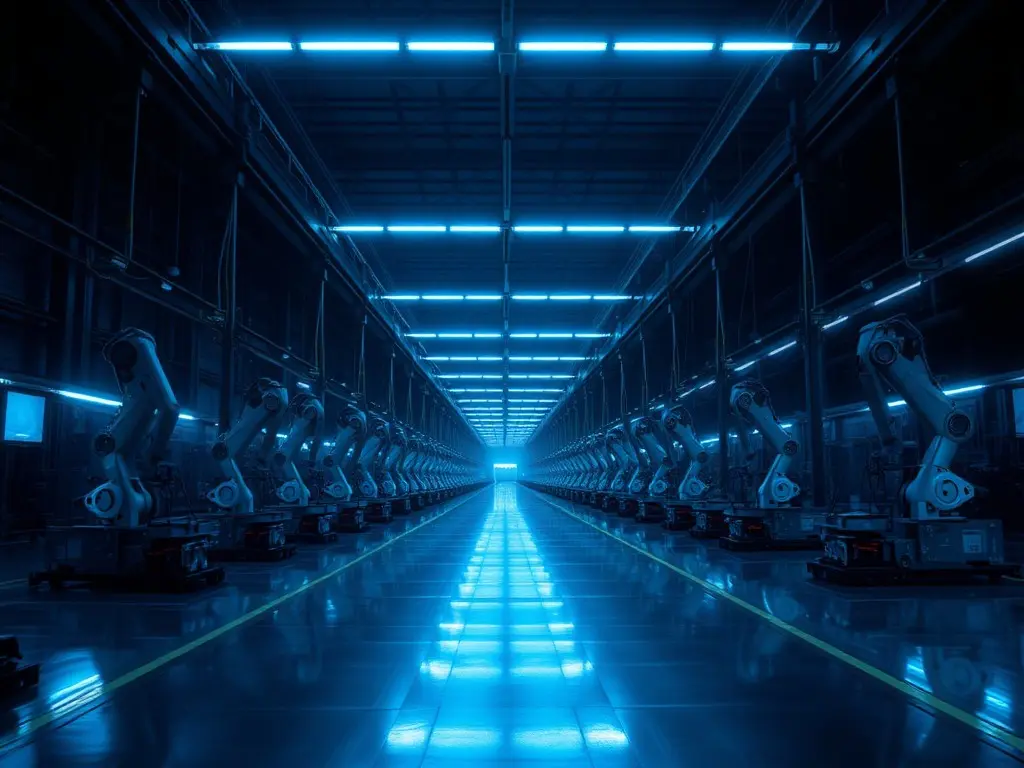
China’s ‘dark factories,’ including Xiaomi’s Changping facility, operate with near-zero human workers, producing one smartphone per second using robotic arms, AI, and automated systems. Companies like Foxconn, BYD, and Changying Precision Technology are replacing tens of thousands of workers with automation, while state-owned defense manufacturers like Chengdu Aircraft Corporation use robotic production for advanced fighter jets like the J-20.
China’s ‘dark factories’ are fully automated manufacturing plants where robots, AI, and machine vision systems handle production with minimal human involvement. Xiaomi’s Changping facility produces one smartphone every second without any workers on the floor, while Foxconn has replaced over 60,000 employees at its Kunshan plant with robotic systems. Other major firms, including electric vehicle battery makers BYD and CATL, and precision component manufacturer Changying Precision Technology, have also adopted dark factory models, reducing human labor significantly. Changying Precision Technology in Dongguan cut its workforce from 650 to just 60, shifting to robotic production for advanced aerospace components, including parts for China’s J-20 fighter jet. The Chengdu Aircraft Corporation, a state-owned subsidiary, uses intelligent scanning systems and robots to inspect products, achieving a 150% increase in production efficiency while operating machinery up to 21 hours a day. China’s push for automation aligns with economic and geopolitical goals, driven by President Xi Jinping’s 2025 initiatives. The country now installs nearly half of the world’s industrial robots annually, accelerating its shift toward high-tech manufacturing. Dark factories operate 24/7 with minimal lighting, leveraging AI-powered quality checks and automated logistics to maintain continuous production. The trend extends beyond consumer electronics, with defense industries adopting similar automation. Song Ge, head of Chengdu’s digital manufacturing center, highlighted how robotic systems enhance efficiency and reduce reliance on human labor. This transformation reflects China’s broader strategy to dominate advanced manufacturing through cutting-edge automation.
This content was automatically generated and/or translated by AI. It may contain inaccuracies. Please refer to the original sources for verification.