Inside China’s green transition
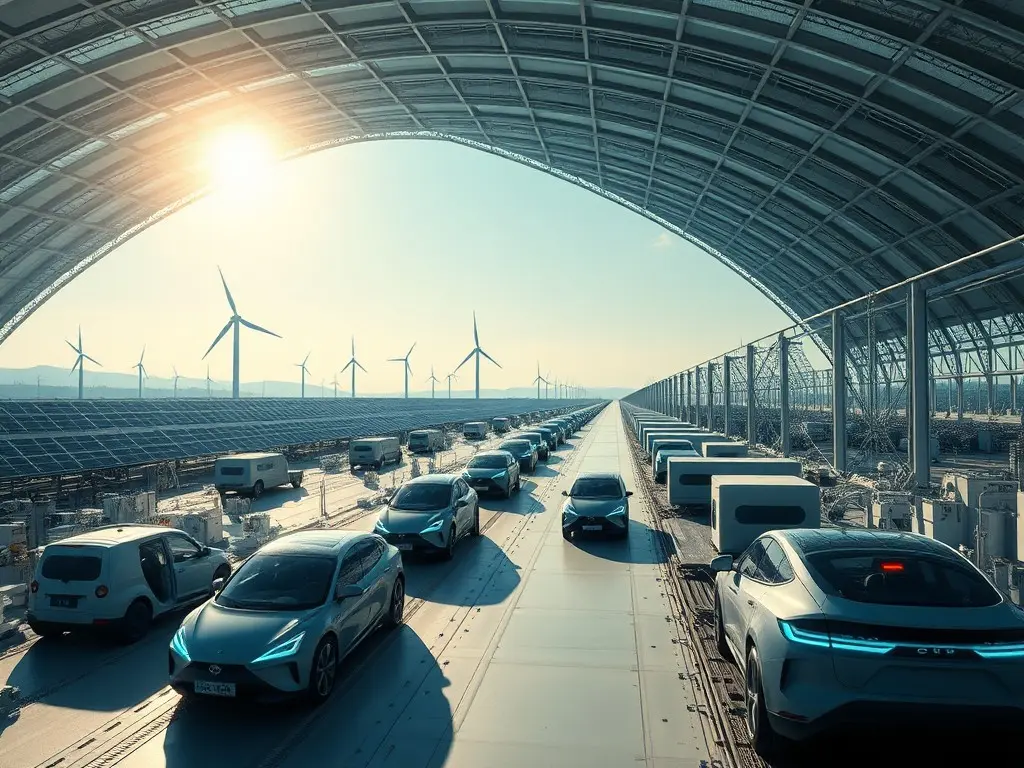
China’s Ningbo city is a key hub for the country’s booming EV industry, with Zeekr, a high-end brand under Geely Auto Group, producing nearly 1.7 million EVs in 2025—a 90% increase from the previous year. The Zeekr factory in Ningbo, dubbed a ‘future factory,’ operates with 60-70% automation, prioritizes green manufacturing with energy-efficient systems, and exports EVs primarily to Europe and Southeast Asia.
Ningbo, a port city in southern China’s Zhejiang Province, has become a central hub for China’s rapidly expanding electric vehicle (EV) industry. Zeekr, a high-end EV brand under the Geely Auto Group, operates a flagship factory in Ningbo, where production surged to nearly 1.7 million EVs in 2025—a 90% increase from the prior year. The factory, funded by a 10 billion RMB ($1.47 billion) investment, emphasizes automation, with 60-70% of work handled by robots, including autonomous welding processes in nearby facilities. Zeekr’s ‘future factory’ prioritizes green manufacturing, tracking real-time carbon footprints, electricity, and water use per vehicle. Waste heat recovery systems have already saved energy equivalent to 736 Chinese households’ annual gas consumption in 2025. The factory operates on a lean model, producing vehicles only after confirmed orders, with a daily capacity of 1,300 cars. Zhejiang Province, where Ningbo is located, leads China’s green transition, achieving record-low PM 2.5 particulate pollution levels (below 25) and surpassing 50% renewable energy capacity in 2024. Local officials highlight the province’s progress in sustainability, aligning with China’s broader push toward clean energy and reduced emissions. Geely Auto Group, which owns Zeekr, also manufactures Volvo and Lotus vehicles, reinforcing its global presence in the automotive sector. Zeekr’s EVs are primarily exported to Europe and Southeast Asia, solidifying China’s dominance in the global EV market. The factory’s innovative approach blends advanced automation with environmental responsibility, setting a benchmark for green industrial production.
This content was automatically generated and/or translated by AI. It may contain inaccuracies. Please refer to the original sources for verification.