Iran deal could drag on as US launches fresh strikes
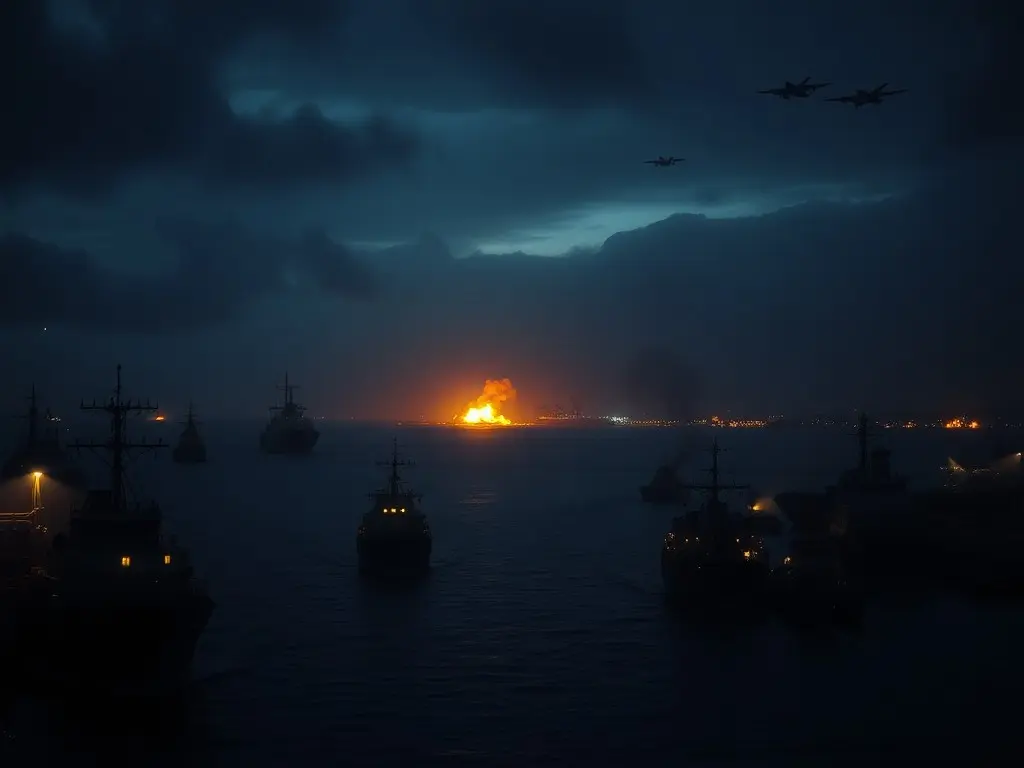
US Secretary of State Marco Rubio stated that negotiations with Iran over a potential deal could take days, following fresh US strikes in southern Iran, while Iran’s Supreme Leader Mojtaba Khamenei warned that regional countries could no longer shield US bases. The conflict, which began on February 28, has disrupted global oil supply through the Strait of Hormuz, with Iran selectively allowing ships passage based on political ties, and tensions escalating as Israel intensifies strikes against Hezbollah in Lebanon.
US Secretary of State Marco Rubio said talks with Iran to end the conflict could last 'a few days,' contradicting earlier hopes of a swift resolution after the US conducted defensive strikes in southern Iran. The strikes targeted boats attempting to lay mines and missile launch sites, with Rubio emphasizing the Strait of Hormuz must remain open. Iran’s Revolutionary Guards reserved the right to retaliate against ceasefire violations, while Supreme Leader Mojtaba Khamenei declared regional nations could no longer serve as shields for US bases, reiterating slogans like 'Death to America' and 'Death to Israel.' The conflict, which began with US and Israeli strikes on Iran on February 28, has severely disrupted global oil supply, reducing vessel traffic through the Strait of Hormuz from 125-140 daily to just a few dozen. Iran has allowed some ships to pass, prioritizing those linked to allied countries, while US Central Command confirmed fresh strikes to protect troops from Iranian threats. Iran claimed to have downed a 'hostile' stealth drone and fired at another drone and a fighter jet over the Gulf region. Negotiations had previously shown progress on a memorandum of understanding to halt the war and restore shipping, with a 60-day window to address broader issues like Iran’s nuclear program. However, tensions remain high, with Iran launching drones and missiles at Gulf states hosting US bases in response to the strikes. US President Donald Trump, who had described talks as 'going nicely,' warned of further attacks if negotiations fail, framing the potential deal as 'a Great Deal for all, or no Deal at all.' In parallel, Israeli Prime Minister Benjamin Netanyahu announced intensified strikes against the Iran-backed Hezbollah militia in Lebanon, despite a ceasefire agreement in mid-April. Israel’s military targeted Hezbollah infrastructure in Lebanon’s eastern Bekaa Valley and other areas, citing self-defense measures. Saudi Arabia, which has not joined the Abraham Accords, reiterated its stance that normalization with Israel requires progress on Palestinian statehood, further complicating regional dynamics.
This content was automatically generated and/or translated by AI. It may contain inaccuracies. Please refer to the original sources for verification.