Iran Expands the Hormuz Threat
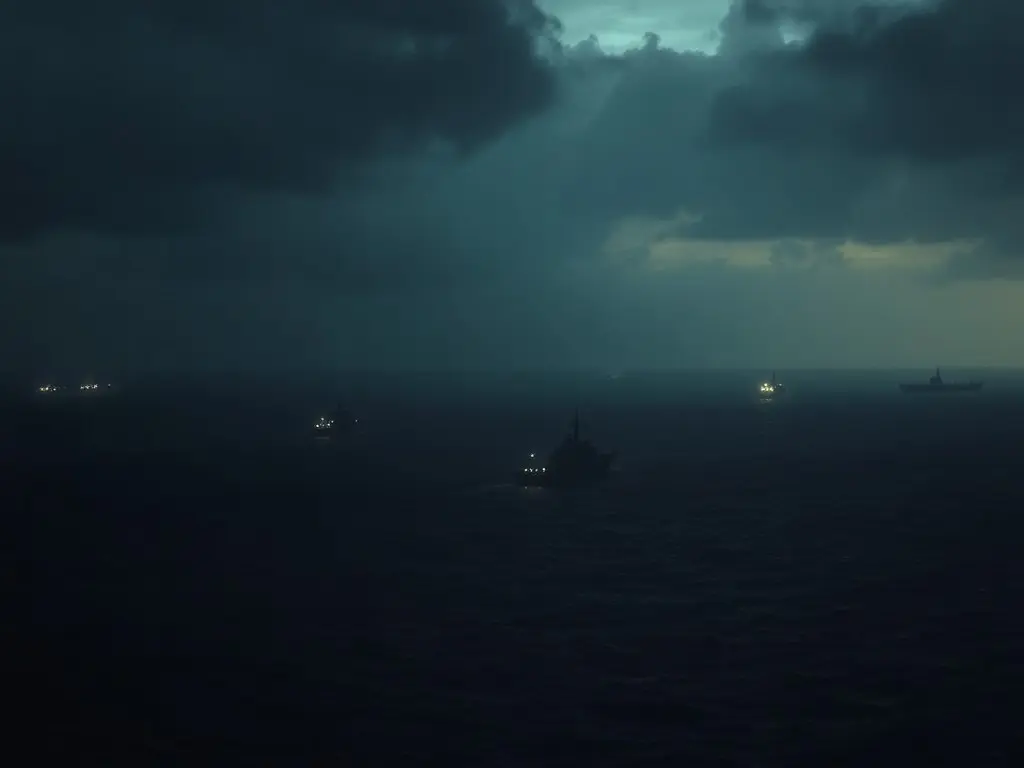
Iran’s Islamic Revolutionary Guard Corps has expanded its claimed 'maritime operational zone' in the Strait of Hormuz, redefining it as a broader area stretching from Jask to Sirri Island, and including Fujairah in the UAE as a strategic target to pressure energy trade routes. The move, backed by a new map and asymmetric warfare tactics like drones and naval mines, aims to disrupt global oil flows—20 million barrels of oil and one-fifth of global LNG pass through the strait daily—while challenging alternative export routes like Fujairah Port, a key hub for UAE oil exports.
Iran’s Islamic Revolutionary Guard Corps (IRGC) has redefined the Strait of Hormuz as a broader 'maritime operational zone,' extending its claimed control from Jask in the east to Sirri Island in the west. The move, announced alongside a new map marking territorial lines between Iran, the UAE, and Oman, signals Tehran’s intent to shift pressure beyond the strait itself, targeting alternative energy export routes like Fujairah Port in the UAE. The Strait of Hormuz is critical to global energy, with 20 million barrels of oil and petroleum products passing through daily—nearly one-fifth of global consumption—alongside one-fifth of the world’s liquefied natural gas trade. The International Energy Agency reports the strait handles 15 million barrels of crude exports daily, or nearly one-third of global crude trade. Iran’s expansion now includes Fujairah, a strategic UAE port used for exporting Abu Dhabi’s oil via a pipeline from Habshan fields, threatening a key alternative to Hormuz. Analysts describe the move as a psychological and media escalation rather than an immediate military transformation, but it reflects Iran’s strategy to maintain constant security pressure. Tehran’s inclusion of Fujairah—outside the strait but vital for energy exports—undermines Gulf states’ efforts to reduce dependence on Hormuz. The port serves as a major refueling hub and oil market center, making it a high-value target for Iranian deterrence. Iran’s tactics rely on asymmetric warfare, including fast boats, drones, naval mines, and coastal missiles, to raise the cost of passage rather than engage in conventional battles. Experts note Iran lacks the capability for prolonged control over international routes but can disrupt navigation, unsettle markets, and force major powers to engage with Tehran as a disruptive regional actor. The strategy mirrors past crises, where Iran used similar methods to pressure global energy flows and challenge U.S. or allied influence in the Gulf. The expansion comes amid broader Iranian efforts to control the rhythm of tension in the region, leveraging proxies and allies to amplify its deterrence. While the move may not immediately alter maritime security, it underscores Tehran’s willingness to escalate pressure on critical infrastructure, particularly as Gulf states diversify their energy export strategies away from Hormuz.
This content was automatically generated and/or translated by AI. It may contain inaccuracies. Please refer to the original sources for verification.