Iran hits Gulf neighbors with missiles, drones
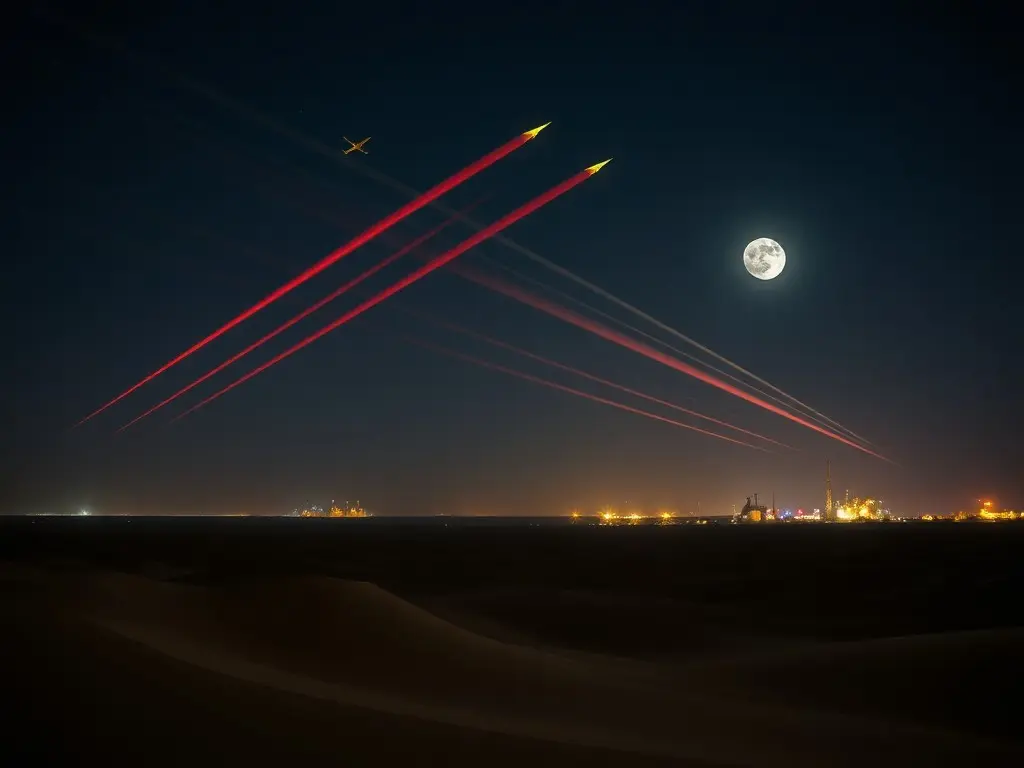
Iran launched ballistic missiles and drones toward Bahrain and Kuwait, targeting US military assets, after the US struck Iranian surveillance facilities, escalating tensions in the Middle East. The US military intercepted two Iranian drones over the Strait of Hormuz, while negotiations for a 60-day ceasefire extension and nuclear talks remain stalled amid regional conflicts in Lebanon.
Iran launched ballistic missiles and drones toward Bahrain and Kuwait early Saturday, according to Bahrain’s government, which stated the attacks targeted US military assets in retaliation for a US strike on Iranian surveillance facilities on Qeshm Island and near Sirik. Tehran claimed the facilities were used for border security and navigation safety, calling the US action a ceasefire violation. The US Central Command later reported shooting down two Iranian attack drones over the Strait of Hormuz. The escalation follows a week of tentative US-Iran negotiations to extend a 60-day ceasefire and resume talks on Iran’s nuclear program, though President Trump has demanded unspecified changes, and Iranian officials have not publicly agreed. Fighting in Lebanon, where Israel has advanced in the south targeting Hezbollah, further complicates efforts to end the conflict and reopen the Strait of Hormuz, a critical global oil and gas route. Iran’s Revolutionary Guard claimed responsibility for targeting the Ali Al Salem air base in Kuwait, which hosts US forces, and the US Navy’s 5th Fleet in Bahrain. The US maintained its blockade on Iranian ports in response. Meanwhile, the US Treasury Department is reportedly considering allowing Gulf allies to access frozen Iranian assets—estimated at $24 billion—to cover war-related damages, though some Gulf states may hesitate due to fears of Iranian retaliation. Pakistan’s interior minister, Mohsin Naqvi, arrived in Iran on Saturday to mediate. Analyst Miad Maleki noted the US move to unlock frozen assets could strengthen Gulf ties but also signal pressure on Iran to negotiate swiftly. The financial and military tensions highlight the fragility of the ceasefire and the broader regional instability.
This content was automatically generated and/or translated by AI. It may contain inaccuracies. Please refer to the original sources for verification.