Is Skyroot’s unicorn milestone Indian space tech’s coming-of-age moment?
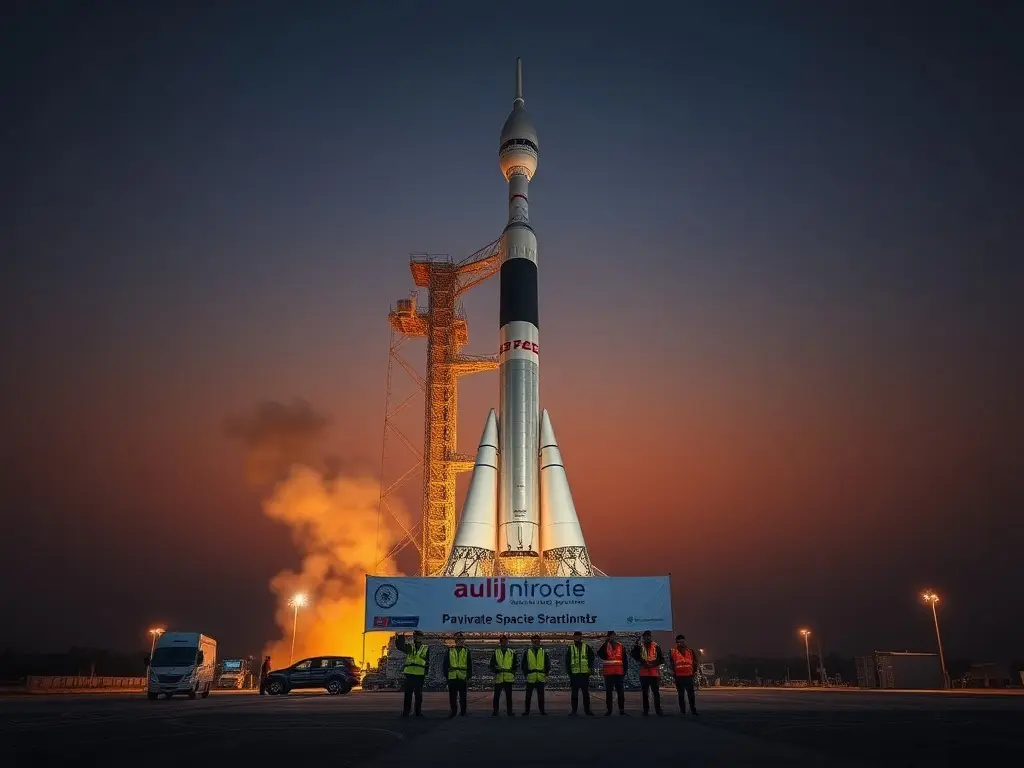
Skyroot Aerospace became India’s first spacetech unicorn after securing $60 million in funding, valuing the company at $1.1 billion, with backing from GIC, BlackRock, and Ram Sriram. The funds will support the upcoming Vikram-I launch and the development of the Vikram-II rocket, signaling growing investor confidence in India’s private space sector as a long-term infrastructure opportunity.
Skyroot Aerospace has achieved unicorn status as India’s first spacetech company, raising $60 million in fresh funding at a $1.1 billion valuation. The investment comes from Singapore’s GIC, BlackRock, and Ram Sriram, a board member of Alphabet, and will be used to scale operations for the Vikram-I rocket, India’s first privately built multi-stage orbital vehicle, expected to launch soon. The funds will also support the development of the heavier-lift Vikram-II rocket, expanding the company’s capacity to carry larger payloads across multiple orbits. The milestone reflects a broader shift in investor confidence toward India’s space sector, which previously struggled to attract significant venture capital. Vipul Patel of IIMA Ventures noted that the funding demonstrates a long-term belief in India’s launch market as a multi-decade infrastructure opportunity rather than a speculative bet. Kushal Bhagia of All In Capital described the achievement as a tipping point, proving that Indian space technology can produce large-scale outcomes over time. Skyroot’s success is attributed to three key factors: regulatory support through IN-SPACe, a rapidly growing space ecosystem, and the upcoming Vikram-I orbital mission. The company has shown it can handle the high capital expenditure and engineering challenges traditionally managed only by national agencies. CEO Pawan Chandana emphasized that the goal remains focused on building more rockets and ensuring regular launches. Beyond its immediate impact, Skyroot’s growth is expected to foster a localized supply chain, benefiting hundreds of MSMEs across India. Dr. Balbir Singh of MIT World Peace University compared its potential to Flipkart’s role in e-commerce or Zerodha’s impact on fintech, suggesting Skyroot could redefine India’s space tech sector as a globally competitive industry. The unicorn status is also seen as a price anchor, encouraging other investors to support Indian space startups like Agnikul and Pixxel in future funding rounds.
This content was automatically generated and/or translated by AI. It may contain inaccuracies. Please refer to the original sources for verification.