Japan Airlines puts humanoid robots to work at Tokyo’s Haneda
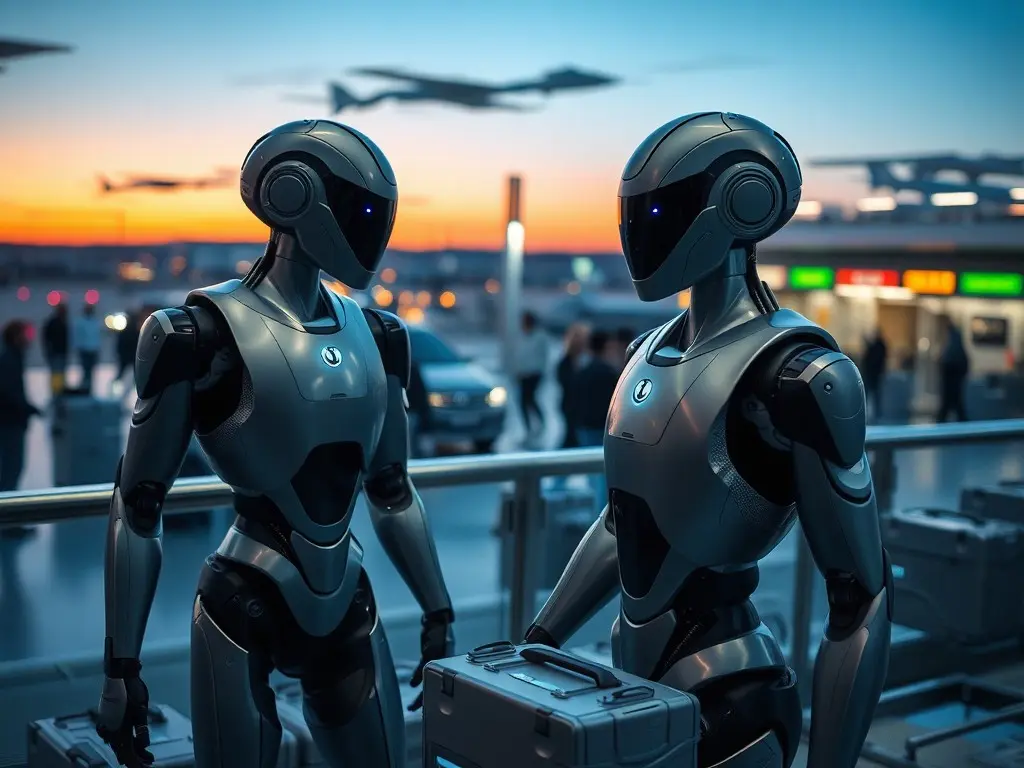
Japan Airlines launched a three-year trial of two Unitree Robotics humanoid robots at Tokyo’s Haneda Airport for baggage handling, container transport, and cabin cleaning, citing Japan’s labor shortage and airport infrastructure needs. The deployment aligns with broader industry trends as companies like BMW, Schaeffler, Humanoid, and AgiBot expand humanoid robot adoption in manufacturing and logistics, despite rising trade barriers like South Korea’s recent tariffs on Chinese and Japanese robots.
Japan Airlines (JAL) has begun a three-year trial using two Unitree Robotics humanoid robots at Tokyo’s Haneda Airport, marking a step toward automating baggage handling, container transport, and cabin cleaning. The robots, costing around $15,400 each, were chosen for their ability to navigate airport layouts designed for human workers, avoiding costly infrastructure changes. The initiative responds to Japan’s shrinking workforce, with the working-age population projected to decline by 31% between 2023 and 2060. Haneda Airport handles roughly 85.9 million passengers annually, and JAL employs about 4,000 ground handling staff. The Japanese government aims to increase inbound tourism to 60 million by 2030, up from an estimated 42.7 million in 2025, heightening demand for labor. JAL partnered with GMO AI & Robotics for the deployment, reflecting a broader trend in industrial automation. BMW has already tested Figure AI’s humanoid robots in its South Carolina plant, producing over 30,000 vehicles and handling 90,000 components. Schaeffler, a German motion tech firm, signed a deal with UK-based Humanoid to deploy thousands of humanoid robots globally by 2032, while Chinese manufacturer AgiBot scaled production from 1,000 to 10,000 units by late March 2026. Trade tensions complicate the expansion, as South Korea imposed antidumping duties of up to 19.85% on Chinese robots and 18.64% on Japanese robots in March 2026. Korean manufacturers argue Chinese suppliers undersell local products by nearly 60%, while U.S. robotics executives have urged Congress to subsidize domestic production and impose tariffs on Chinese competitors. Despite these challenges, humanoid robots are increasingly seen as essential to addressing labor shortages in manufacturing and logistics.
This content was automatically generated and/or translated by AI. It may contain inaccuracies. Please refer to the original sources for verification.