Jim Cramer says SpaceX stock could hit $6 trillion due to mismatched supply and demand
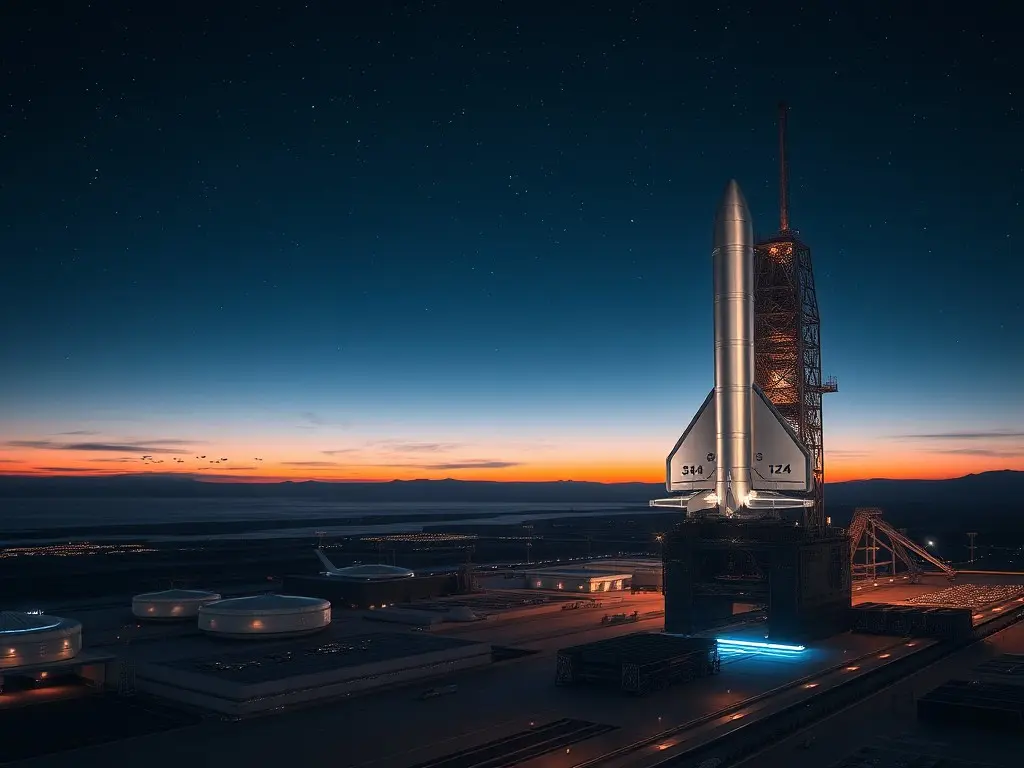
SpaceX priced its IPO at $135 per share on June 12, valuing the company at nearly $1.8 trillion, the largest IPO in history, with analysts like Jim Cramer predicting its market value could surge to $6 trillion due to limited share supply and high demand. The company’s orbital AI data centers and Starship system, which could cut orbital launch costs by 99%, are seen as key drivers for future revenue growth, with billionaire Ron Baron forecasting a potential $14 trillion valuation." "article": "SpaceX, Elon Musk’s rocket and satellite company, went public on June 12 with an initial public offering (IPO) priced at $135 per share, valuing the company at nearly $1.8 trillion—the largest IPO in history. The company’s float, or shares available for trading, is less than 5%, far below the Nasdaq-100 average of over 80%, creating a supply-demand imbalance. Recent Nasdaq-100 rule changes now allow SpaceX to qualify for inclusion in just 15 trading days, potentially drawing additional demand from index funds. Analysts like CNBC’s Jim Cramer predict SpaceX’s market value could skyrocket to $6 trillion due to the mismatch between limited shares and high investor interest. Hedge fund billionaire Ron Baron goes further, suggesting the company could eventually reach a $14 trillion valuation, driven by its orbital AI infrastructure ambitions. SpaceX’s Starship system, a fully reusable spacecraft, aims to reduce orbital launch costs by 99% compared to historical averages. The company’s Starlink satellite network, with over 10,000 satellites in low-Earth orbit, plans to expand to 1 million data center satellites. Subsidiary xAI has deployed the first gigawatt-scale AI training cluster, with its Colossus systems among the largest on Earth. Orbital data centers are a central focus, as SpaceX argues they solve power and cooling constraints that limit terrestrial facilities. The company’s Form S-1 filing notes that orbital chips could run on unlimited solar energy and use radiative cooling, eliminating operational costs. SpaceX plans to deploy orbital AI compute satellites as early as 2028, positioning itself as a leader in AI infrastructure. The company’s vertical integration—combining launch capacity, satellite connectivity, and supercomputing expertise—sets it apart from competitors. While challenges like satellite maintenance and radiation protection remain, SpaceX’s aggressive expansion strategy and Musk’s vision for orbital AI could reshape the tech and space industries.
SpaceX, Elon Musk’s rocket and satellite company, went public on June 12 with an initial public offering (IPO) priced at $135 per share, valuing the company at nearly $1.8 trillion—the largest IPO in history. The company’s float, or shares available for trading, is less than 5%, far below the Nasdaq-100 average of over 80%, creating a supply-demand imbalance. Recent Nasdaq-100 rule changes now allow SpaceX to qualify for inclusion in just 15 trading days, potentially drawing additional demand from index funds. Analysts like CNBC’s Jim Cramer predict SpaceX’s market value could skyrocket to $6 trillion due to the mismatch between limited shares and high investor interest. Hedge fund billionaire Ron Baron goes further, suggesting the company could eventually reach a $14 trillion valuation, driven by its orbital AI infrastructure ambitions. SpaceX’s Starship system, a fully reusable spacecraft, aims to reduce orbital launch costs by 99% compared to historical averages. The company’s Starlink satellite network, with over 10,000 satellites in low-Earth orbit, plans to expand to 1 million data center satellites. Subsidiary xAI has deployed the first gigawatt-scale AI training cluster, with its Colossus systems among the largest on Earth. Orbital data centers are a central focus, as SpaceX argues they solve power and cooling constraints that limit terrestrial facilities. The company’s Form S-1 filing notes that orbital chips could run on unlimited solar energy and use radiative cooling, eliminating operational costs. SpaceX plans to deploy orbital AI compute satellites as early as 2028, positioning itself as a leader in AI infrastructure. The company’s vertical integration—combining launch capacity, satellite connectivity, and supercomputing expertise—sets it apart from competitors. While challenges like satellite maintenance and radiation protection remain, SpaceX’s aggressive expansion strategy and Musk’s vision for orbital AI could reshape the tech and space industries.
This content was automatically generated and/or translated by AI. It may contain inaccuracies. Please refer to the original sources for verification.