Jumping spiders inspire wildly efficient 3D camera
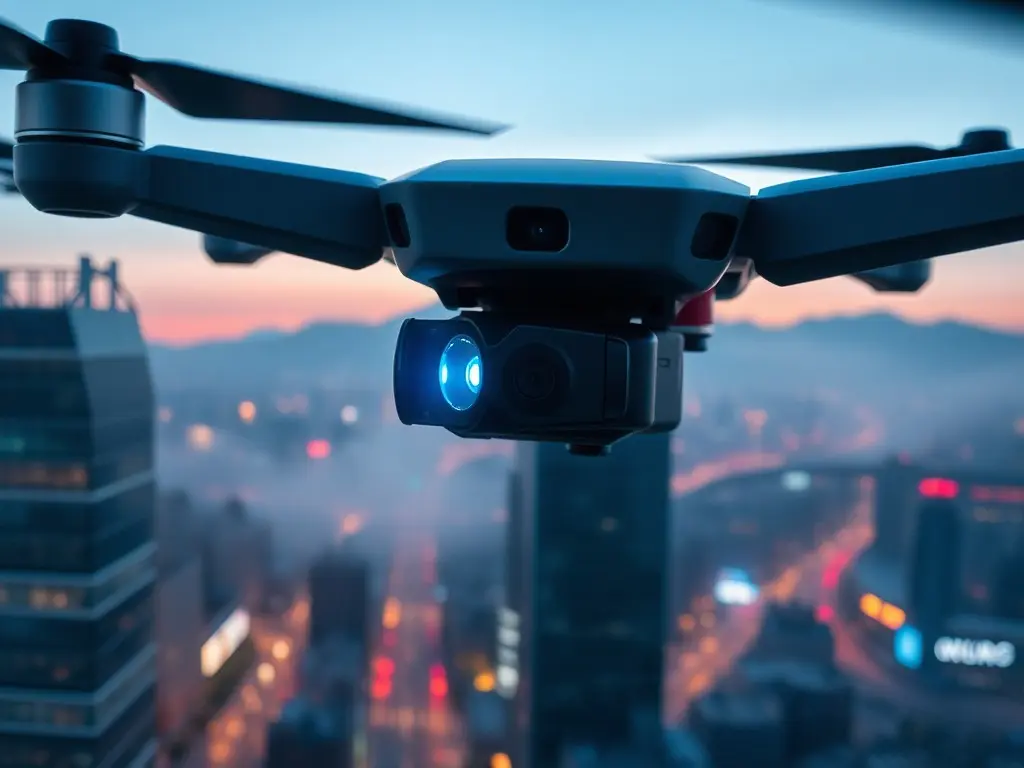
Researchers at Northwestern University developed SpiderCam, a 3D camera inspired by jumping spiders’ multi-retina eyes, capable of real-time depth mapping using less than a watt of power. The technology, presented at the Computer Vision and Pattern Recognition conference in Denver, could revolutionize battery-powered devices like wearables and drones by enabling efficient depth sensing in resource-constrained environments.
A team led by computer scientist Emma Alexander at Northwestern University has created SpiderCam, a highly energy-efficient 3D camera inspired by the vision of jumping spiders. These spiders use multiple retinal layers to capture images at varying focus levels, allowing their tiny brains to judge distance by comparing sharpness differences between layers. SpiderCam replicates this process by taking two slightly out-of-focus images of the same scene and analyzing the blur differences in real time to generate depth maps. The device consumes less than a watt of power—significantly less than a standard nightlight—while producing depth maps at 32.5 frames per second. This efficiency is achieved through a customizable computer chip optimized for low-power processing, making it ideal for applications where energy is limited. Alexander highlighted its potential for use in field settings, augmented reality, or wearable technologies where traditional 3D cameras would be impractical due to high power demands. Most existing 3D cameras rely on computationally intensive methods that require substantial energy and expensive hardware. SpiderCam’s approach, inspired by nature, offers a more sustainable alternative. The team plans to integrate the technology into small robots and wearable devices, expanding its use in environments where power and space are constrained. Presented at the Computer Vision and Pattern Recognition conference in Denver on June 7, the research demonstrates how biological systems can inspire technological breakthroughs. By mimicking the spider’s efficient depth-perception system, SpiderCam could enable a new generation of battery-powered gadgets capable of navigating and interacting with their surroundings without heavy energy consumption.
This content was automatically generated and/or translated by AI. It may contain inaccuracies. Please refer to the original sources for verification.