Kansas farmers hit hard by weather extremes and growing costs, wheat crop could be worst since 1972
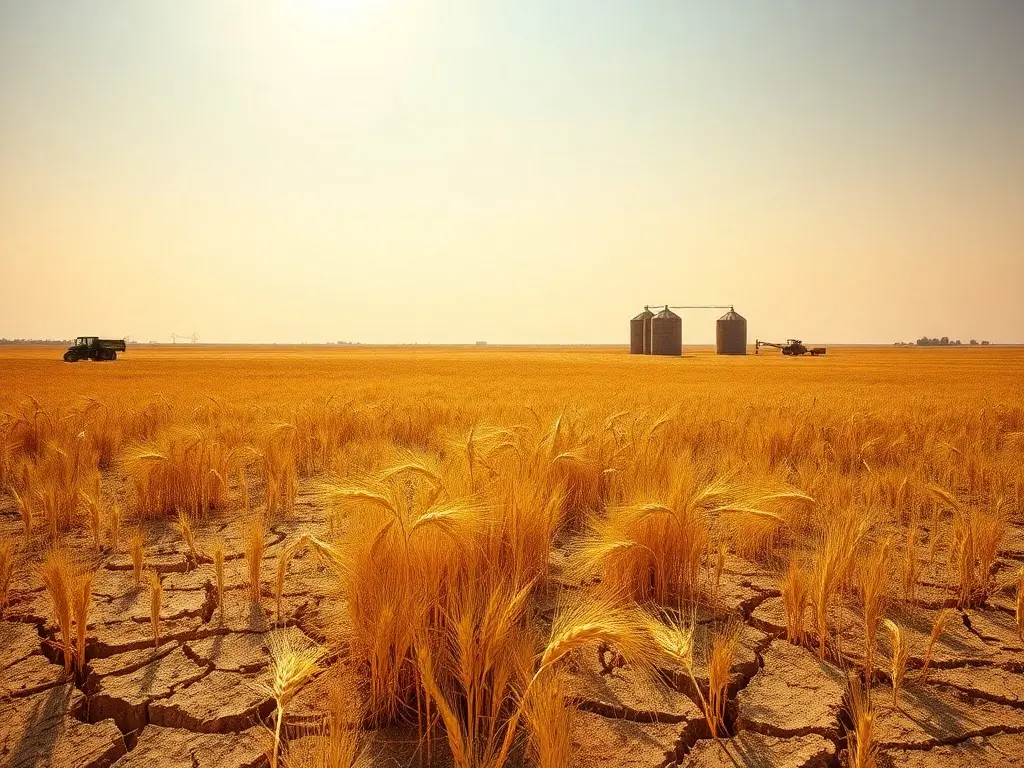
Kansas farmers, including Orville Williams, face their worst wheat harvest in 50 years due to record drought, extreme temperatures, and rising input costs, with production expected to drop 21% to 1.56 billion bushels. The USDA reports 58% of Kansas’ wheat crop is rated 'poor' or 'very poor,' driven by climate change and economic pressures like fertilizer and diesel costs.
Orville Williams, a 76-year-old farmer in Montezuma, Kansas, has grown wheat for decades but warns this season will be his worst. Record drought, hotter-than-average temperatures, and erratic weather have devastated crops, while rising costs for fertilizer, diesel fuel, and tariffs add financial strain. The U.S. Department of Agriculture (USDA) projects the smallest wheat harvest since 1972—1.56 billion bushels, a 21% drop from 2025—with Kansas, a top producer, seeing 58% of its crop rated 'poor' or 'very poor' as of May 17. Climate change, driven by fossil fuel use, has intensified these challenges, with farmers citing unseasonable heat, late freezes, and persistent drought. Kansas State agronomist Romulo Lolloto notes the conditions threaten both domestic bread prices and U.S. wheat exports. Williams, who typically yields 100 bushels per irrigated acre, expects only 30–40 this year, while dryland yields may fall to 10–15 bushels. The USDA’s Brad Rippey highlights a broader decline in U.S. wheat acreage, as competition from Russia and the EU grows. Farmers like Williams are turning to crop insurance or shifting to other crops to survive. Williams advises caution: 'Stay the course. Forget your wants and just do your needs.' Experts link the crisis to long-term climate shifts, warning of worsening extremes. The USDA’s data shows Kansas wheat yields have rarely been this low in the past 40 years, with 2023 marking the last severe drought. Farmers face a double burden: shrinking harvests and soaring costs, leaving little room for error.
This content was automatically generated and/or translated by AI. It may contain inaccuracies. Please refer to the original sources for verification.