Larry Fink says we're in the 'opposite' of an AI bubble — the industry isn't moving fast enough. How exposed are you if he's wrong?
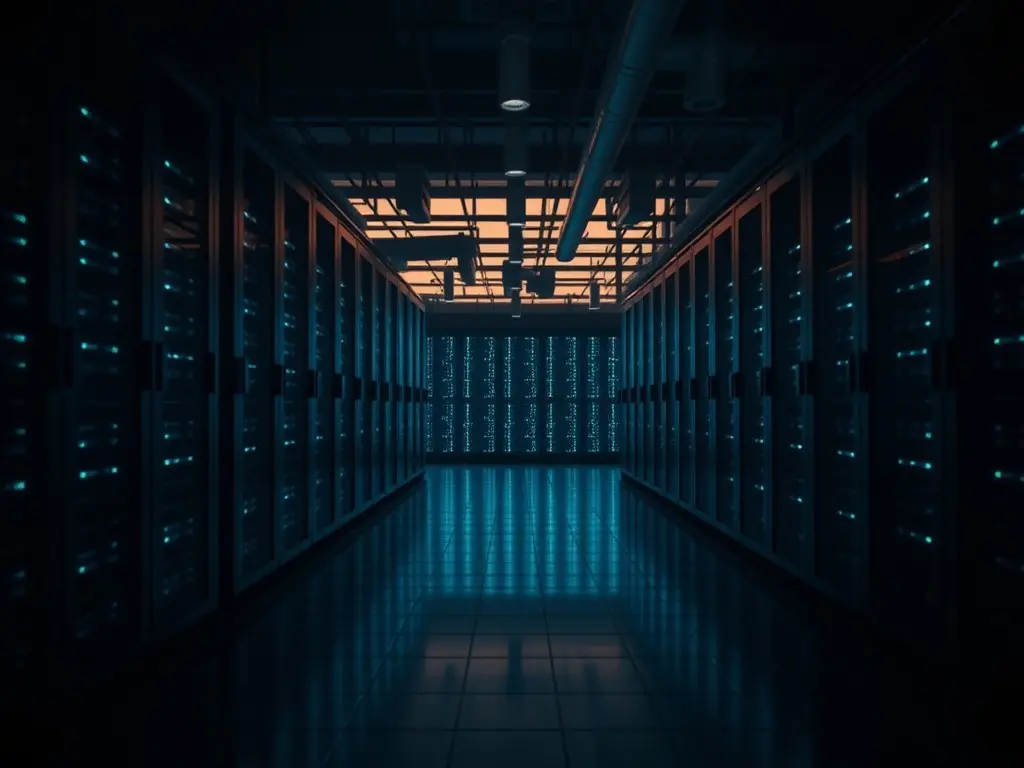
Larry Fink, CEO of BlackRock, argued at the Milken Institute Global Conference on May 5 that AI development is moving too slowly and dismissed the idea of an AI bubble, while emphasizing BlackRock’s $12.5 billion acquisition of Global Infrastructure Partners and partnerships with Microsoft, Nvidia, and xAI for AI data centers. Critics note a $650 billion spending gap between tech giants like Alphabet and Amazon and AI companies like OpenAI and Anthropic, raising concerns about potential overvaluation in the sector.
Larry Fink, CEO of BlackRock, stated at the Milken Institute Global Conference on May 5 that artificial intelligence is not advancing quickly enough and dismissed the notion of an AI bubble, calling it the ‘opposite’ of a speculative frenzy. He reaffirmed BlackRock’s commitment to AI infrastructure, announcing plans to partner with a hyperscaler to expand data centers and energy investments, though the partner’s name remains undisclosed. BlackRock’s focus on AI infrastructure aligns with its 2024 acquisition of Global Infrastructure Partners for $12.5 billion. In March 2025, the firm joined forces with Microsoft, Nvidia, xAI, and MGX to invest in data centers, with Microsoft’s CEO Satya Nadella calling AI infrastructure ‘critical for global economic growth.’ Fink’s stance contrasts with concerns from investors and experts, who point to a $650 billion spending surge by hyperscalers like Alphabet, Amazon, Meta, and Microsoft in 2026. Meanwhile, AI companies such as OpenAI and Anthropic report annualized revenues of $25 billion and over $30 billion, respectively, highlighting a potential disconnect between investment and revenue growth. Analysts like Ganesh Sitaraman and Asad Ramzanali have questioned whether the sector’s rapid expansion could signal an overvalued market. The debate underscores tensions between optimism about AI’s long-term potential and skepticism about its current financial trajectory.
This content was automatically generated and/or translated by AI. It may contain inaccuracies. Please refer to the original sources for verification.