Lasers in moon craters could create a lunar GPS system
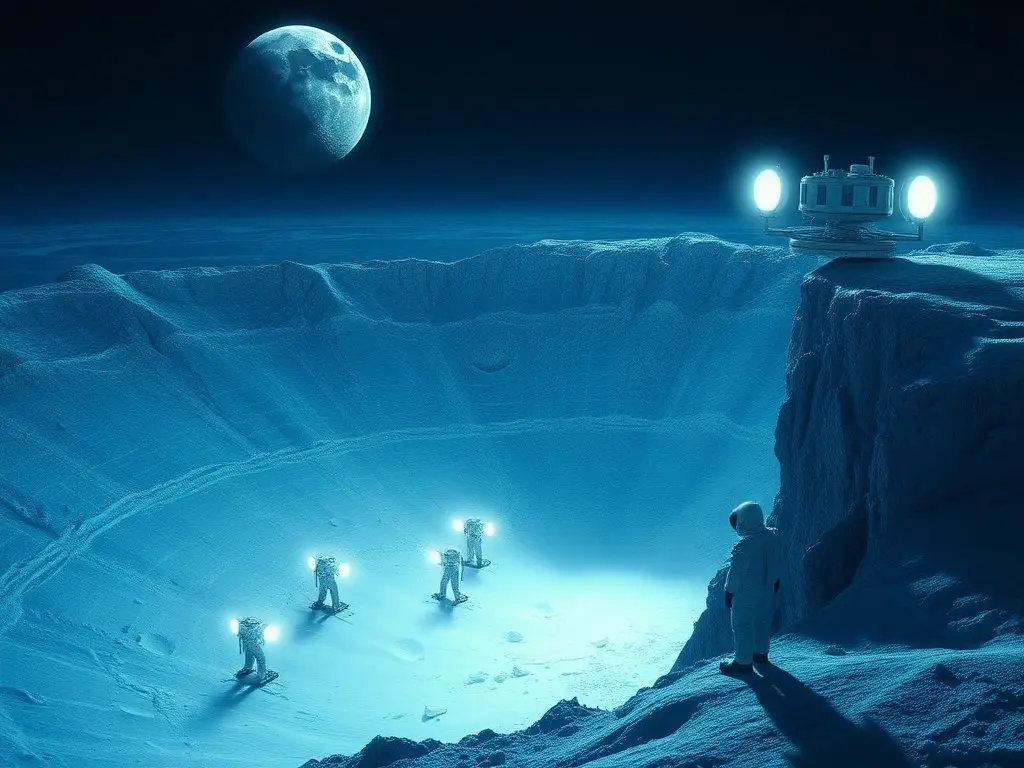
Researchers at the National Institute of Standards and Technology (NIST) propose using ultrastable lasers in permanently shadowed lunar craters near the moon’s south pole to create a GPS-like navigation system for Artemis missions. The extreme cold and stable conditions in these craters could eliminate the need for complex cooling systems, enabling precise laser-based positioning for astronauts and spacecraft on the lunar surface.
Scientists at the National Institute of Standards and Technology (NIST) have proposed a novel approach to lunar navigation by placing ultrastable lasers inside permanently shadowed craters near the moon’s south pole. These craters, which remain in perpetual darkness with temperatures as low as -370°F (-223°C), could provide an ideal environment for highly precise laser systems without requiring Earth-like cryogenic cooling or vibration isolation. The concept builds on existing efforts to develop a lunar GPS system, which would reduce reliance on Earth-based tracking for Artemis astronauts and spacecraft. NIST researchers suggest using silicon optical cavities—devices that stabilize laser light by reflecting it between mirrors—to maintain consistent frequencies, enabling accurate distance measurements across the lunar surface. Unlike on Earth, where temperature fluctuations and vibrations disrupt laser stability, the moon’s frigid, high-vacuum conditions in these craters could naturally minimize thermal expansion. This stability would support navigation systems that depend on precise laser frequencies to track spacecraft movement and calculate positions. The proposal aligns with broader plans for moon-based positioning systems, including lunar orbiting satellites and radio beacons. By leveraging the moon’s natural environment, scientists aim to create a more reliable and independent navigation network for future lunar bases and exploration missions. NASA’s Artemis program and other space agencies have been exploring lunar positioning solutions for years. This new approach adds a unique twist by repurposing the moon’s coldest craters—previously studied for potential water ice deposits—as potential hosts for cutting-edge laser technology.
This content was automatically generated and/or translated by AI. It may contain inaccuracies. Please refer to the original sources for verification.