Louisiana House panel advances congressional map taking away one majority-Black district
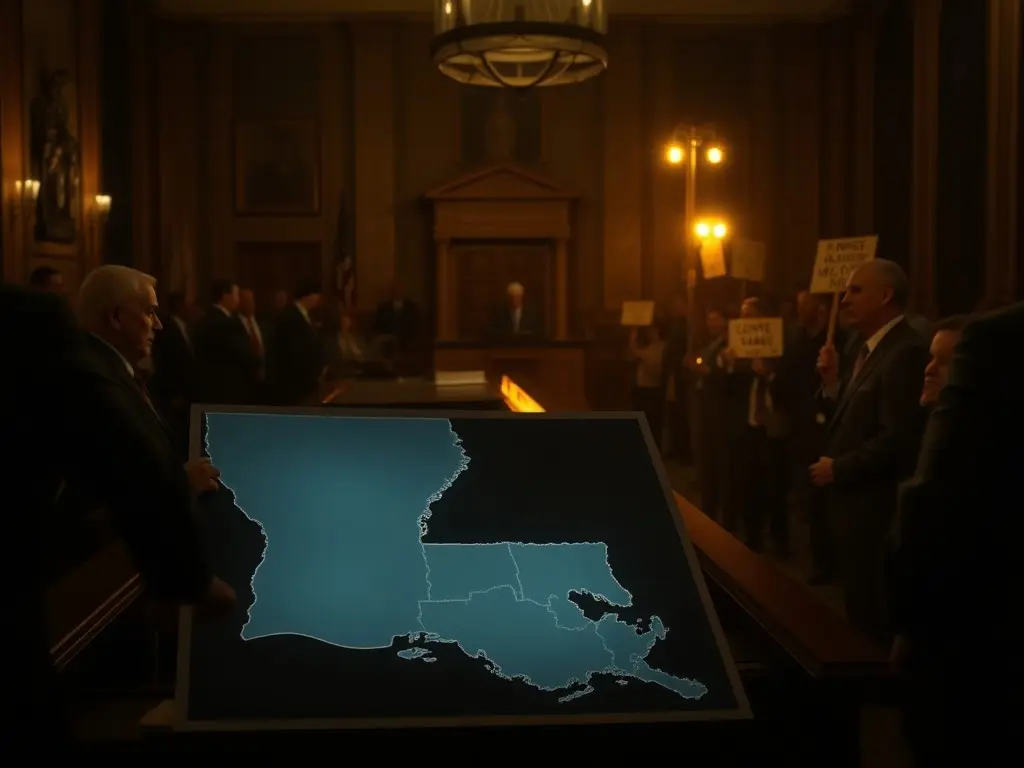
The Louisiana House and Government Affairs Committee advanced a Republican-backed congressional map proposal on May 21, reducing the state’s two majority-Black districts to one, despite Black residents making up about one-third of the population. Democrats and public witnesses criticized the plan, calling it discriminatory and a step backward in representation, as lawmakers aim to finalize the map before the legislative session ends June 1.
A Louisiana House panel advanced a congressional redistricting plan on May 21 that eliminates one of the state’s two majority-Black districts, replacing it with a majority-white district. The 10-7 vote along party lines followed three hours of Democratic questioning of Sen. Jay Morris, the West Monroe Republican proposing the map, and over five hours of public testimony opposing the changes. The plan mirrors a 2022 redistricting effort that reduced majority-Black districts from two to one, despite Black residents comprising roughly one-third of Louisiana’s population. Democrats condemned the move, arguing it undermined decades of progress. Rep. C. Denise Marcelle of Baton Rouge called the proposal a denial of representation, while Rep. Rodney Lyons of Marrero failed to gain support for his alternative plan to create two competitive ‘opportunity districts.’ Republican lawmakers dismissed the criticism, with Rep. Wilfred Carter of Lake Charles warning that Democrats would likely win only one congressional seat under the new map, currently held by U.S. Rep. Troy Carter. The committee rejected public input demands, proceeding with amendments to Morris’ original map. Republicans adjusted boundaries by moving Morehouse, Lincoln, and Jackson parishes into District 4 and placing Grant and Calcasieu parishes entirely in District 3. These changes aim to keep Rep. Dixon McMakin, a Baton Rouge Republican, in District 6 if he runs for Congress. Public opposition was intense, with witnesses ranging from ages 9 to 90 testifying against the plan. Roberta Brown, a 90-year-old New Orleans activist, likened the proposal to reverting to 1950s segregation. Marc Morial, former New Orleans mayor and National Urban League president, labeled the map a ‘jack-o’-lantern plan’ with ‘intentional racial discrimination,’ referencing his 1968 childhood visit to the Capitol, where he saw few Black lawmakers beyond janitorial staff. Behind closed doors, lawmakers debated how the new boundaries could impact their electoral prospects. With Republicans holding the majority, the map is expected to advance to Gov. Jeff Landry’s desk before the legislative session concludes June 1. Democrats and civil rights groups continue to push for a revised plan that maintains fair representation for Black voters.
This content was automatically generated and/or translated by AI. It may contain inaccuracies. Please refer to the original sources for verification.