Manufacturing v Health: How Humans Feel About Robots at Work
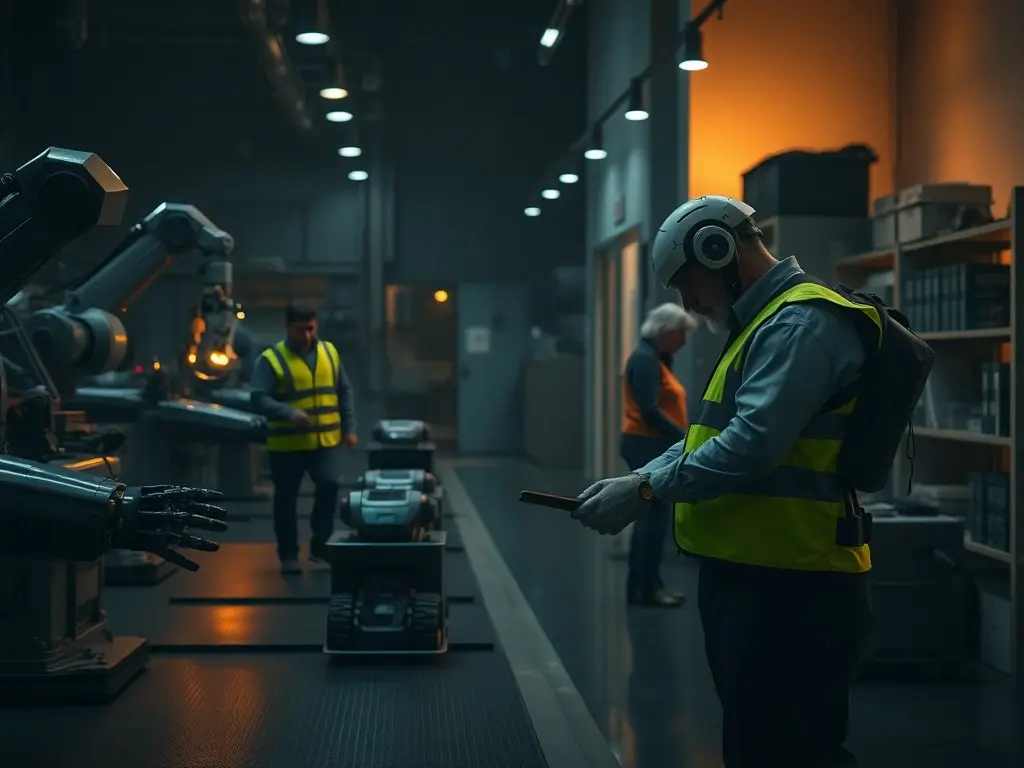
Hexagon’s global survey of 18,000 people found 63% accept robots in factories but only 46% at home, with heavy lifting and hazardous tasks preferred for automation. Most adults demand strict rules for robots, favoring machine-like designs over humanoid ones, while caregiving and conflict resolution remain human-preserved roles.
A global survey by Hexagon, covering 18,000 respondents, reveals shifting attitudes toward robots in the workplace and daily life. While 63% of adults support robots in factories—especially for heavy lifting (68%), delivery (54%), and hazard monitoring (52%)—only 46% feel comfortable with robots in domestic settings. Manufacturing, logistics, and hazardous environments were identified as the top industries for robot adoption, with 43% predicting rapid scaling in manufacturing. The survey highlights tasks where humans remain essential: caregiving (71%), training (57%), and health checks (56%). Conflict resolution and handling sensitive data also overwhelmingly favor human involvement. Burkhard Boeckem, Hexagon’s Chief Technological Officer, notes that industrial environments provide clearer safety and governance frameworks, making them ideal for robot integration. Preferences for robot design diverge sharply: one-third prefer machine-like robots over humanoid ones, and only 14% would trust robots to take charge. Over half, however, see value in robots assisting with basic tasks like research. Notably, children are twice as likely as adults to view robots as full colleagues, suggesting generational differences in perception. Concerns about automation persist, echoing historical fears from mechanized looms to AI-driven decision-making. Yet the data underscores a pragmatic approach: robots are seen as tools for efficiency, not replacements for human judgment or emotional labor. Clear rules and defined boundaries remain critical to public acceptance of robotic integration.
This content was automatically generated and/or translated by AI. It may contain inaccuracies. Please refer to the original sources for verification.