Massachusetts museums use AI to bring history to life
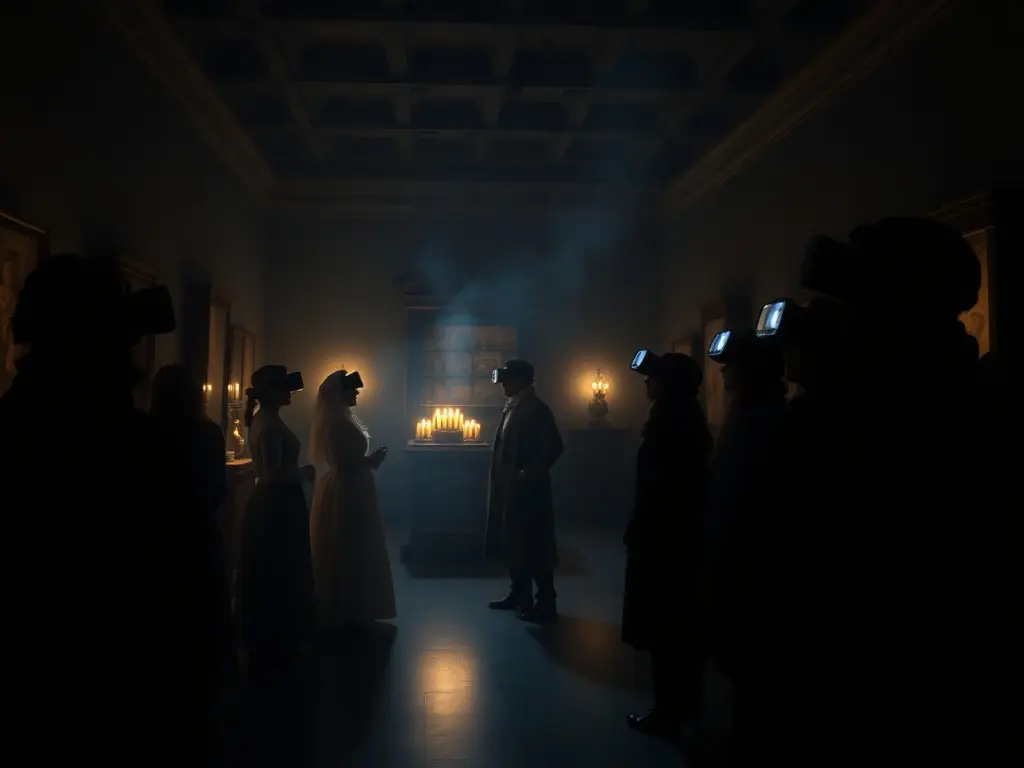
Massachusetts museums are integrating AI and virtual reality to create immersive historical experiences, including recreating 18th-century events and enabling interactive holograms of figures like Frederick Douglass. The initiatives aim to make history more engaging by blending technology with traditional exhibits, such as VR tours of Revolutionary War sites and AI-powered dialogues based on Douglass’s writings.
Massachusetts museums are leveraging artificial intelligence and virtual reality to transform historical tourism into interactive experiences. As the state marks its 250th anniversary of independence, institutions like the Museum of African American History and the Lexington Visitors Center are adopting modern technology to engage visitors. The Museum of African American History introduced an AI-powered hologram of Frederick Douglass in February 2024, allowing guests to ask questions through an iPad. The AI generates responses based on Douglass’s autobiographies and speeches, covering topics like his childhood and advocacy for women’s rights. The Lexington Visitors Center launched virtual reality tours in May, recreating lost sites such as the original meeting house where gunpowder was stored and the belfry where the Revolutionary War alarm sounded in 1775. These tours blend digital reconstructions with real-time experiences, offering insights into Colonial American life beyond the battles. At the Boston Tea Party Ships and Museum, visitors reenact the 1773 protest by throwing tea crates into the harbor, while holograms and live performances immerse them in 18th-century politics. The museum combines artifacts, theatrical interpretations, and modern technology like musket-fire simulations to create an active learning experience. Noelle Trent, president of the Museum of African American History, stated that technology enables deeper exploration of historical narratives, shifting from didactic to dynamic experiences. Jackson Rhodes, who oversees VR tours in Lexington, emphasized that these tools reveal what daily life was like during the Revolution, not just the battles. The trend reflects a broader shift in museum education, where hands-on engagement—supported by AI and VR—replaces passive observation. Institutions aim to make history accessible and memorable, aligning with Benjamin Franklin’s principle that involvement fosters learning.
This content was automatically generated and/or translated by AI. It may contain inaccuracies. Please refer to the original sources for verification.