Massive marine predator crowned T rex of the ocean and 'a true terror of its time'
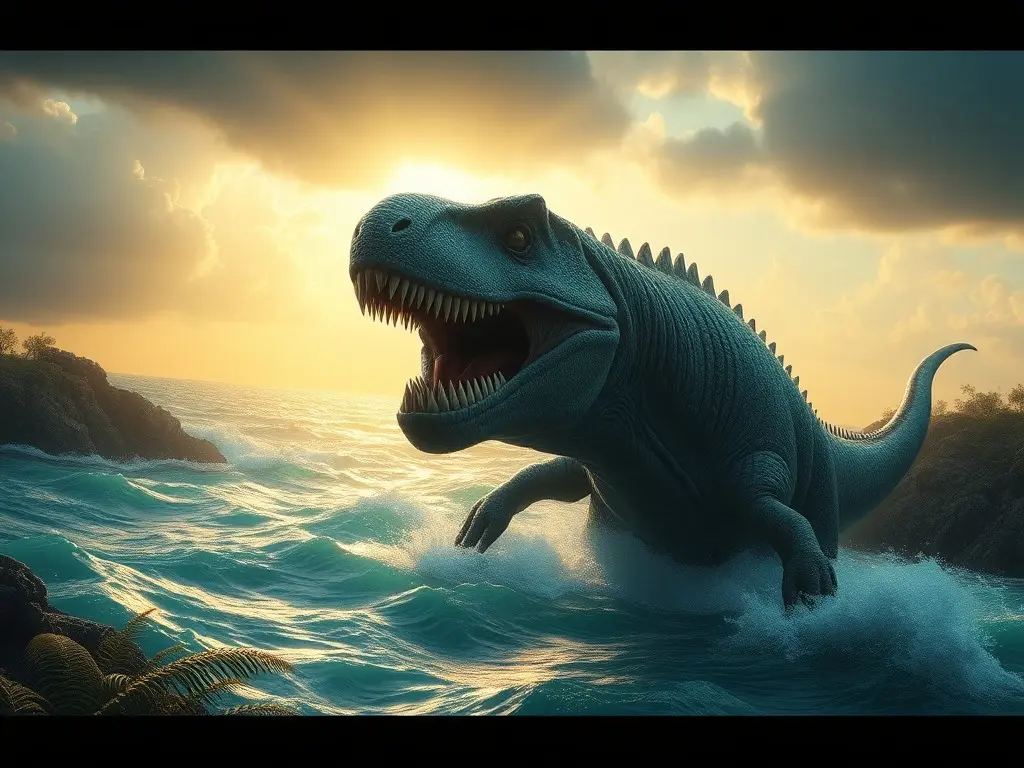
A team of paleontologists reclassified fossils from Texas, identifying a new species of mosasaur, *Tylosaurus rex*, as a dominant marine predator 80 million years ago. The discovery, published in *Bulletin of the American Museum of Natural History*, highlights the role of museum collections and community involvement in scientific breakthroughs.
Paleontologists have identified a new species of mosasaur, *Tylosaurus rex*, a massive marine reptile that ruled the oceans 80 million years ago during the late Cretaceous Period. The species, named for its similarity to the land-dwelling *Tyrannosaurus rex*, was uncovered after researchers reexamined fossils previously attributed to *Tylosaurus proriger*. Fossils of *Tylosaurus rex*, including a large specimen nicknamed 'Beefcake,' were found in Texas, a region where mosasaur remains are less commonly discovered. Lead author Amelia Zietlow, a paleontologist at the History Museum at the Castle in Appleton, Wisconsin, led the study published May 21 in the *Bulletin of the American Museum of Natural History*. The team analyzed fossils housed in over a dozen institutions, many of which were collected by amateur paleontologists in the Dallas area. The discovery underscores how museum collections and community contributions can lead to new scientific findings. The mosasaur, measuring around 40 feet long, was an apex predator with sawlike teeth adapted for crushing prey such as fish, turtles, and plesiosaurs. Co-author Michael Polcyn, a mosasaur specialist at Southern Methodist University, noted that peculiarities in earlier fossils had piqued his interest for a decade before sufficient specimens confirmed the new species. The study highlights the collaborative nature of paleontology, where professionals and hobbyists alike contribute to understanding Earth’s prehistoric past. The inland sea covering parts of North America during the Cretaceous Period provided the habitat for *Tylosaurus rex*, making it a contemporary of *Tyrannosaurus rex* but in a different ecosystem. Both species shared dominance as top predators, each ruling their respective environments. The research serves as a reminder of the ongoing discoveries possible through careful study of existing fossil collections.
This content was automatically generated and/or translated by AI. It may contain inaccuracies. Please refer to the original sources for verification.