Microsoft drops quantum bombshell with new chip
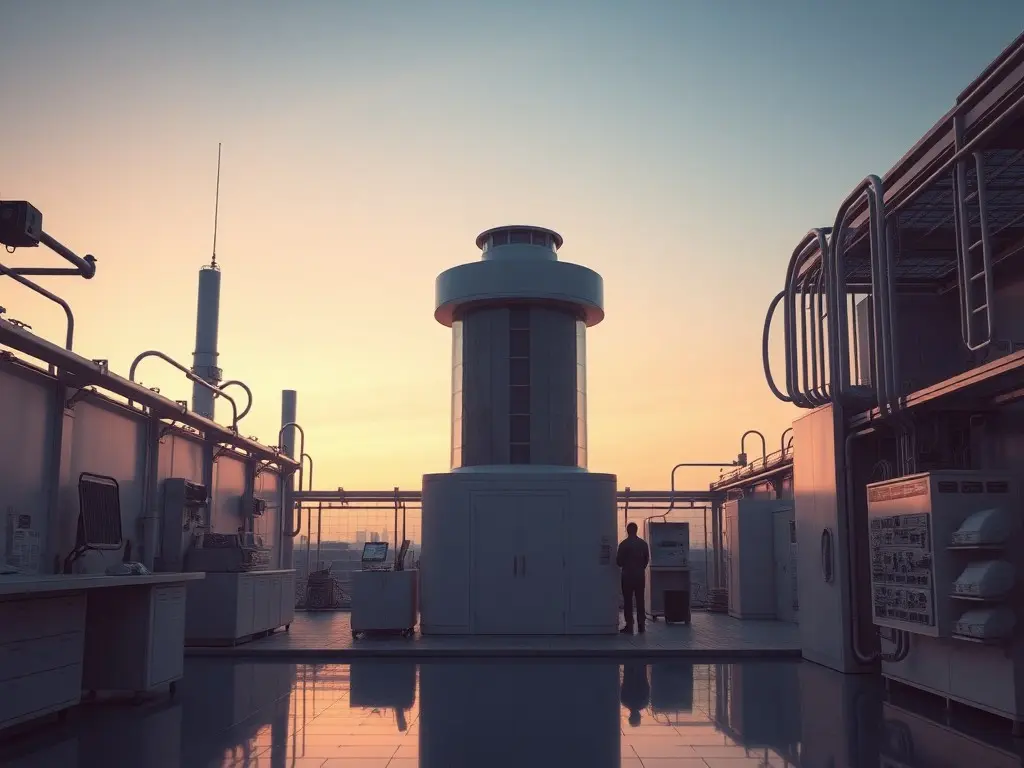
Microsoft announced its new quantum chip, Majorana 2, which reportedly outperforms its predecessor by 1,000 times in qubit reliability, with lifetimes extending up to one minute. The company claims this breakthrough enables a scalable, commercially viable quantum computer by 2029, addressing challenges in global health, sustainability, and energy production through AI-driven simulations and a lead-based topological superconductor design.
Microsoft revealed its next-generation quantum chip, Majorana 2, which it claims is 1,000 times more reliable than its predecessor, Majorana 1. The chip’s qubits now achieve mean lifetimes of 20 seconds, with some reaching up to one minute—an improvement Microsoft compares to a phone battery lasting nearly three years instead of a day. This stability breakthrough relies on a lead-based topological superconductor, replacing aluminum, and required years of overcoming trade-offs to refine the design. The company attributes its progress to AI-driven simulations, which optimized the chip’s atom-by-atom structure by predicting ideal material placements and accelerating experiments. Microsoft’s quantum team used AI to identify hidden data correlations and even detected an uncalibrated temperature sensor affecting results. The announcement coincided with the general availability of Microsoft Discovery, an AI research platform designed to enhance scientific breakthroughs. Majorana 2’s advancements address a core challenge in quantum computing: maintaining qubit stability against temperature and electromagnetic interference. Microsoft now projects a scalable, commercially viable quantum computer by 2029, potentially solving 'intractable problems' in global health, food supply, and sustainability. The timeline and claims, however, have drawn skepticism from physicists like Henry Legg of the University of St Andrews, who dismissed the 2029 goal as 'massive PR bulls**t.' The shift from aluminum to lead in the superconductor was a significant change, yielding 'big, big improvements' in device quality, according to Microsoft technical fellow Chetan Nayak. The company’s AI tools reduced experimental timeframes by 'orders of magnitude,' enabling faster iterations. Meanwhile, Microsoft Discovery integrates agentic AI to process raw data, offering insights like identifying sensor errors that could derail experiments. While Microsoft emphasizes practical applications, critics question whether the 2029 deadline is feasible. The company insists its roadmap remains on track, with Majorana 2 marking a critical step toward overcoming quantum computing’s stability barriers. The breakthrough underscores the role of AI in accelerating material science and quantum research, though real-world deployment remains years away.
This content was automatically generated and/or translated by AI. It may contain inaccuracies. Please refer to the original sources for verification.