Morocco’s answer to drought is in the ocean. Could more of Africa follow its lead?
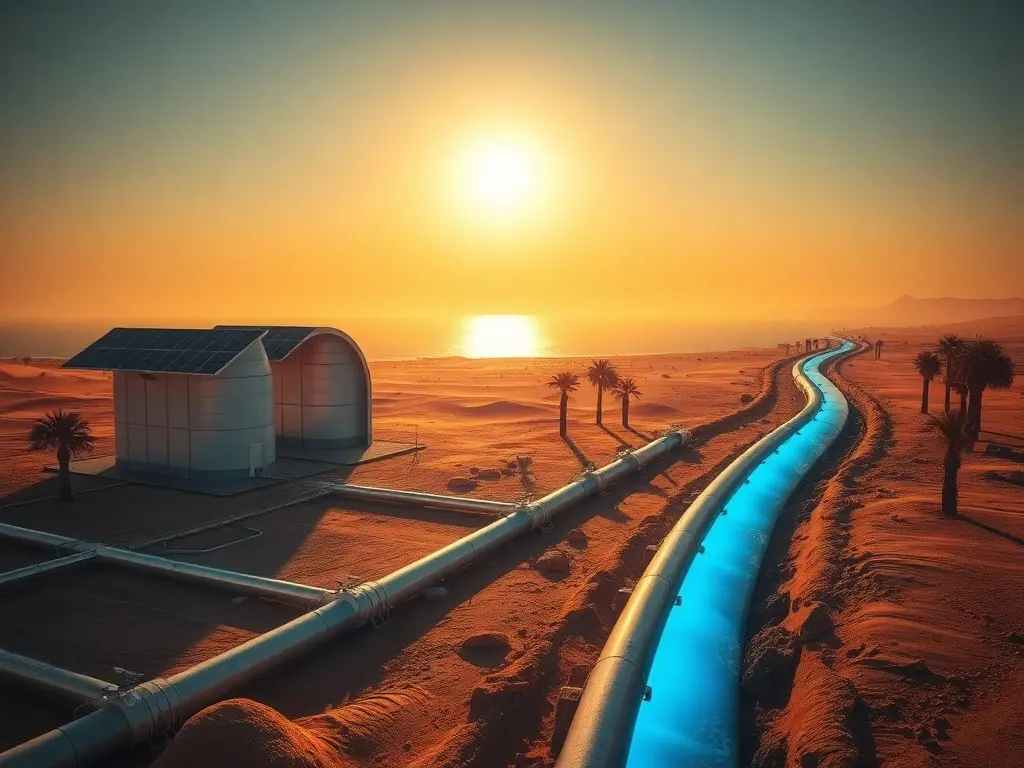
Morocco plans to derive 60% of its drinking water from desalination by 2030, with a $650 million renewable-powered plant near Casablanca set to supply 7.5 million people and irrigate 20,000 acres. The strategy aims to address long-term drought risks, though environmental and financial challenges remain amid a $14 billion national water plan.
Morocco is accelerating its reliance on desalination to combat chronic water shortages, aiming to meet 60% of its drinking water needs through seawater conversion by 2030. The country declared an end to a seven-year drought in January after heavy rains refilled reservoirs, but officials warn climate change has made drought a permanent feature. Nizar Baraka, Morocco’s minister of equipment and water, stated that rainfall and dams alone are no longer sufficient, requiring a structural shift toward ocean-based solutions. A $650 million desalination project 25 miles south of Casablanca will become Africa’s largest and the world’s biggest renewable-powered facility, using a 360-megawatt wind farm in Western Sahara. Phase I begins in February 2027, with full capacity expected in August 2028, producing 79 billion gallons of water annually for 7.5 million people and irrigating 20,000 acres. Morocco already operates 17 desalination plants, increasing output ninefold since 2021, with 11 more plants planned or under construction. Financing for the project closed in May 2025 through public-private partnerships, with Spain’s Acciona leading development alongside Moroccan firms and the Spanish government covering over half the cost. The initiative is part of a broader $14 billion national water plan, which includes dams, wastewater reuse, and pipelines to transport water from northern basins to drier southern regions. Most desalination plants rely on energy-intensive reverse osmosis, often powered by fossil fuels, worsening climate impacts. Morocco’s strategy integrates renewables to reduce costs and carbon emissions, with wind and solar farms supplying clean energy. As of 2024, renewables accounted for a quarter of the country’s energy mix, aligning with Baraka’s goal of minimizing desalination’s environmental footprint. The shift reflects a broader trend in water-scarce regions, where desalination—now operating in over 22,000 global plants—is seen as a critical adaptation to drought. Africa is increasingly adopting the technology, though challenges like high costs and ecological concerns persist.
This content was automatically generated and/or translated by AI. It may contain inaccuracies. Please refer to the original sources for verification.