Musk's SpaceX company launches the world's largest rocket, Starship V3, for the first time - media
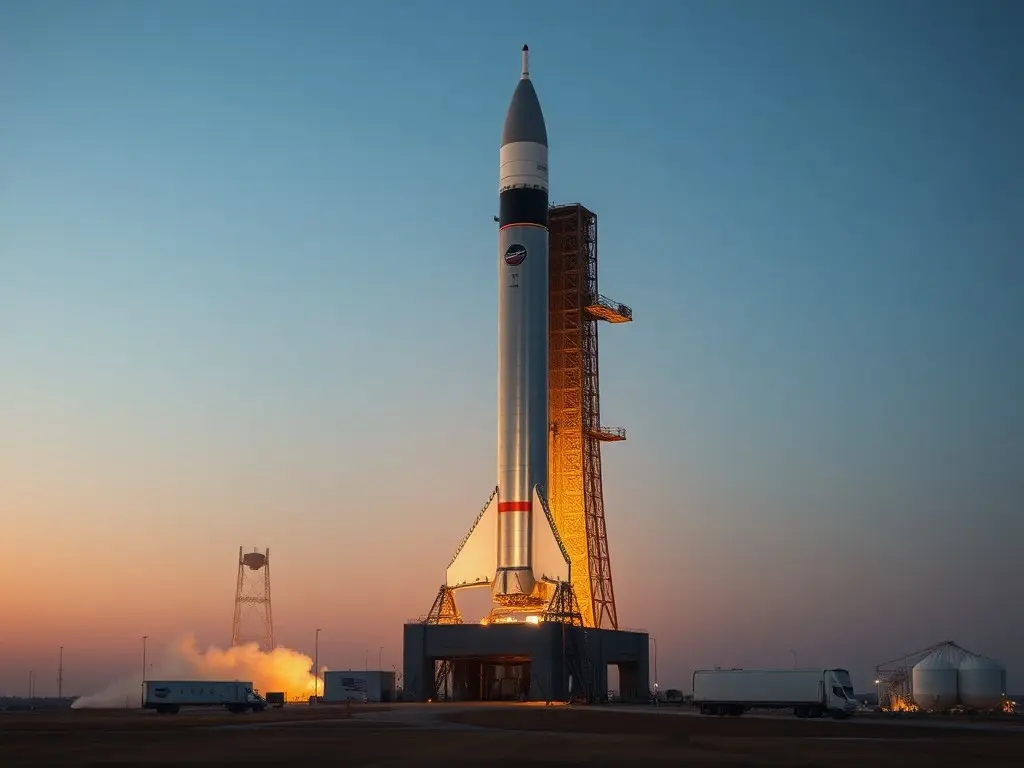
SpaceX successfully launched its Starship V3 rocket from Texas on May 22, 2026, deploying 22 satellite mockups despite engine failures during ascent and landing. The test flight marked progress toward future Moon missions for NASA in 2028, though the Super Heavy booster and landing engines underperformed.
SpaceX executed the first test flight of its updated Starship V3 rocket on May 22, 2026, from its Texas base. All 33 Raptor engines ignited without issues, propelling the vehicle into a suborbital trajectory where it released 22 satellite mockups, two equipped with cameras to test the heat shield. Problems arose during the booster’s return phase, as the Super Heavy accelerator failed to complete a full 'boost back' burn, with only five of six engines firing. This prevented a controlled landing, though the trajectory remained stable. The ship’s engines were not reignited in space, and only two of three landing engines activated upon re-entry, yet atmospheric descent proceeded smoothly. SpaceX employees applauded the landing despite the setbacks. Starship V3 is designed to carry 150–250 tons to orbit, with launch costs estimated at $90 million—higher than Falcon 9’s $60–75 million for 22.8 tons of payload. The rocket is critical for SpaceX’s plans to launch satellites, deep-space missions, and land NASA astronauts on the Moon in 2028. The test highlighted both advancements and challenges in Starship’s development, including engine reliability and orbital maneuvering. NASA’s reliance on Starship for Artemis missions adds urgency to resolving these issues. SpaceX continues to refine the system, targeting full operational capability in the coming years.
This content was automatically generated and/or translated by AI. It may contain inaccuracies. Please refer to the original sources for verification.