NAACP pushes boycott of SEC, ACC schools. How feasible is the movement?
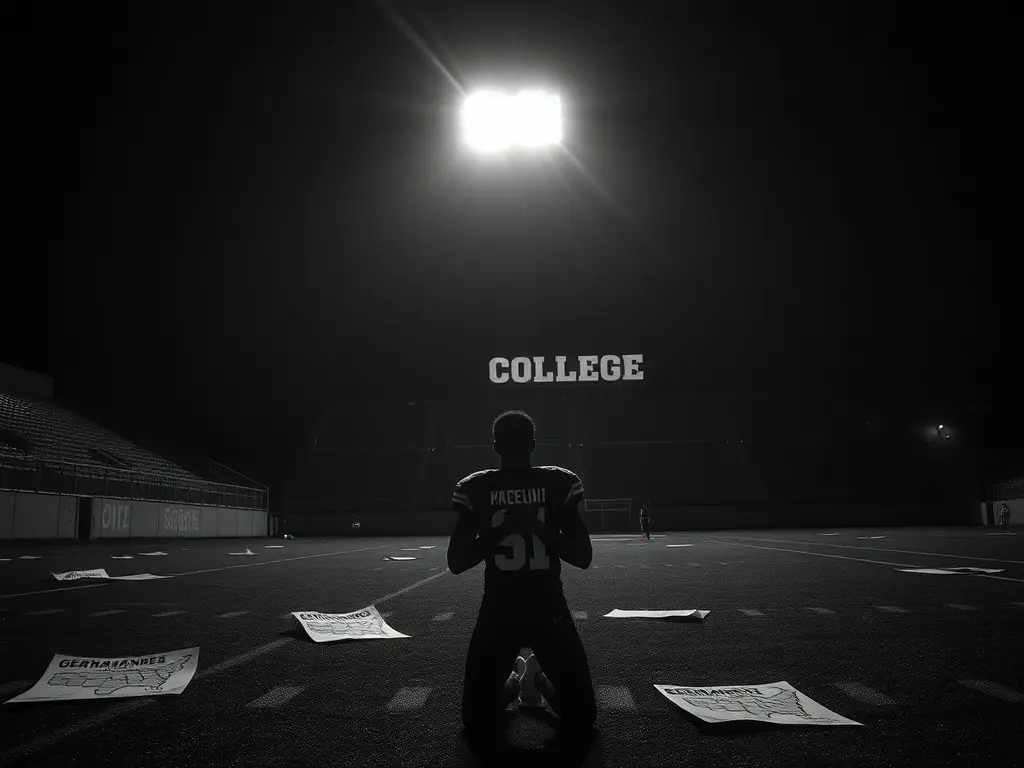
The NAACP launched the 'Out of Bounds' campaign urging Black athletes and fans to boycott SEC and ACC schools in eight states over gerrymandering that dilutes Black political representation. The movement targets 13 programs generating over $100 million annually, calling on recruits to reconsider commitments and current athletes to explore transfers or historically Black colleges." "article": "The NAACP introduced a boycott campaign targeting 13 college athletics programs in eight states—Alabama, Florida, Georgia, Louisiana, Mississippi, South Carolina, Tennessee, and Texas—over racial gerrymandering in congressional maps. The campaign, called 'Out of Bounds,' follows the U.S. Supreme Court’s April 29 ruling in *Louisiana v. Callais*, which allowed Louisiana’s racially motivated redistricting, weakening Black voter influence. The NAACP’s president Derrick Johnson called it a 'sprint to erase Black political power,' urging Black athletes to withhold support until fair representation is restored. The campaign specifically names Alabama, Auburn, Georgia, Florida, Florida State, LSU, Mississippi, Mississippi State, South Carolina, Clemson, Tennessee, Texas, and Texas A&M, all generating over $100 million annually from TV deals, donations, and merchandise. It asks recruits to delay commitments and current athletes to consider transfers or historically Black colleges and universities (HBCUs), redirecting spending to HBCU programs instead. NAACP Youth and College Division director Tylik McMillan framed the call as a demand for Black athletes to leverage their talent and political power. The feasibility of the boycott hinges on financial and logistical factors. Top recruits and current athletes in the SEC and ACC often prioritize NIL payouts and proximity to home, despite the conference’s recent lack of national championships. Congressman Jonathan Jackson (D-Ill.) supported the boycott, urging athletes to 'exercise their free-market will' by transferring to states with stronger voting rights protections. However, an exodus of talent could limit athletes’ financial opportunities and disrupt established programs. The NAACP’s campaign ties sports to broader civil rights issues, framing athlete influence as a tool for political change. While the movement highlights systemic barriers, its success depends on athletes’ willingness to forgo high-profile programs for HBCUs or transfers, amid ongoing debates over voting rights and representation. The push reflects growing activism among Black athletes in addressing racial justice beyond sports.
The NAACP introduced a boycott campaign targeting 13 college athletics programs in eight states—Alabama, Florida, Georgia, Louisiana, Mississippi, South Carolina, Tennessee, and Texas—over racial gerrymandering in congressional maps. The campaign, called 'Out of Bounds,' follows the U.S. Supreme Court’s April 29 ruling in *Louisiana v. Callais*, which allowed Louisiana’s racially motivated redistricting, weakening Black voter influence. The NAACP’s president Derrick Johnson called it a 'sprint to erase Black political power,' urging Black athletes to withhold support until fair representation is restored. The campaign specifically names Alabama, Auburn, Georgia, Florida, Florida State, LSU, Mississippi, Mississippi State, South Carolina, Clemson, Tennessee, Texas, and Texas A&M, all generating over $100 million annually from TV deals, donations, and merchandise. It asks recruits to delay commitments and current athletes to consider transfers or historically Black colleges and universities (HBCUs), redirecting spending to HBCU programs instead. NAACP Youth and College Division director Tylik McMillan framed the call as a demand for Black athletes to leverage their talent and political power. The feasibility of the boycott hinges on financial and logistical factors. Top recruits and current athletes in the SEC and ACC often prioritize NIL payouts and proximity to home, despite the conference’s recent lack of national championships. Congressman Jonathan Jackson (D-Ill.) supported the boycott, urging athletes to 'exercise their free-market will' by transferring to states with stronger voting rights protections. However, an exodus of talent could limit athletes’ financial opportunities and disrupt established programs. The NAACP’s campaign ties sports to broader civil rights issues, framing athlete influence as a tool for political change. While the movement highlights systemic barriers, its success depends on athletes’ willingness to forgo high-profile programs for HBCUs or transfers, amid ongoing debates over voting rights and representation. The push reflects growing activism among Black athletes in addressing racial justice beyond sports.
This content was automatically generated and/or translated by AI. It may contain inaccuracies. Please refer to the original sources for verification.