Nasa names Artemis III crew, but a rocket explosion has thrown US Moon plans into turmoil
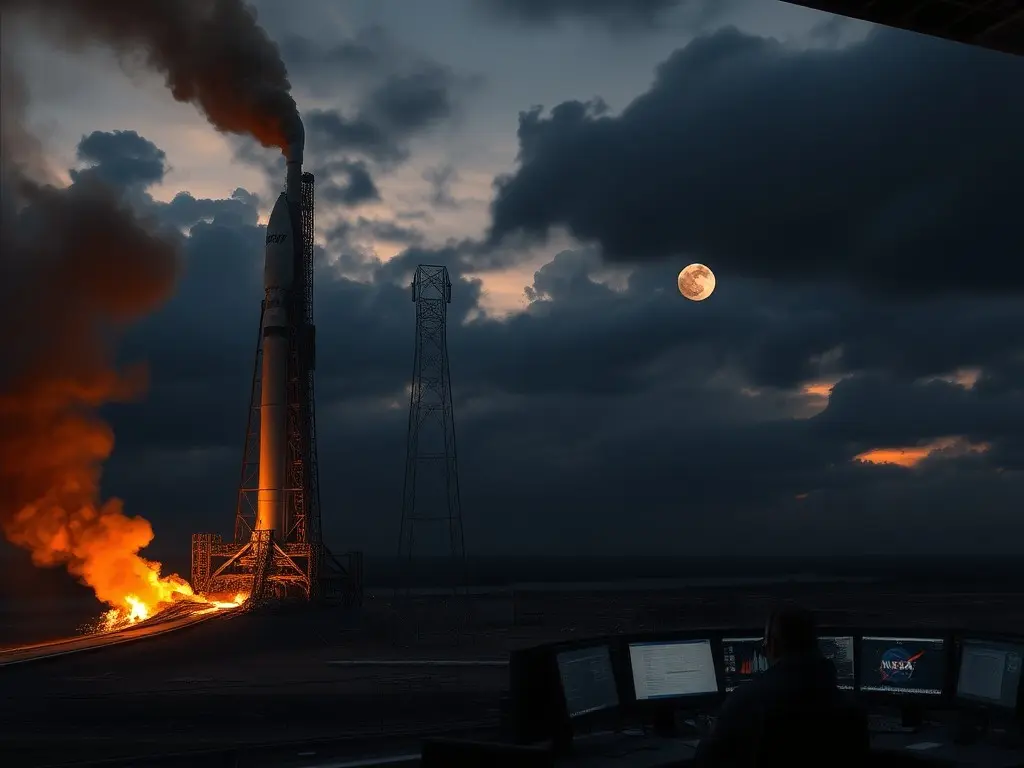
NASA announced the crew for the Artemis III mission, set for late 2027, but a New Glenn rocket explosion at Blue Origin’s Cape Canaveral launchpad threatens delays to Artemis III and IV, potentially jeopardizing the U.S. timeline for returning humans to the Moon before China’s 2030 mission. The incident damaged Blue Origin’s only launchpad and disrupted NASA’s backup plan for lunar landers, though repairs may allow a return to launches before year-end.
NASA has selected the crew for Artemis III, the next major step in its Moon program, including astronauts Randy Bresnik, Frank Rubio, and Andre Douglas, alongside Italian ESA astronaut Luca Parmitano. The mission, originally planned for late 2027, will remain in low Earth orbit and dock with a lunar lander launched separately by either SpaceX or Blue Origin. However, progress toward Artemis III and the first crewed Moon landing (Artemis IV) faces uncertainty after a New Glenn rocket exploded during an engine test on May 28, 2026, at Blue Origin’s Cape Canaveral launchpad. The blast destroyed the rocket and damaged the facility, delaying Blue Origin’s Blue Moon lander development, which was NASA’s backup option for Artemis IV. The explosion risks pushing the U.S. behind China’s planned 2030 Moon landing. NASA’s Artemis program relies on commercial partners like Blue Origin and SpaceX to reduce costs, but the setback mirrors SpaceX’s 2016 Falcon 9 explosion, which took four months to recover from. Blue Origin’s CEO, Dave Limp, suggested repairs could restore launchpad functionality by year-end, as key structures like the propellant farm and other New Glenn rocket components remained undamaged. The launch tower requires repairs, not a full rebuild. Meanwhile, SpaceX’s Starship, originally slated for Artemis III, has faced its own testing delays, leaving NASA with limited alternatives. The Artemis program aims to establish a lunar base using heavy-lift rockets for construction modules. With Blue Origin’s lander now in doubt, NASA may need to reassess timelines or seek additional solutions. The explosion underscores the risks of relying on commercial partners for critical missions, particularly as China advances its own lunar ambitions.
This content was automatically generated and/or translated by AI. It may contain inaccuracies. Please refer to the original sources for verification.