NASA’s Hubble Accidentally Witnesses a Comet Shattering in Space
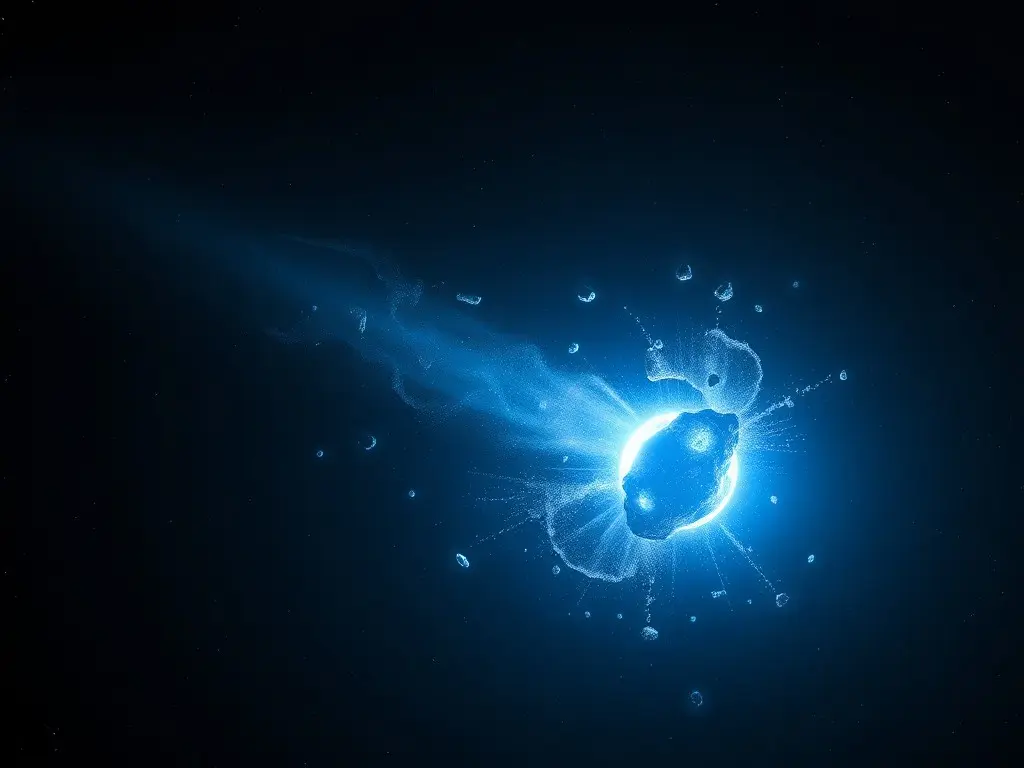
NASA’s Hubble Space Telescope accidentally captured comet C/2025 K1 (ATLAS) breaking apart into at least four fragments in real time, a rare event offering scientists an unprecedented look at primordial solar system materials. The discovery, published in *Icarus*, occurred when researchers pivoted to observe K1 after their original target became unviewable due to technical constraints.
NASA’s Hubble Space Telescope observed comet C/2025 K1 (ATLAS) splitting into at least four fragments in November 2025, a rare event that provided scientists with a close-up view of a comet’s internal structure. The breakup was unintentional—researchers had originally planned to study a different comet but switched targets due to technical issues. When reviewing Hubble’s images, co-investigator John Noonan from Auburn University noticed four distinct fragments instead of one, confirming the unexpected event. The comet fragments each retained their own coma, the glowing cloud of gas and dust surrounding a comet’s core. Hubble’s high-resolution images allowed researchers to distinguish the pieces clearly, unlike ground-based telescopes, which struggled to resolve them. The observations occurred about a month after K1 reached perihelion, its closest approach to the Sun, where extreme heat and solar radiation likely triggered the fragmentation. Scientists estimate K1 began breaking apart around eight days before Hubble captured the event, with one smaller fragment splitting further during the three-day observation period. The comet was roughly 5 miles wide before fragmentation, and its disintegration revealed pristine, unprocessed materials from the solar system’s early formation. Researchers had long sought such an observation to study whether a comet’s composition reflects its original state or has been altered by solar exposure. The breakup also posed a mystery: the comet did not immediately brighten after splitting, despite expectations that fresh ice exposure would increase its luminosity. The team is investigating possible explanations, including delayed sublimation of exposed ice or variations in fragment composition. Principal investigator Dennis Bodewits noted the event offers a rare glimpse into the solar system’s ancient building blocks, as comets preserve materials untouched since their formation.
This content was automatically generated and/or translated by AI. It may contain inaccuracies. Please refer to the original sources for verification.