National Hurricane Center utilizes AI for storm tracking
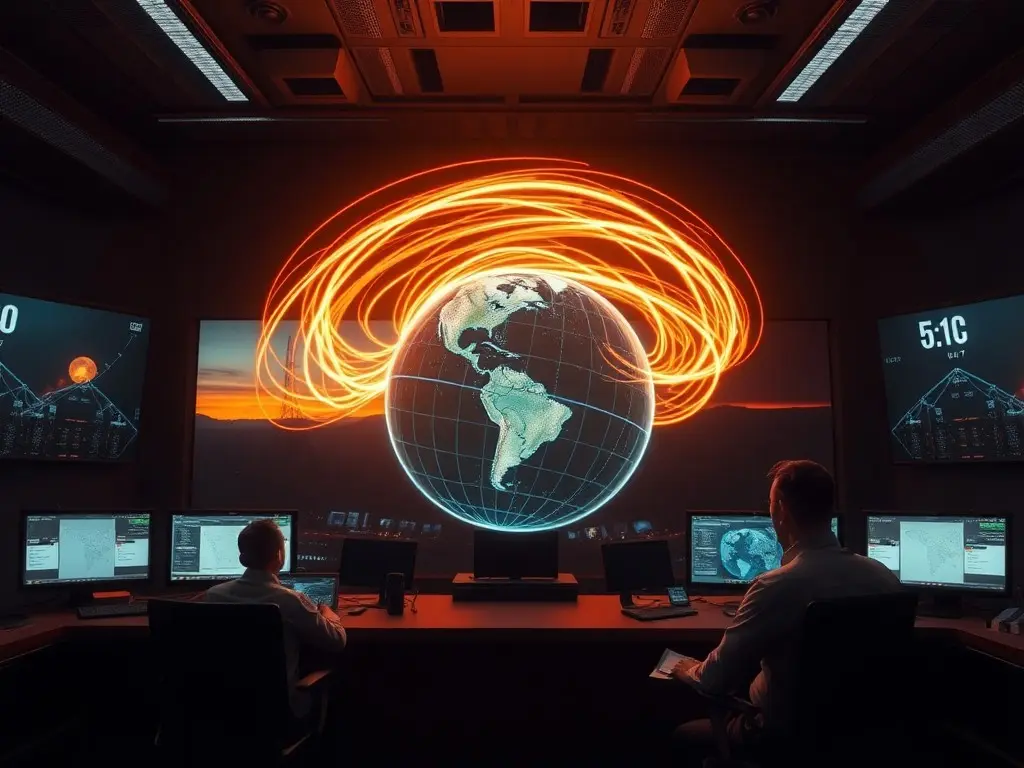
The National Hurricane Center began using Google DeepMind’s AI-based model in 2025 to improve hurricane tracking, outperforming traditional methods with faster, cheaper, and more accurate predictions during testing. If successful, the system could extend warning times from three to five days and become a permanent tool for issuing localized storm alerts, though budget details and exact error margins remain undisclosed.
The National Hurricane Center has integrated Google’s DeepMind AI model into its storm-tracking systems, marking a shift toward advanced pattern recognition. In 2025, the AI model demonstrated superior accuracy, speed, and cost-efficiency compared to traditional numerical weather prediction methods, which rely on equations rather than historical data analysis. The system replicates Earth’s structure and studies decades of atmospheric patterns to refine forecasts, offering forecasters a tool to enhance—not replace—human decision-making. The AI’s capabilities could extend hurricane warning lead times from three to five days, allowing for earlier evacuations and preparedness. It also provides hyper-localized storm impact projections, helping communities understand specific risks. The National Hurricane Center plans to use the AI alongside conventional models during the current season to assess long-term reliability. This transition reflects a broader move away from decades-old numerical prediction models, which have long been the standard for tracking tropical systems. Officials emphasize that the AI’s role is supplementary, providing data-driven insights while human forecasters retain final authority. The system’s success could redefine severe weather alert distribution, particularly in vulnerable coastal regions. Details remain unclear, however, including the exact budget for AI integration and the precise tracking error margins between the AI and traditional models during 2025 tests. Meteorologists are now monitoring the AI’s performance in real-time as the hurricane season progresses, with potential for permanent adoption if it meets expectations. The technology was developed in collaboration with Google DeepMind scientist Ferran Alet, National Hurricane Center Deputy Director Jamie Rhome, and hurricane specialist Bryan Norcross. Their work aims to bridge the gap between cutting-edge AI and operational meteorology, ultimately saving lives through earlier and more precise warnings.
This content was automatically generated and/or translated by AI. It may contain inaccuracies. Please refer to the original sources for verification.