Navigating climate risks in a carbon-constrained world
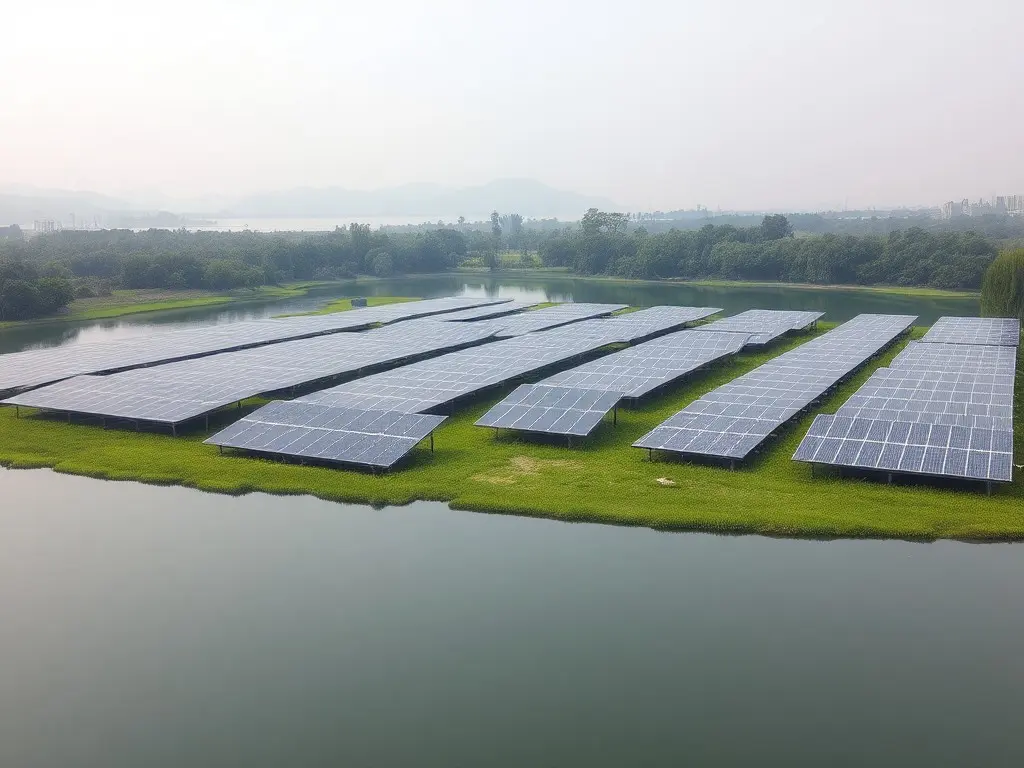
Singapore is increasing its solar capacity to 3GWp by 2030 and exploring other low-carbon energy sources like hydrogen and biomethane to mitigate climate change risks. The city-state is using innovative approaches such as floating solar systems at reservoirs to maximize its limited land resources.
Singapore faces significant climate change risks due to its low-lying geography and dense population, despite contributing only 0.1% of global greenhouse gas emissions. The average temperature has risen by 0.24°C per decade since 1984, with sea levels expected to increase by 0.23m to 1.15m by 2100. To address this, Singapore is maximizing its solar energy potential, having already reached its initial 2GWp target ahead of schedule and now aiming for 3GWp by 2030. Innovative projects include floating solar systems at reservoirs like Tengeh, which spans 45 hectares and reduces carbon emissions by 32 kilotonnes annually. Beyond solar, Singapore is exploring low-carbon hydrogen, biomethane, and advanced nuclear technologies to diversify its energy mix and support its energy transition. The city-state is also assessing the import, storage, and use of these alternative energy sources in power generation and industry.
This content was automatically generated and/or translated by AI. It may contain inaccuracies. Please refer to the original sources for verification.