New ghostfish specie named after beloved Muppet
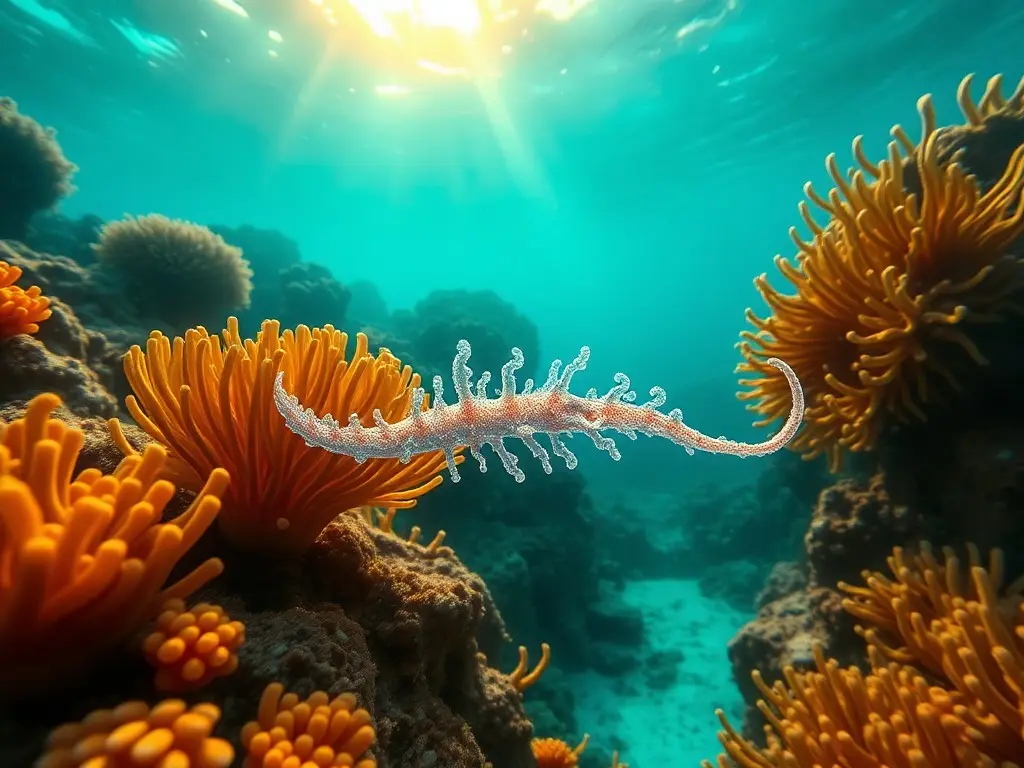
Marine biologists officially named a new ghost pipefish species, *Solenostomus snuffleupagus*, after Mr. Snuffleupagus from *Sesame Street*, documenting its discovery in the southwest Pacific Ocean after 30 years of misidentification. The species, published in the *Journal of Fish Biology* on May 10, 2026, exhibits unique camouflage, predatory behavior, and a record-breaking 36 vertebrae, challenging long-held ecological assumptions about its feeding habits.
Marine biologists Graham Short and David Harasti formally identified a new ghost pipefish species, *Solenostomus snuffleupagus*, in the *Journal of Fish Biology* on May 10, 2026. Named after *Sesame Street*’s Mr. Snuffleupagus, the fish features dense skin filaments resembling the Muppet’s shaggy appearance, providing near-perfect camouflage among red macroalgae on coral reefs. The discovery resolves a 30-year mystery, as divers and researchers had previously misclassified it as the roughsnout ghost pipefish. The species was first documented in January 1993 near Raine Island on Australia’s Great Barrier Reef but remained unrecognized due to technological limitations. Recent expeditions in Papua New Guinea and advanced laboratory analysis—including mitochondrial testing and micro-CT scans—confirmed its distinct evolutionary lineage, which diverged from its closest relative 18 million years ago. The fish also holds the record for the highest vertebrae count among ghost pipefish, with 36. Contrary to prior assumptions, the species is an active ambush predator, not a filter feeder. Scans revealed a fully digested small fish in its stomach, upending theories about its diet and trophic role in coral reef ecosystems. Female *S. snuffleupagus* also exhibit unique reproductive biology, using fused pelvic fins to brood eggs, further distinguishing them from related species. The breakthrough highlights the importance of citizen science and technological advancements in marine biology. The fish’s adaptive camouflage allowed it to evade detection for decades, underscoring the need for continued exploration of the ocean’s biodiversity. The discovery was published by the Fisheries Society of the British Isles and marks a significant update to global marine databases.
This content was automatically generated and/or translated by AI. It may contain inaccuracies. Please refer to the original sources for verification.