New Glenn Explodes During Static Test Fire
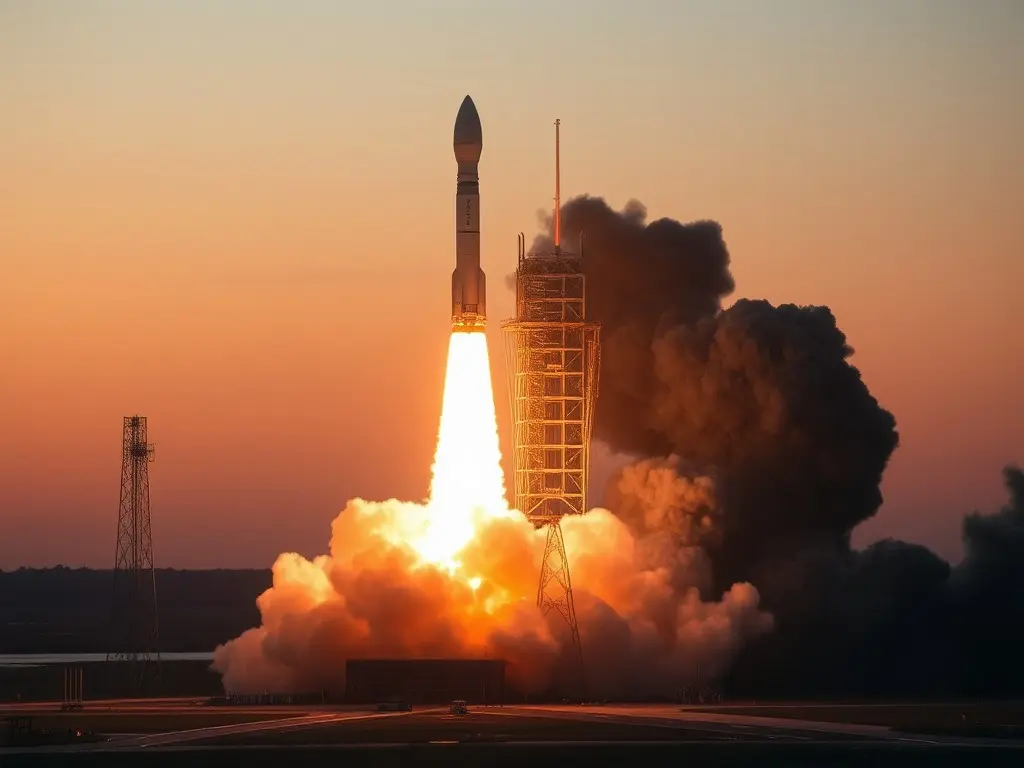
A Blue Origin New Glenn rocket exploded during a static test fire on May 28 at Cape Canaveral Space Launch Complex-36 while preparing for its fourth orbital flight and Amazon’s Leo constellation mission. The incident occurred shortly after 9 pm EDT, with Blue Origin confirming all personnel were accounted for but delaying updates on the cause while investigating the anomaly." "article": "A Blue Origin New Glenn rocket exploded on its launchpad during a static test fire on May 28 at Cape Canaveral Space Launch Complex-36 (SLC-36), ahead of its fourth orbital flight. The rocket was being prepared for Amazon’s inaugural mission to deploy 48 satellites for its broadband constellation, Leo. The explosion occurred shortly after 9 pm EDT, with Blue Origin confirming all personnel were safe but providing no immediate details on the cause. Blue Origin owner Jeff Bezos acknowledged the incident in a statement, calling it a 'rough day' while emphasizing the company’s commitment to rebuilding and returning to flight. The company stated it would provide updates as the investigation into the anomaly progressed. SLC-36 remains the only launchpad for New Glenn, a two-stage, partially reusable rocket that has flown three times previously, most recently on April 19, though an upper-stage engine issue prevented the successful deployment of AST SpaceMobile’s BlueBird 7 satellite. The Federal Aviation Administration (FAA) had previously cleared Blue Origin to resume flights following an investigation into its last anomaly. However, no launch date had been set for the upcoming Amazon mission before the latest incident. Details on the extent of damage to the launchpad or the rocket remain unclear, with no immediate word on the cause of the explosion. New Glenn’s development has been marked by delays, including its first successful launch in January 2025. The rocket’s reusable design and capacity to carry heavy payloads have positioned it as a key competitor in the commercial space industry. Blue Origin’s response highlights its focus on safety and rapid recovery, though the setback could impact future launch schedules.
A Blue Origin New Glenn rocket exploded on its launchpad during a static test fire on May 28 at Cape Canaveral Space Launch Complex-36 (SLC-36), ahead of its fourth orbital flight. The rocket was being prepared for Amazon’s inaugural mission to deploy 48 satellites for its broadband constellation, Leo. The explosion occurred shortly after 9 pm EDT, with Blue Origin confirming all personnel were safe but providing no immediate details on the cause. Blue Origin owner Jeff Bezos acknowledged the incident in a statement, calling it a 'rough day' while emphasizing the company’s commitment to rebuilding and returning to flight. The company stated it would provide updates as the investigation into the anomaly progressed. SLC-36 remains the only launchpad for New Glenn, a two-stage, partially reusable rocket that has flown three times previously, most recently on April 19, though an upper-stage engine issue prevented the successful deployment of AST SpaceMobile’s BlueBird 7 satellite. The Federal Aviation Administration (FAA) had previously cleared Blue Origin to resume flights following an investigation into its last anomaly. However, no launch date had been set for the upcoming Amazon mission before the latest incident. Details on the extent of damage to the launchpad or the rocket remain unclear, with no immediate word on the cause of the explosion. New Glenn’s development has been marked by delays, including its first successful launch in January 2025. The rocket’s reusable design and capacity to carry heavy payloads have positioned it as a key competitor in the commercial space industry. Blue Origin’s response highlights its focus on safety and rapid recovery, though the setback could impact future launch schedules.
This content was automatically generated and/or translated by AI. It may contain inaccuracies. Please refer to the original sources for verification.