New tech could squeeze wildfire risk, carbon from forest debris
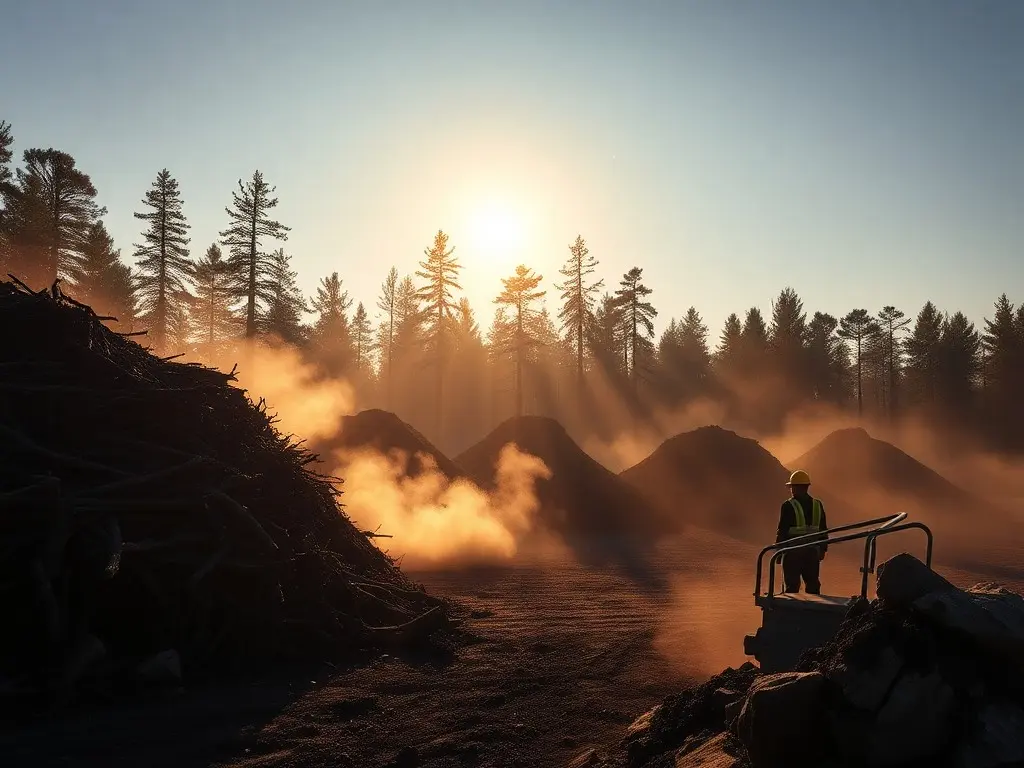
A startup called Graphyte has partnered with Coconino County to convert forest debris from thinning operations into dense pellets for underground storage, aiming to reduce wildfire risks and carbon emissions. The project, set to begin in early 2027, will test the technology in the Coconino National Forest but faces challenges like permit approvals and long-term funding sustainability through carbon markets.
A wildfire in the Dry Lake Hills near Flagstaff, Arizona, in July 2019—sparked by an excavator during a forest thinning project—highlighted a critical issue: excess forest debris left behind after thinning operations creates significant fire hazards. The Museum Fire burned over 1,000 acres in 24 hours, fueled by piles of unremoved wood from previous thinning efforts. Jay Smith, forest restoration director for Coconino County, noted that the leftover biomass worsened the fire risk on a drought-prone landscape. Forest thinning is essential for reducing wildfire risks, but disposing of the resulting wood—often low-value and flammable—remains a challenge. Traditional methods like burning slash piles on-site cause air and water pollution, disrupt ecosystems, and can ignite new fires, as seen in the 2022 Calf Canyon Fire in New Mexico, which became the state’s largest wildfire after smoldering debris reignited. Across the Western U.S., over 140,000 bus-sized slash piles in northern Colorado alone await disposal, while warming temperatures increase the dangers of pile burning. To address this, Arkansas-based startup Graphyte has partnered with Coconino County to convert forest debris into dense pellets for underground storage. The process aims to reduce biomass oversupply, lower wildfire risks, and sequester carbon by preventing organic decay. If successful, the method could offer a climate solution by locking carbon underground, though its long-term effectiveness and funding sustainability—relying on carbon markets—remain unproven. Graphyte’s first trial, Project Ponderosa in the Coconino National Forest, awaits permits from the Arizona Department of Environmental Quality and a suitable site for machinery. Wood fiber intake is expected to begin in early 2027. The project could set a precedent for managing forest waste, but its success hinges on overcoming logistical and financial hurdles in a region increasingly vulnerable to megafires.
This content was automatically generated and/or translated by AI. It may contain inaccuracies. Please refer to the original sources for verification.