Next Ariane 6 launch to carry 36 Amazon Leo satellites using upgraded boosters
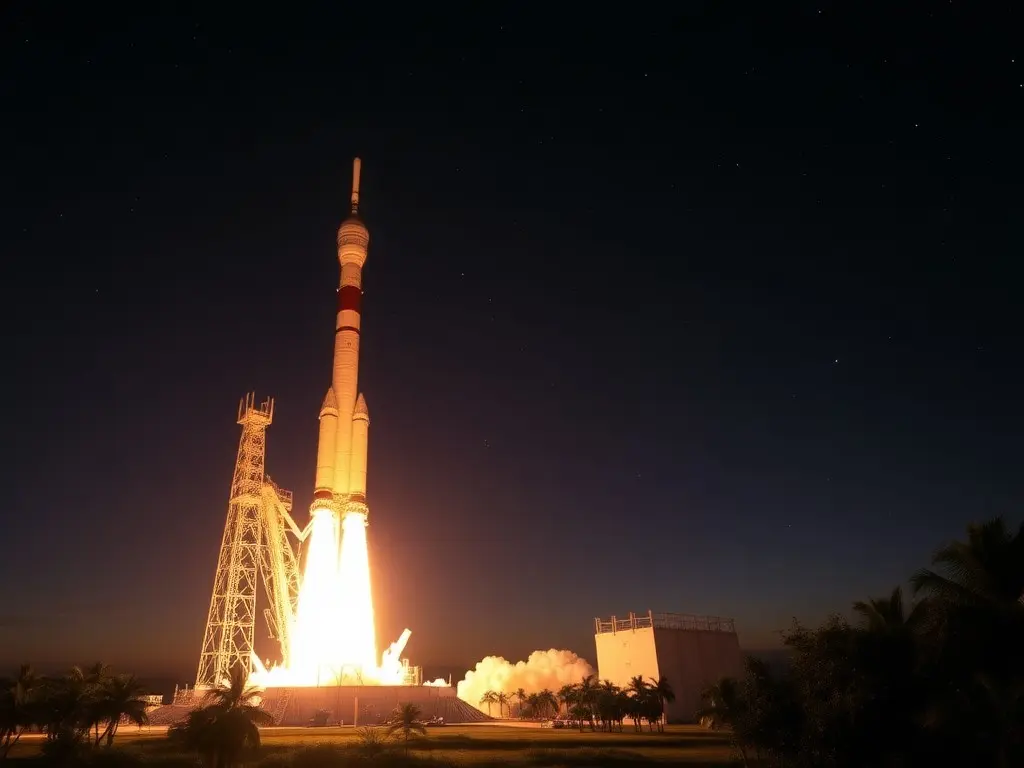
Amazon will launch its largest batch of 36 broadband satellites yet on June 17 using an upgraded Ariane 6 rocket with P160C boosters, marking the first such launch for the European rocket. The mission, named LE-03, follows delays to other planned launches, including a Blue Origin New Glenn explosion and ongoing Vulcan rocket testing issues by ULA, as Amazon races to meet its FCC deadline for deploying half its satellite constellation by July 30." "article": "Amazon announced on June 5 that it will launch 36 Amazon Leo satellites on an Ariane 64 rocket from French Guiana on June 17, the largest number of satellites it has deployed in a single mission. This launch, designated LE-03, will be the third consecutive Ariane 6 mission carrying Amazon satellites, following February and April flights, and the first to use upgraded P160C solid rocket boosters instead of the previous P120C models. The new boosters are 1 meter longer, increasing the rocket’s low Earth orbit payload capacity by over two metric tons, enabling the additional satellites. The upgraded boosters allow Amazon to maximize payload capacity, with Melissa Wuerl, director of launch systems at Amazon Leo, stating that the collaboration with Arianespace made this possible. David Cavaillolès, CEO of Arianespace, confirmed the boosters delivered the expected performance gains. This mission surpasses Amazon’s previous record of 32 satellites per launch, with earlier Atlas 5 and Falcon 9 missions carrying 27–29 and 24 satellites, respectively. The LE-03 launch follows a setback for Amazon’s planned June Blue Origin New Glenn mission, which was set to carry 48 satellites before exploding during a static-fire test on May 28. The incident damaged the launch pad and delayed New Glenn launches until at least the end of 2024. Additionally, United Launch Alliance’s Vulcan rocket, scheduled for its first Amazon Leo mission, remains grounded after a February solid rocket booster anomaly during a U.S. Space Force launch. ULA has not set a date for the Vulcan mission, instead prioritizing another Atlas 5 launch for Amazon in July. Amazon has deployed 331 satellites to date, just over 10% of its planned 3,232-satellite constellation. The company faces a July 30 deadline from the Federal Communications Commission to have at least 50% of its constellation in orbit, a target it risks missing due to launch delays. In January, Amazon requested either a 24-month extension or a waiver of this deadline, though the FCC has not yet ruled on the request.
Amazon announced on June 5 that it will launch 36 Amazon Leo satellites on an Ariane 64 rocket from French Guiana on June 17, the largest number of satellites it has deployed in a single mission. This launch, designated LE-03, will be the third consecutive Ariane 6 mission carrying Amazon satellites, following February and April flights, and the first to use upgraded P160C solid rocket boosters instead of the previous P120C models. The new boosters are 1 meter longer, increasing the rocket’s low Earth orbit payload capacity by over two metric tons, enabling the additional satellites. The upgraded boosters allow Amazon to maximize payload capacity, with Melissa Wuerl, director of launch systems at Amazon Leo, stating that the collaboration with Arianespace made this possible. David Cavaillolès, CEO of Arianespace, confirmed the boosters delivered the expected performance gains. This mission surpasses Amazon’s previous record of 32 satellites per launch, with earlier Atlas 5 and Falcon 9 missions carrying 27–29 and 24 satellites, respectively. The LE-03 launch follows a setback for Amazon’s planned June Blue Origin New Glenn mission, which was set to carry 48 satellites before exploding during a static-fire test on May 28. The incident damaged the launch pad and delayed New Glenn launches until at least the end of 2024. Additionally, United Launch Alliance’s Vulcan rocket, scheduled for its first Amazon Leo mission, remains grounded after a February solid rocket booster anomaly during a U.S. Space Force launch. ULA has not set a date for the Vulcan mission, instead prioritizing another Atlas 5 launch for Amazon in July. Amazon has deployed 331 satellites to date, just over 10% of its planned 3,232-satellite constellation. The company faces a July 30 deadline from the Federal Communications Commission to have at least 50% of its constellation in orbit, a target it risks missing due to launch delays. In January, Amazon requested either a 24-month extension or a waiver of this deadline, though the FCC has not yet ruled on the request.
This content was automatically generated and/or translated by AI. It may contain inaccuracies. Please refer to the original sources for verification.