Nvidia and Microsoft 'reinvent the PC' with new AI chip
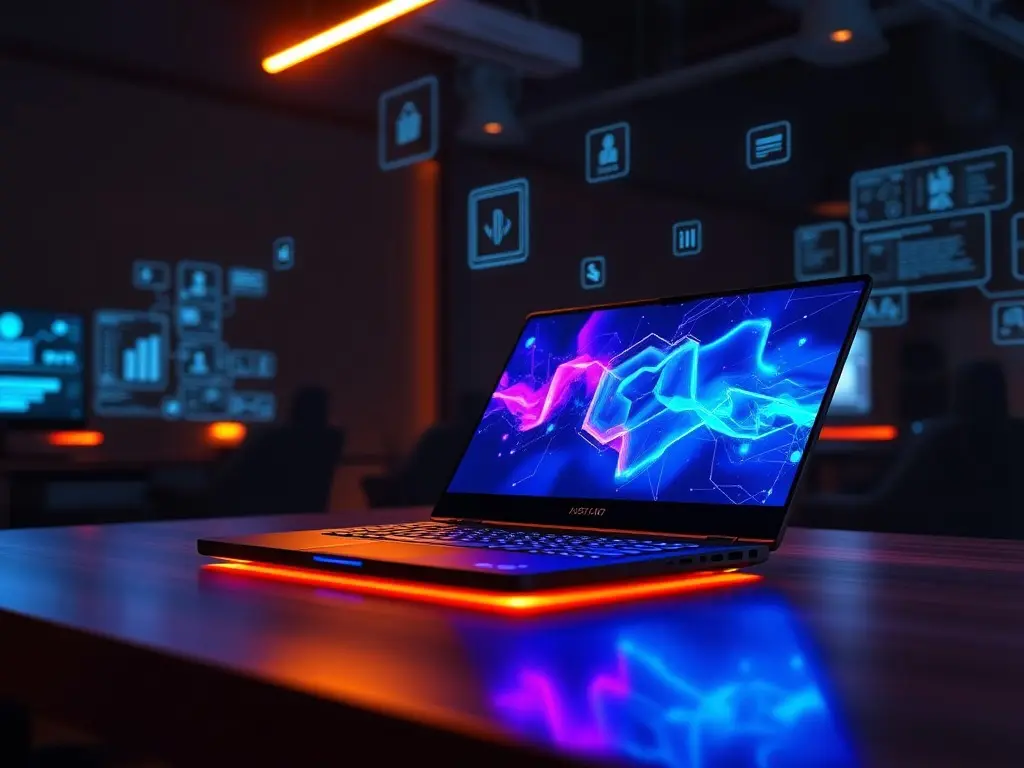
Nvidia unveiled its RTX Spark chip at Computex AI in Taiwan, a 1 petaflop AI-powered superchip designed to run local AI agents on Windows PCs, challenging competitors like Apple, Intel, and AMD. The chip, featuring a Blackwell GPU, 20-core CPU, and 128GB unified memory, is set to debut in September in laptops and desktops from brands like ASUS, Dell, and HP, with Microsoft integrating AI agents directly into the Windows taskbar.
Nvidia introduced its RTX Spark chip at the Computex AI conference in Taiwan, positioning it as a breakthrough for on-device AI agents on Windows PCs. The chip combines a Blackwell GPU with 1 petaflop AI performance, a 20-core CPU, and 128GB of unified memory, alongside 70 billion transistors, targeting tasks like gaming, scientific computing, and local AI processing. It will launch in September across laptops and desktops from manufacturers including ASUS, Dell, HP, Lenovo, Microsoft Surface, and MSI, with Acer and GIGABYTE following later. The RTX Spark aims to reduce reliance on cloud-based AI by enabling autonomous PC control through agents like OpenClaw, Anthropic’s Claude, and Nous Research’s Hermes. Nvidia CEO Jensen Huang described the chip as the 'most amazing ever built,' suggesting AI could eventually replace traditional input methods like keyboards and mice. Microsoft CEO Satya Nadella supported the vision, stating the chip aligns with Windows' goal of delivering 'unmetered intelligence' to every user. Developed over three years, the chip integrates AI agents directly into the Windows taskbar, potentially transforming PCs into household 'AI supercomputers' over the next decade. Huang compared the shift to the smartphone revolution, emphasizing the chip’s role in redefining computing. Early adopters may face high costs due to rising RAM prices driven by AI demand, though official pricing remains unannounced. A separate survey by Telsyte revealed that only 10% of Australians currently use AI agents on dedicated devices, with Apple silicon preferred among those who do. Less than a third of Australians over 16 expressed comfort with AI managing daily tasks, highlighting cautious adoption despite technological advancements.
This content was automatically generated and/or translated by AI. It may contain inaccuracies. Please refer to the original sources for verification.