NVIDIA open sources physical AI agent tools
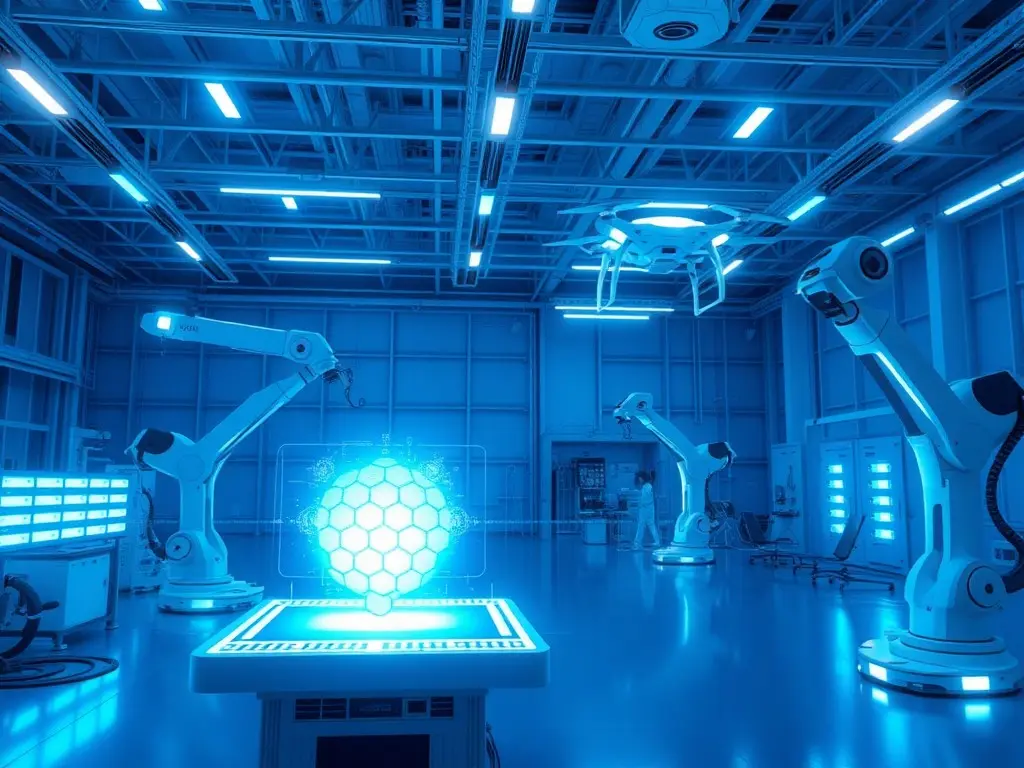
NVIDIA has open-sourced a collection of agent tools and skills to accelerate development in robotics, autonomous vehicles, and industrial AI systems, announced at NVIDIA GTC Taipei. The tools integrate with NVIDIA’s Omniverse, Cosmos, Isaac, Metropolis, Alpamayo, and Jetson platforms, enabling automated workflows for simulation, training, and deployment while reducing costs and complexity for developers globally.
NVIDIA has released an open-source suite of agent tools and skills designed to streamline the development of physical AI systems, including robotics, autonomous vehicles, and industrial applications. The announcement, made at NVIDIA GTC Taipei, expands the company’s focus on agentic AI by allowing developers to automate complex workflows—such as simulation, synthetic data generation, training, and deployment—using NVIDIA’s software libraries, models, and frameworks. The new tools integrate across NVIDIA’s Omniverse, Cosmos, Isaac, Metropolis, Alpamayo, and Jetson platforms, transforming repetitive tasks into structured, agent-executable workflows. Jensen Huang, NVIDIA’s founder and CEO, stated that AI agents are now extending beyond software development into physical AI systems, accelerating advancements in transportation, manufacturing, healthcare, and robotics. Developers can deploy autonomous agents securely using NemoClaw and OpenShell, which include policy-based privacy and security controls for cloud or local environments. The NVIDIA Agent Toolkit also introduces new skills that provide step-by-step instructions for coding agents, including tool selection, expected outputs, and validation steps. These tools are already being adopted by industrial and automotive companies. Pegatron reduced model training and deployment time by 67% using NVIDIA’s Defect Image Generation skill, while Delta Electronics improved excess soldering defect detection by 17%. Foxconn reported a 3% increase in first-pass manufacturing yield when using the technology with partner DeepHow. In the automotive sector, Li Auto, Afari, and DeepRoute.ai are leveraging NVIDIA Omniverse NuRec models for neural scene reconstruction, generating over 300,000 renders and simulations daily to advance autonomous vehicle development. Industrial software firms like Cadence, Dassault Systèmes, Siemens, and Synopsys are integrating NVIDIA Omniverse libraries into digital twin and simulation workflows. Robotics developers, including Agile Robots, Agility, FieldAI, and Universal Robots, are also adopting the agent-ready stack to speed up development from simulation to deployment. Healthcare is another emerging application area, with Foxconn and Compal using NVIDIA Isaac for Healthcare to support hospital robotics and AI-powered automation systems. The open-source tools and skills are now available on GitHub and skills.sh, with preconfigured launch environments accessible via NVIDIA Brev. The release aims to lower barriers for developers and accelerate adoption of simulation-driven design and AI-enabled manufacturing across industries.
This content was automatically generated and/or translated by AI. It may contain inaccuracies. Please refer to the original sources for verification.