NVIDIA Releases Major Collection of Open Source Agent Tools and Skills for Physical AI
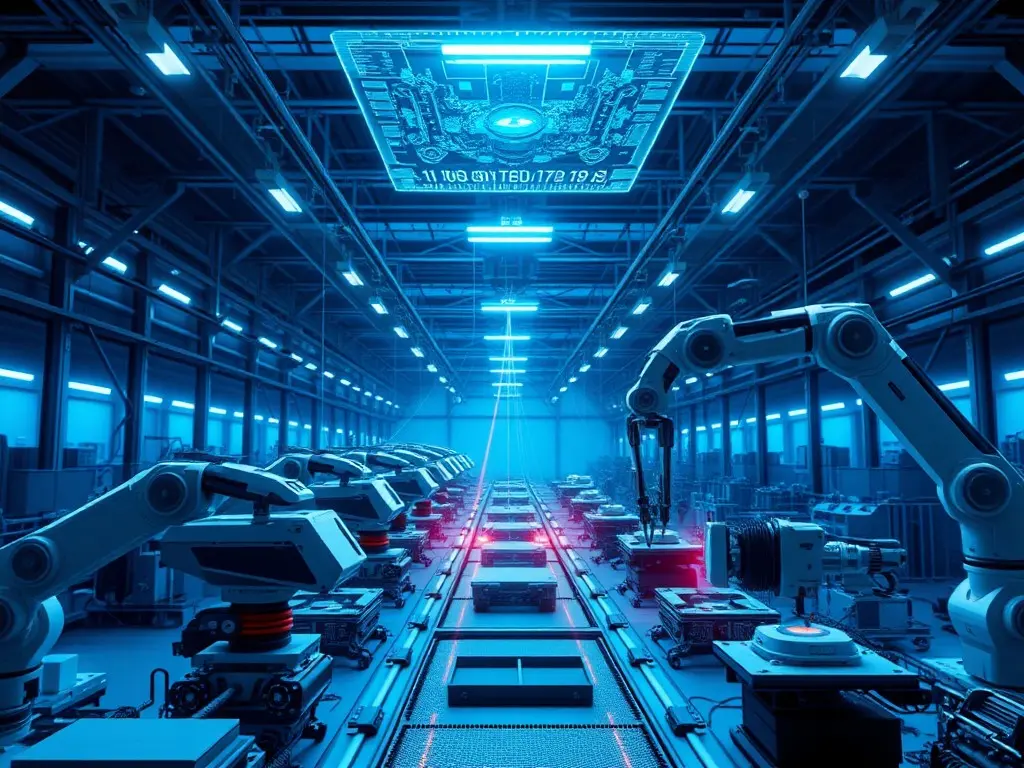
NVIDIA announced an open-source collection of physical AI tools and skills for robotics, autonomous vehicles, and industrial applications at GTC Taipei 2026, enabling developers to streamline complex workflows using AI agents. Industry leaders like Foxconn, Siemens, and TSMC are adopting these tools to accelerate development in robotics, autonomous systems, and digital twins.
NVIDIA unveiled a major open-source suite of physical AI tools and skills at its GTC Taipei event on June 1, 2026. The collection, part of the NVIDIA Agent Toolkit, integrates libraries and frameworks from Omniverse, Cosmos, Alpamayo, and Metropolis to simplify workflows for robotics, autonomous vehicles, vision AI, and industrial digital twins. These tools allow AI agents to execute tasks like data generation, simulation, training, and deployment, reducing costs and complexity in physical AI development. The new skills turn repetitive development processes into agent-executable instructions, including data reconstruction, photorealistic scenario generation, and reinforcement learning for autonomous systems. For robotics, developers can automate perception training, navigation, and edge AI deployment using Jetson platforms. Autonomous vehicle teams can reconstruct fleet data into simulations and expand training coverage with closed-loop reinforcement learning. Industrial applications benefit from skills that convert engineering data into CAD assets for digital twin simulations, optimizing large OpenUSD scenes with minimal manual input. Vision AI agents gain capabilities for synthetic data generation, model fine-tuning, and automated video analysis. NVIDIA’s Cosmos world foundation models and NemoClaw blueprint support safe agent deployment across these domains. Partner companies such as Agile Robots, Cadence, Dassault Systèmes, Delta Electronics, Foxconn, Pegatron, PTC, Siemens, Synopsys, and TSMC are already using these tools to accelerate physical AI projects. NVIDIA CEO Jensen Huang emphasized the shift from coding to agent-driven development, calling it a transformation for industries like transportation, manufacturing, and healthcare. The open-source skills are available on GitHub, with documentation detailing tool integration, output validation, and deployment workflows. This release marks a step toward scalable, agentic development in physical AI systems, aligning with NVIDIA’s broader push for AI-driven innovation in robotics and automation.
This content was automatically generated and/or translated by AI. It may contain inaccuracies. Please refer to the original sources for verification.