Nvidia's ENPIRE lets AI coding agents train robots to install the GPUs that run AI
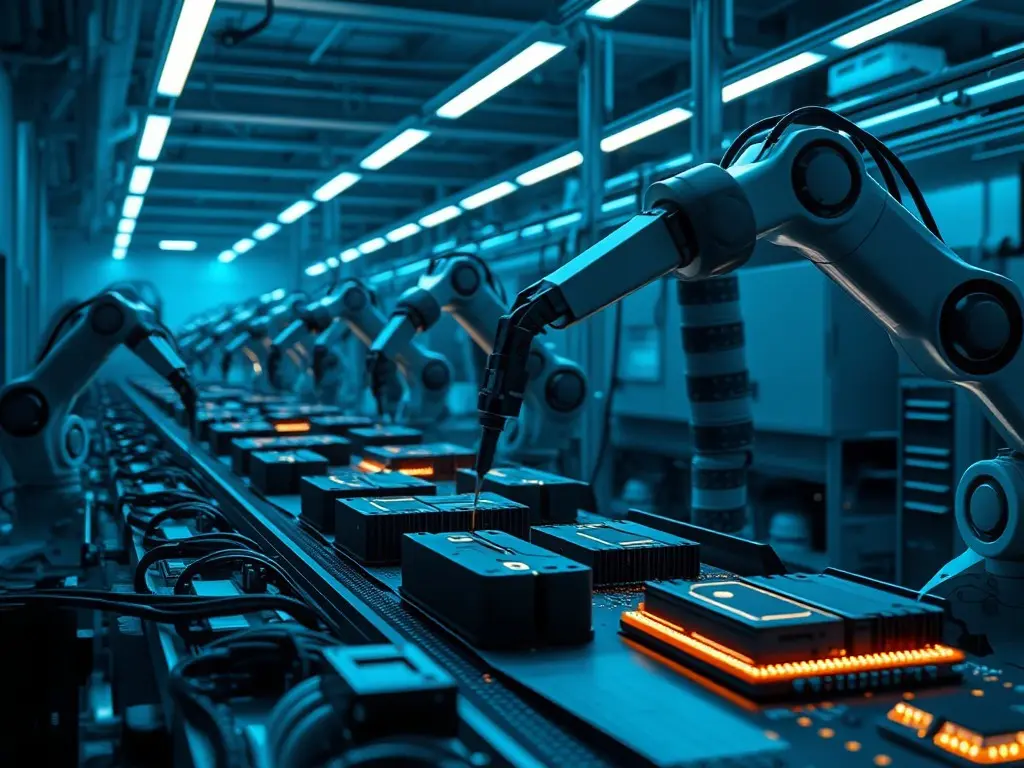
Researchers from Nvidia, Carnegie Mellon, and UC Berkeley developed ENPIRE, an AI-driven system where coding agents autonomously write, test, and refine robot training code on real hardware, achieving a 99% success rate in tasks like GPU installation. The system automates research workflows by using agents like Codex, Claude Code, and Kimi Code to debug and improve robot training scripts without human intervention, though scalability depends on compute and robot resources.
Researchers from Nvidia’s GEAR lab, Carnegie Mellon University, and UC Berkeley introduced ENPIRE, a system where AI coding agents autonomously generate, test, and refine robot training code. The agents—including Codex, Claude Code, and Kimi Code—operate in a loop: writing code, deploying it on real robots, analyzing failures, and revising scripts without human input. The system uses Git to share updates, mirroring real-world research workflows. ENPIRE’s structure follows four stages: resetting the physical environment, running policy-improvement trials, evaluating results across a fleet of robots, and feeding data back to the agents for further refinement. The system was tested on an eight-robot fleet of dual-arm YAM stations, achieving a 99% pass@8 success rate in precision tasks like pin insertion, zip tie cutting, and GPU installation into motherboards. These tasks demand millimeter-level accuracy, making the results notable for their practicality rather than just visual demonstration. The GPU installation task stands out as a key example, though the paper clarifies it does not represent fully autonomous data center assembly. Instead, it highlights how AI agents can autonomously optimize robot training over time, reducing the need for manual intervention. For instance, scaling from one agent to eight robots cut the time to solve the Push-T task from five hours to two, and pin insertion from over 90 minutes to 40. These efficiency gains address a longstanding bottleneck in robotics research: slow policy-development cycles that waste robot and compute resources. However, the system’s scalability introduces trade-offs. As more agents join the fleet, robot utilization per agent declines while token usage rises due to increased coordination and log analysis. The cost of faster convergence—measured in compute and robot resources—means smaller labs may still prefer simpler setups despite slower timelines. The paper underscores that ENPIRE accelerates research for well-funded operators with deep compute budgets, rather than making physical automation inherently cheaper. A persistent challenge in robotics remains: simulation often overestimates real-world performance. The Push-T benchmark, for example, showed all three coding agents solved the task in simulation but struggled with physical execution. This gap highlights the need for real-world testing in robotics development, even when AI agents drive the process. The research reflects a broader trend where AI tools automate labor-intensive aspects of robotics, from coding to debugging. While ENPIRE does not yet replace human oversight entirely, it demonstrates how autonomous agents can streamline repetitive research tasks, potentially reshaping how robotics labs operate.
This content was automatically generated and/or translated by AI. It may contain inaccuracies. Please refer to the original sources for verification.