Over 200 state lawmakers urge Congress to oppose AI preemption in House proposal
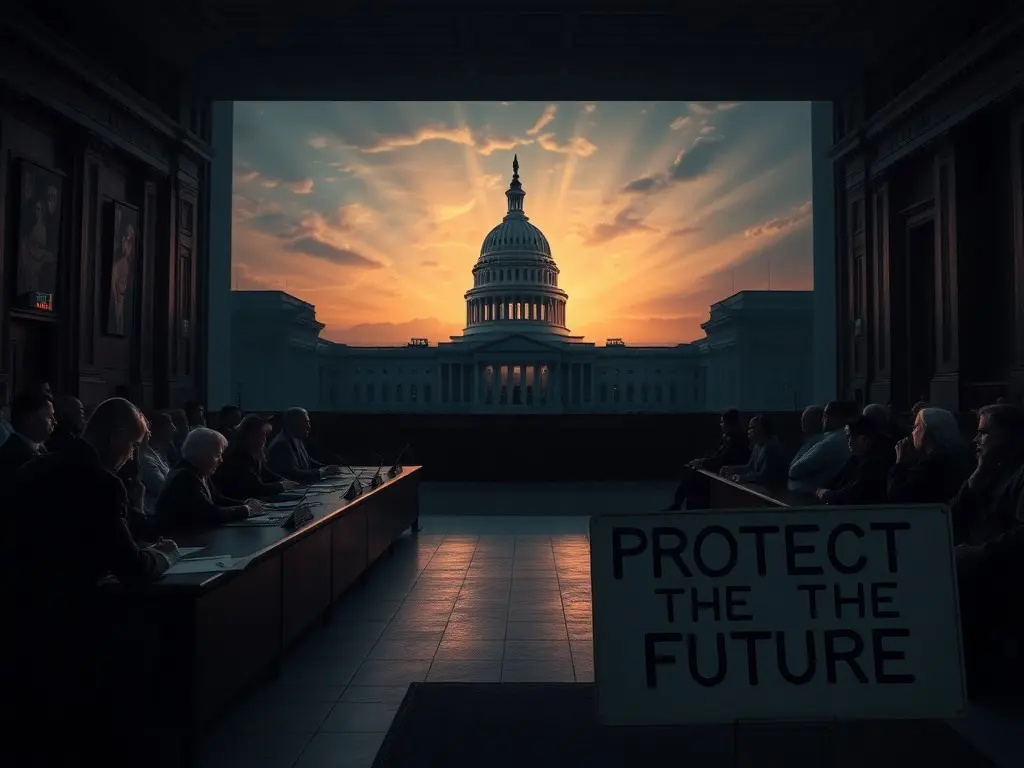
Over 200 state lawmakers from both parties urged Congress to reject a House proposal that would preempt state AI regulations for three years, warning it could weaken protections for children, workers, and artists. The letter, organized by Americans for Responsible Innovation, targets a provision in a bipartisan AI framework draft by Reps. Jay Obernolte (R-Calif.) and Lori Trahan (D-Mass.).
More than 200 state lawmakers, including 104 Democrats, 98 Republicans, and one independent, sent a letter to Congress on Tuesday opposing a provision in a proposed national AI framework. The provision, included in a discussion draft by Reps. Jay Obernolte (R-Calif.) and Lori Trahan (D-Mass.), would temporarily block state regulations on AI model development for three years. The lawmakers argue this would freeze critical protections for children, workers, artists, and consumers during rapid technological change. The letter, coordinated by the nonprofit Americans for Responsible Innovation, warns that the preemption would apply broadly, including laws on AI trained with copyrighted materials, antidiscrimination measures, and private-sector safeguards. The lawmakers fear tech companies could exploit the provision in court to dismantle state-level AI regulations, even those not explicitly covered by the draft. The draft explicitly excludes preemption for general laws, common legal remedies, or rules governing AI use after deployment, but critics say its wording remains dangerously vague. Comparisons were drawn to social media regulation failures, where unchecked industry power led to societal harms, particularly for minors. In the Senate, Sen. Marsha Blackburn (R-Tenn.) is negotiating with the White House on an AI preemption package aimed at protecting kids, creators, and communities. However, partisan divisions and past legislative stalling—such as a failed Senate moratorium last year—continue to hinder progress. The House proposal, introduced in bipartisan fashion, now faces renewed opposition from state officials wary of federal overreach in AI governance.
This content was automatically generated and/or translated by AI. It may contain inaccuracies. Please refer to the original sources for verification.