Part Of A SpaceX Rocket Will Be Hitting The Moon At Mach 7, According To Experts
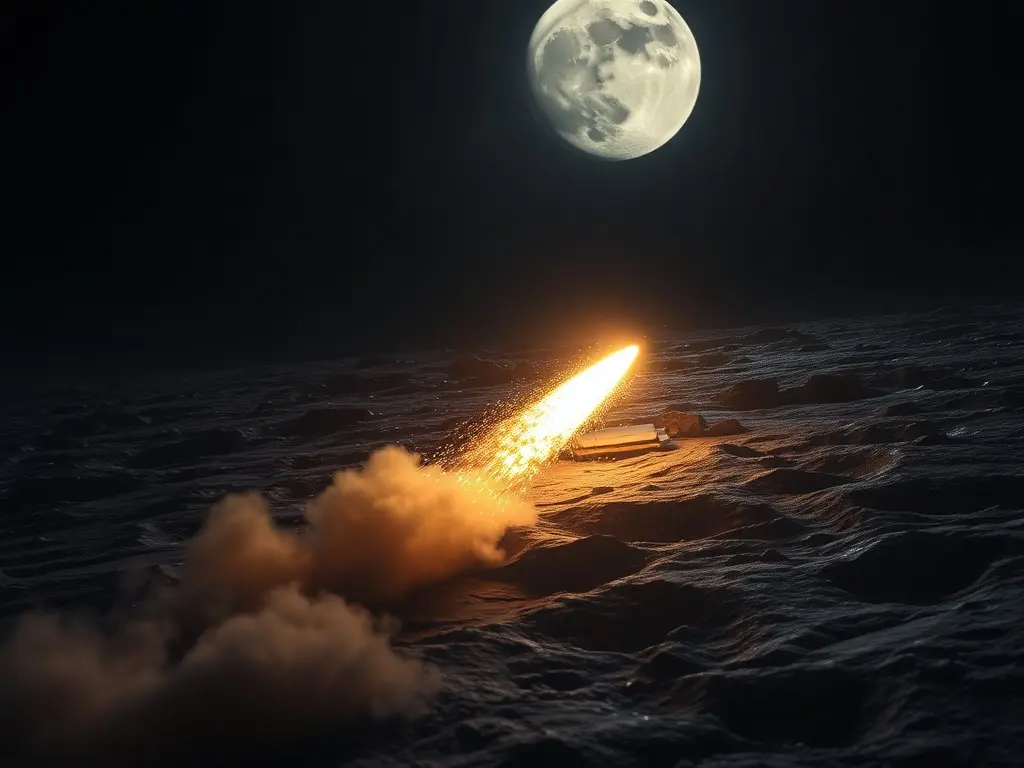
A SpaceX Falcon 9 rocket’s upper stage, launched on January 15, 2025, for the Blue Ghost Mission 1 and Hakuto-R Mission 2, is set to collide with the Moon at Mach 7 in August 2026, according to astronomer Bill Gray. The impact will vaporize the debris, creating a small crater, while raising concerns about growing space junk risks as lunar missions increase and NASA plans a Moon base.
A discarded SpaceX Falcon 9 upper stage will strike the Moon at over 5,400 mph (Mach 7) in August 2026, according to astronomer Bill Gray, who first identified it in September 2025. The object, tracked by the U.S. Space Force, originated from a January 15, 2025, launch carrying Firefly Aerospace’s Blue Ghost Mission 1 lander and ispace’s Hakuto-R Mission 2 lander—only the latter of which crashed on the lunar surface. Gray’s software detected the upper stage as the 10th rocket stage from that launch, with the Space Force confirming its trajectory toward the Moon. The impact will vaporize the debris, leaving a small crater and scattered lunar rocks. This follows a similar 2022 collision involving China’s Chang’e-5 T1 upper stage. While the Falcon 9 stage’s impact poses minimal risk, experts warn growing space debris could threaten future lunar missions. NASA’s planned Moon base and increasing launches demand better disposal methods for rocket stages to avoid uncontrolled impacts. The U.S. Space Force may need to expand debris tracking to mitigate risks for spacecraft traveling to and from the Moon. A 2025 European Space Agency (ESA) report highlighted rising space traffic dangers, including unintended collisions, as commercial satellite constellations like SpaceX’s Starlink expand. The company now operates over 10,000 satellites in Earth orbit, reinforcing concerns about debris management as lunar activity intensifies. Controlled disposal trajectories for rocket stages will be critical to prevent future lunar collisions. NASA already monitors space debris near the International Space Station (ISS), but lunar missions require broader tracking to ensure safety as human presence on the Moon becomes permanent.
This content was automatically generated and/or translated by AI. It may contain inaccuracies. Please refer to the original sources for verification.