Penpa Tsering’s Re-election and the Institutional Future of the Tibetan Movement
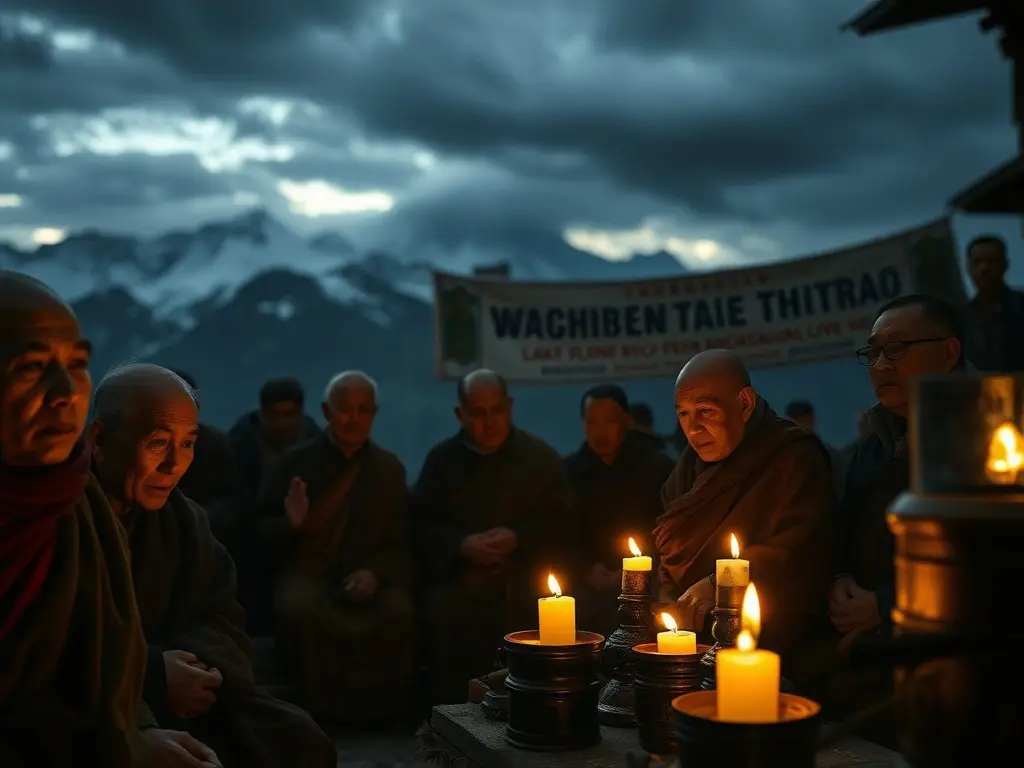
Penpa Tsering was sworn in on May 27 as Sikyong of the Central Tibetan Administration (CTA) after re-election by the Tibetan exile community, marking the fourth direct election since the Dalai Lama stepped down from administrative roles in 2011. His re-election underscores the Tibetan movement’s shift from reliance on the Dalai Lama’s spiritual authority to institutional continuity amid stalled Sino-Tibetan dialogue and Beijing’s attempts to influence Tibetan Buddhist reincarnation processes.
Penpa Tsering was sworn in on May 27 for a new five-year term as Sikyong of the Central Tibetan Administration (CTA) following his re-election by the Tibetan exile community. This marks the fourth direct election of the exile leadership since the Dalai Lama formally ended his administrative role in 2011, signaling a deliberate transition toward institutional governance. The CTA’s elections test whether the Tibetan movement can sustain legitimacy without statehood or territorial sovereignty, relying instead on democratic procedures and transnational participation. For decades, the movement’s visibility depended on the Dalai Lama’s moral authority, framing the Tibetan issue in terms of nonviolence, human rights, and religious freedom. However, as the post-Dalai Lama era approaches, the movement faces challenges in maintaining cohesion without his unifying influence. Beijing has long sought to intervene in Tibetan Buddhist reincarnation, including the Dalai Lama’s successor, through administrative controls like the 2007 *Measures on the Management of the Reincarnation of Living Buddhas*. The Chinese government views reincarnation as a tool to assert state power over religious institutions, while the exile community sees it as central to religious continuity and national identity. Competing narratives risk fragmenting the movement, as international actors may avoid direct intervention in disputes over religious legitimacy. Penpa Tsering’s re-election reflects the exile community’s effort to institutionalize politics beyond the Dalai Lama’s leadership. The CTA’s elections serve as a rehearsal for the post-Dalai Lama era, emphasizing representation and procedural legitimacy. Without formal diplomatic recognition or statehood, the movement’s future hinges on its ability to demonstrate sustained organization and transnational support. Sino-Tibetan dialogue has remained stalled since 2010, and Penpa Tsering’s term may not immediately reopen negotiations with Beijing. Yet his re-election highlights the broader struggle to balance spiritual heritage with modern governance in a stateless political movement. The exile community’s ability to navigate this transition will determine whether the Tibetan cause remains cohesive in the absence of its most iconic figure.
This content was automatically generated and/or translated by AI. It may contain inaccuracies. Please refer to the original sources for verification.